The sad fact is, I despise conservative anything. The kind of mental midgetry that bans a motorcycle from a race because it is too good just makes me want to ignore everything racing organizations sponsor. One of my childhood heroes, Parnelli Jones, experienced this bullshit at the Indianapolis 500 with his STP-Paxton Turbocar. I haven't watched an Indi 500 since. There was a back-story about Honda's EXP-2 that I can not find a link to, but as I remember it the bike was banned from the Paris to Dakar series because no one else could replicate the technology without breaking Honda's patents. Bore me to death with your old technology and timid bullshit and I take my money and time somewhere else. It is despicable that electric motorcycle racing is already turning into a bunch of little old ladies worried that someone might knit something interesting.
Aug 20, 2013

Aug 18, 2013
Gangbangers with Badges
From Biker News out of Colorado comes this hilarious piece: "Cop Biker Clubs Draw Unwanted Attention." My favorite line in the article was, from Michael Koepke, vice president of the Yavapai County Hells Angels chapter, "They give a bad name to motorcycle clubs." I wonder if Koepke knows the meaning of the word "ironic?"
 The gang in question, the Iron Brotherhood, is being investigated for a few reasons, the most recent being a Prescott, Arizona
bar brawl that resulted in at least one brawler being hospitalized. The gangbangers being prosecuted are "Tarzan, Mongo, Guido and Top Gun." These knife-wielding, brass knuckled, Harley Davidson riding, patched and tatted bangers had day-jobs as a police chief, a county sheriff's sergeant, a police officer and a paramedic.
The intro to the Brotherhood's website claims, "The Iron Brotherhood MC was founded in January 2006 by Law Enforcement Officers and former members of another LEMC. The purpose of this club is to promote brotherhood among like minded brothers who enjoy riding hard, working together, and sharing in a tight knit brotherhood. We are bikers who happen to be cops who share a common bond. We are dedicated to our profession and our brotherhood . . . "


The intro to the Brotherhood's website claims, "The Iron Brotherhood MC was founded in January 2006 by Law Enforcement Officers and former members of another LEMC. The purpose of this club is to promote brotherhood among like minded brothers who enjoy riding hard, working together, and sharing in a tight knit brotherhood. We are bikers who happen to be cops who share a common bond. We are dedicated to our profession and our brotherhood . . . "

As you can see from their very friendly looking logo, these are upstanding members of society who make a valuable tax-collection contribution, most likely scaring the shit out of every citizen they stick with traffic taxes (the accurate description of what "serve and protect" too often means in the real world).
A big part of my general dislike for police of any sort is based on a lot of past history. Too often, small time bullies get badges and become professional bullies. That is the talent and psychological pool most police departments are all too happy to draw from. Having had about two dozen local police in my experience riders' courses over the years, the fact that the overwhelming majority are proud to be sporting grossly illegal pipes on their grossly mal-designed hippobikes and are every bit as vested in the badass biker image as the characters the FBI has labeled a "terrorist threat" and are listed in the NCIC Violent Gang and Terrorist Organization File (VGTOF). In my wife's words, this is just another group of "excess males" behaving as if they are rogue cats in an over-crowded barn.
Aug 17, 2013
Not News, but Media Noise
This is a wonderful example of how fuckin' stupid the "media" (air, for example, is a media for sound, thermal energy, light, etc.) has become. The morons at the incredibly dumbed-down Rapid City Journal published an attempt to describe a series of crashes at the Sturgis Potato-Potato Rally called, "One dead in bike wreck, multiple vehicles seized for drugs." This brilliant piece of kindergarten writing contains irrational statements like:
- "William L. Ziegelbein, 44, of Lincoln, Neb., was traveling north on a 2008 Triumph Rocket motorcycle, when his bike left the road on a curve and entered the west ditch . . . "
- "A motorcycle driven by Mark Steever, 47, of Lennox, went out of control while traveling south on Nemo Road . . ."
- "A motorcycle driven by Ellen Lloyd, 60, from Lavista, Neb., failed to handle a curve while traveling east on Nemo Road . . . "
- "A motorcycle driven by Sherwin Coleman, 58, from West Bountiful, Utah, lost control while traveling north . . . "
- "A motorcycle driven by Clarence Carlson, 40, from Warroad, Minn., drifted off the road while traveling west on U.S. Highway 16A . . ."
- "A motorcycle driven by William Perry, 45, from Hawthorne, Calif., failed to negotiate a curve while traveling west on state Highway 44 . . . "
Aug 16, 2013
Why I Don't Ride Cruisers (or When Seat Height Is All That Matters)
Originally, this was an article requested by my old MMM editor, Sev Pearman. His idea was for me to identify motorcycles with low seat heights (the apparent prime technical specification for the over-50 crowd) that were still competent motorcycles. Going into to this, I thought it was a hopeless task but I was slightly surprised that there are a few options. Maybe this isn’t apparent, but the fact is that a low seat height is an engineering sacrifice on several levels. The only race bikes that even make an attempt to keep the seat low are dragsters and they are the ultimate in single-purpose vehicles. To be sure I wasn’t missing something obvious, I ran the article past Kevin Cameron and he said, in his usual efficient manner, “Everything you’ve said is true.” So, with my apparent appeal to a higher authority in hand, I went with what I had.
Apparently, there is no interest in this kind of article in the new MMM editorial regime and it appears to be an unsellable idea to the rest of moto-journalism, so I will “publish” it here for my favorite readers.
All Rights Reserved © 2012 Thomas W. Day
As an MSF instructor, I hear this every week, "I bought a Harley/V-Star/Polaris/etc. because I could touch the ground flat-footed." A lot of the rest of that discussion goes over my head. I don't own a bike I can flat-foot and haven't since the early-1980's, so that selection criteria has rarely connected with me. However, with a 29" inseam (and that measure usually means my pants' cuffs are ragged) and arthritis in every joint, getting a leg over a tall seat is not an insignificant consideration. The problem is physics and physical.
Last summer, a Geezer blog reader, John Kettlewell, sent me a note (titled "Cruisers!") that contained an article from New York state's "The Saratogian" about one more old Harley rider failing to negotiate a curve and meeting a tractor-trailer head-on. John summed up his analysis of this fatal crash with, "[This] is why cruisers are a problem--no matter how much you plan on just puttering down the road to the next rally or bar, there comes a time on a motorcycle when you need to maneuver and/or brake fast in order to avoid some problem. They just aren't safe." Forwarding that note to a few friends started an email conversation that resulted in Sev Pearman challenging me to write a "non-ranty" article that would prove that "If you value low seat height you don't have to settle for all the limitations inherent to a compromised cruiser form."
John's reasoning is why I avoid the cruiser style of motorcycles. They aren't safe. Now, I have to figure out if there is a way to get a low seat height and still have a competent motorcycle. First, I am going to try to define "low seat height."
While there are motorcycles that go overboard in the pursuit of stumpy seat heights, like the 24" seats from the late-odd Ridley Motorcycle's vehicles, it appears that anything under 30" is an engineering decision to go low as a primary design feature. Engineering anything involves design compromises and the design concessions made to keep motorcycle seat heights low result in long wheel bases, low ground clearance, poor cornering capability, suspension travel limits, and the resulting handling constraints. There are few performance-enhancing options for an engineer who is told "keep the seat under 30 inches." BMW's boxer engine is one way to lower the height of the engine, although that option creates a wide profile that has other issues. For good reasons, BMW doesn't abuse the vertical space saved by their engine design to dramatically lower seat heights. BMW's lowest seat height (using the "comfort seat" and suspension lowering options ) is found on the R1200R and K1600 GTL models at 29.5 inches; 33-35" is more in-line with their design specifications. BMW does offer custom seats on six models with the explanation, "Let's face it - not every one is six feet tall with long inseams. And besides, some folks just want a more easy-handling riding position." Still, what BMW calls "low" compared to Harley Davidson's typical 26" seat heights is a world apart for many riders.
Once a designer has opted to drop the seat height to an arbitrary value very near the height of the rear tire, several things have to give way to make room for the seat base. The obvious, and often used, solution is to stretch the frame to create the necessary real estate. When you couple this requirement with the style-related requirement of a large, padded tractor seat, the frame can get quite long. By necessity, a longer wheelbase means more "stability," which is marketing-speak for "ponderous steering."
Going for a sub-30" seat height, including 3-4" of padding and seat frame, the next thing effected is ground clearance. With 22-24" from the bottom of the seat base to the ground, typical cruiser ground clearance specifications are in the 4-5" territory. That limited clearance not only effects the motorcycle's ability to get over common obstacles, like speed bumps and driveway gutters, but low clearance dramatically reduces the motorcycle's maximum lean angle. If the designer chooses to find some of the necessary real estate for the engine and transmission by increasing engine/transmission width, even more lean angle is lost. Maximum lean is directly related to a motorcycle's ability to turn quickly and perform basic maneuvers.
Ground clearance means more than just the space between the frame and the ground. Ground clearance sets a maximum limit to suspension travel. If the ground clearance is 4", the absolute maximum suspension travel is also 4" and the practical limit is more like 2 1/2" to 3". The first time I rode a modern Harley was in 1993, in Colorado. I was on a Sportster of some sort and as I swung the bike from the dealer's driveway to the street, I ground the pipe when the front tire dropped into the gutter. It was a normal maneuver, I wasn't turning sharply or going fast. When I brought the bike back, I watched other riders leave the dealership and discovered that they all turned right from the drive into the far edge of the four-lane street's center lane, to increase the radius of their turn and reduce the lean angle. Not only is that an illegal maneuver, it's unsafe and a terrible demonstration of one more way cruisers are unsafe vehicles. It did, however, prevent the pipe-grinding problem I experienced when I turned into the near lane. The lack of lean capability is a big part of the "I had to lay 'er down" mythology. Those riders did "have to" lay the bike down, since attempting to do any serious steering maneuver would lever the bike up on to metal parts and throw the vehicle into an uncontrolled slide.
It's important to keep in mind that a low seat height might mean an unacceptably wide seat, too. To cover the hot engine components that have been made wide to avoid making them tall, manufacturers put tractor seats on many motorcycles and shift the footpegs far forward to accommodate broad transmission and engine cases. In many cases, the advantage of the low seat is lost as the feet-forward riding position gives up steering leverage, the rider's ability to stand when the vehicle crosses obstacles, and a well-balanced position of strength when the motorcycle is stopped.
Many women complain that motorcycle manufacturers don't consider their physiology in bike designs. The complaint should more accurately be that physics and nature have conspired against motorcyclists with short legs and limited strength: sex is inconsequential (you don't see that statement often). So far, even electric motorcycles haven't overcome this requirement, since batteries take that same territory in the center of the motorcycle. Allowing for reasonable room for a power plant and transmission necessarily raises the seat height, center of gravity (COG), and usually creates a motorcycle that requires more strength to handle at low speeds and when the bike is stopped. Once the motorcycle is in motion, the advantage moves to the shorter wheelbase, higher ground clearance, quicker steering designs. The scooter and cruiser solution of moving the motor and/or rider over the rear wheel produces compromises in weight distribution and handling.
Going for the lowest seat height possible has produced some odd results; one example would be those 24" seat heights and other non-rider accommodations (auto-transmission, parking brake, etc.) that were found on the late Ridley Motorcycle's vehicles. The company's 2009 (last year of production) 750cc Auto-Glide cost $14,500, has a 24.5" seat height, 5.25" of ground clearance, 3.5" of suspension travel, weighed 482 pounds (wet), and a 77.5" wheelbase. The CV transmission eliminated a lot of real estate demands, which gave Ridley a couple of extra inches to work with between the ground and the seat height. Ridley aggressively aimed their products at Boomer Generation women, a marketing plan that may have backfired as loudly as their barely-muffled motorcycles.
Looking for more traditional and better performing motorcycles in the major manufacturer lines didn't do much to counteract the argument that the low seat height target coexists with performance motorcycles:
Yamaha's "new for 2012" XT250 Dual Purpose all-around commuter/play-bike has a stock 31.9" seat height and a really narrow profile, which makes it a lot more friendly than the specs read to riders like me. Still, 32" is a fair obstacle for many overweight and un-athletic Americans and for those with altitude-challenged inseams. The rest of Yamaha's lineup presents exactly the rider complaint that forces them to the company's V-Star products. Don't get me wrong, I'm not saying you shouldn't consider the Super Ténéré (33.26" or 34.25" with an optional "low seat" that takes another 35mm ( 1.38") away from the stock seat's measurements) or the FZ1/FZ8 (32.1"), FZ6 (30.9") or the FJR1300A (31.69" or 32.48"). We both know those kinds of numbers are exactly what put you in the V-Star Roadliner's 27.8" seat, aren't they?
Honda has always known who the Goldwing market is and that bike's stock 29.1" seat height reflects that awareness. The new NTV700V seems to be less well-positioned with a 31.7" seat and the Adventure Touring NC700X's 32.7" riding height puts that bike in the "questionable" category for those afraid of heights or with limited mobility. The CBR250R is well-designed for its target market, new riders and urban commuters, with a 30.5" seat. The rest of Honda's sportbike line seat heights run very near 32" for the whole product line and their cruisers are predictably around 26".
Kawasaki has, probably, the most commonly modified motorcycle in the history of motorized two-wheel vehicles in the KLR650 (No, loud pipes and cheap chrome don't qualify as "modifications." At best, those bits are no more personal or creative than the Xmas decorations you bought at Wal-Mart.) The KLR's 35" seat height is a prime reason this go-everywhere motorcycle attracts aftermarket vendors. Kawasaki's "little" dual purpose bike, the KLX250S also sports a 35" seat. The Kawai sport bikes are in the 31.7-33.3" territory, except for the 250R and the 2009 500R at 30.5". That company's sporty tourer, the Concours, sits at 32.1", ignoring the lesson Honda demonstrates with the Goldwing. The Vulcan Vaquero, Voyager, and Nomad cruiser-tourers offer a 28.7" platform. Kawasaki drops that to 27" on the Vulcan cruisers.
Suzuki's sportbikes all sit about 32" high and the cruisers drop that to about 27.5". One of the best urban commuting bikes imported to the US, the TU250X standard, has a 30.3" seat. The 650 and liter V-Stroms start at 33". As expected, Suzuki's dual sport bikes aren't playing the low seat game. Only the DRZ125 has a reachable 30.5" seat, while their "serious" dirt bike, the RM-Z450 sits at 37.6".
 Most popular motorcycles will attract aftermarket products for lowering the suspension or seat. Lowering the seat doesn't involved a lot of risk, other than a possible sore butt. Dropping the suspension can introduce engineering flaws that can be hazardous. For example, if you lower the suspension 2" on a KLR, you have a math problem. The stock KLR650 has 8.3" of ground clearance and 7.3" rear and 7.9" front suspension travel. Two inches off of the rear suspension means the bike's frame will hit ground while the suspension continues to collapse. There is a solid reason Kawasaki put some margin between ground clearance and suspension travel. Lowering the suspension at one or both ends changes the frame and steering geometry, too. That can have serious handling and stability consequences. Just because some shade tree "mechanic" offers a lowering kit does not mean installing that kit is a good idea.
Where does that leave those of us who walk less-than-tall? The choices are obvious. We can either suffer performance-compromised cruisers that "just aren't safe" or we can learn to ride real motorcycles.
 The posterboy for the second choice was Gaston Rahier, the Belgian Suzuki-rider's three-time FIM 125cc Motocross World Champion (he still holds the record with 29 Grand Prix victories), four-time Motocross de Nations winning team member, and three-time Paris-Dakar winner on the highly-modified 1000cc BMW Rally GS motorcycle that he made famous. "The little man with the giant reputation" was 5'4" tall and you can see how tall the BMW in comparison. The GS weighed 507 pounds and with 60 liters of fuel being a substantial portion of that mass. If being able to touch the ground wasn't a big deal when Rahier was crossing the Sahara Desert, not being able to put both feet flat on the ground can't been a critical criteria for selecting your bike.
There are tactics for riding a tall bike that relieve some of the problems associated with that long reach:
- Assuming you're not sitting on a wide saddle, shift your body to the left side when stopping and plan ahead to stop with only your left foot on the ground. Using this approach, I can often flat-foot my 34" WR250X's at stoplights; it's just one foot, though.
- Watch for crowned roads and sloped parking spaces. Even if you're shifted off to the side, going for the longer distance could be enough to throw you off balance.
- Although you'll lose style points, it's often worth getting off of the bike where the ground is flat and the sidestand can help hold the bike up. When you are off of the bike, back it into the parking space and wrestle with positioning the motorcycle without the added problem of dismounting.
- Mount the bike like you're riding a horse. I can, currently, swing a leg over the WR but I don't usually bother. The sidestand and bracket are pretty stout on that bike and I take advantage of that fact by getting on the bike using the left footpeg as a stepladder. In open terrain, I often mount up "Pony Express-style"; I put my left foot on the peg, slip the clutch to get the bike rolling, and swing up on to the bike as it gets moving. On muddy ground, this can be the only way I can get back on two wheels.
- Ride wearing real motorcycle boots. Decent motorcycle boots add at least an inch to your leg length and their grip they provide will keep your feet from sliding out from under you when the road surfaces are imperfect.
- Learn to balance your motorcycle. Regardless of law enforcement mythology, no state law requires a motorcyclist to put a foot down at a stop light or sign. If you can balance the bike, you are more ready to move away from stopped in an emergency and you'll be more likely to have your eyes up and looking for hazards than if you're comfortably relaxing waiting for a light change. Bicyclists do it all the time and it's much harder to balance a bicycle.
Wrapping this up, I see that I failed to accomplish Sev's assignment. Outside of the Goldwing, I did not find a single competent, new motorcycle with a seat lower than 30". There are, however, several choices for reasonably modern used (especially pre-1990) motorcycles. Even with 30" as an acceptable measure, the choices are all under-500cc motorcycles. That's not a bad thing because a competent two-fifty is more vehicle than 90% of the height-challenged motorcycling public can ride to the limits of that machine's capabilities. If you're set on that two-liter hippomobile and "value low seat height" above other riding and engineering concerns, you will "have to settle for all the limitations inherent to a compromised cruiser form." Currently, there is no magic bullet that solves the handling problems created by a sub-30" seat height. Outside of scooters and cruisers, there aren't many options out there for riders who insist on looking for a motorcycle that accommodates their physical inabilities. Getting into shape, limbering up, becoming stronger and more flexible is probably out of the question. Right?
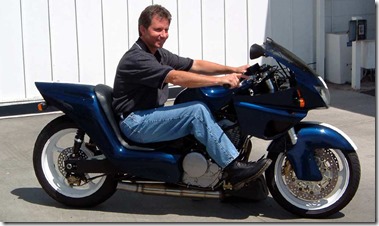 POSTSCRIPT: Thanks for a few readers, I have been officially turned on to the Gurney Alligator; an attempt to remedy the problems of low seat height and handling. To my eyes, most of the objections still stand with this vehicle. I can see how it might have some improved characteristics on nearly perfect roads/racetracks, but I think I’d rather have a convertible than something this restrictive, uncomfortable, and limited.
 POSTSCRIPT: Thanks for a few readers, I have been officially turned on to the Gurney Alligator; an attempt to remedy the problems of low seat height and handling. To my eyes, most of the objections still stand with this vehicle. I can see how it might have some improved characteristics on nearly perfect roads/racetracks, but I think I’d rather have a convertible than something this restrictive, uncomfortable, and limited.
Aug 15, 2013
Minnesota Montesa
All Rights Reserved © 2002 Thomas W. Day 
[This was a wonderful (from my perspective) interview with one of my old heroes, Martin Belair. Martin was a national level California trials in the 1970s. Since then, he's moved to Minnesota and is the national distributor for Montesa motorcycles. He was a great interview and I'm only sorry that I didn't publish all of what he said to me.
This article appeared in the June issue of Minnesota Motorcycle Monthly. Check out the pictures, they're even better than the interview.]
One of Minnesota's better-kept motorcycling secrets is that we are the home of an exotic bike distributor (the motorcycle is very exotic, and the distributor is somewhat exotic). Martin Belair's US Montesa is the importer/distributor of Montesa trials bikes and he's based in Minnetonka. Martin is a Southern California transplant who came here for the clean air and tall mountains. He's also a Master trials rider from America's golden age of motorcycling and an admitted "trials geek."
This is a special year for observed trials in the Midwest. Martin's company is one of the sponsors for a two-day World Outdoor Trials event at Duluth's Spirit Mountain this June. Martin is also responsible for training the Minnesota observers to world trials standards and he has planned many of the event's sections. If you know anything about trials, you know this is an incredible opportunity for Minnesota motorcycling enthusiasts. When I first met Martin, at the Cycle World International Motorcycle Show in January, he was watching the Extreme Trials demonstration. Or rather, he was watching people watching the demo. He told me that what he liked best about these demos was the expressions on spectators' faces when they first saw what a trials rider could do. It was easy to see what he meant.
The demonstration, by 1992 World Champion Tommi Ahvala, drew large crowds. The things he did on his stunt rig are barely warm-up exercises compared to what Ahvala does on a trials section, so those spectators haven't seen anything. Yet. In June, they'll have a chance to be completely astounded.
Martin, graciously, gave me nearly an hour of his time and attempted to update my knowledge of modern trials jargon and philosophy. He was, probably, only partially successful because old habits die hard.
MMM: When did you get started in trials?
I started riding trials in 1969. I rode my first trials event . . . I think I was nine years old, on a Hodaka Ace 90. I finished 17th out of 19 guys. We were desert racers. We had no idea what we were doing. We realized that right away, so we didn't ride another trials for 8 months.
In the meantime we got trials books and reconfigured our Hodakas. Put the mufflers back on, geared them down. In those days, people took bikes like Hodakas or DT-1s and modified them. We put obstacles in the back yard and we practiced. When I say "we," I mean my brother and I. When we went back, we were ready. We were competitive and we knew what we were doing. But we always laugh about that first event. What a sight we must have been! We were riding the sections with our goggles on. We had expansion chambers. I'm sure the trials guys must have thought . . . I just remember tearing miles of ribbon out, you know? Just wreaking every section. I'm sure they were just going, "what are these guys doing?"
It was the best time to be there. It was a golden era. I spent a lot of time riding at Saddleback Park. There were so many areas to ride and the terrain was so good. The economy was there and everybody was riding dirt bikes. And trials was . . . that era produced the best riders America has ever produced. We had riders that were competitive in the world Championship. We produced the world champion from Southern California, Bernie Schreiber in 1979. We had eight out of the top ten riders in the nation, were from Southern California. It was such a hot bed. We had the terrain. We had sponsorships. We had healthy clubs, because we had 200 people show up at every local event. It was everything. All those things that go into making a sport successful.
Bernie Schreiber was champion. Marland Whaley was champion. Lane Leavitt, Don Sweet, Joe Guggliemeli, there were so many good riders, competition was so intense. I go back and look at those results and it blows me away. A national in Michigan, I finished 7th place and I was four points off of the leader. It was very, very competitive. It was a great era.
MMM: Could you compare those riders to today's riders?
It's difficult. The machines now are so much better. The tires. The brakes. The machines help these guys look spectacular. The machines back then . . . were tanks. You bring out one of those vintage bikes and put Tommi [Ahvala] on it and, yeah, he can do some stuff but nowhere near what he's doing now. . . Back then, to go over every little rock or log, was all this commitment and effort to work the bike through the section. And now, I could stand on the thing and point it and it does all the work.
The riders, then, were great. Especially considering the machinery they used. I think the riders were incredible. I mean, we had tires that were rock hard. Today, tires are incredible. The riders now, obviously, are spectacular. They're amazing. I think the riders, now, are definitely better. In any sport, they're going to be better. But it's hard to compare eras. We were awfully good, back then.
The other thing was that we rode a lot more low traction. Lot more slippery. Trials was a winter sport, initially. And now it's become a summer sport. So they're riding in much more high traction areas. It allows them to do much more. We were riding slippery, slimy, mossy creek beds with rock-hard tires. It's a different ballgame.
MMM: There was a strange mental glitch for me, when I first came back to paying attention to trials a few years ago. I saw Lampkin was back up there. I thought he has to be 100, practically.
I've had a number of people say that, "that guy's still alive?" No, no, no. It's the kid [Dougie]. That is a great story. You know he was just awarded the MBE by the Queen, made a member of the British Empire? It was in all the British press. That's quite an honor. That's a big deal. That whole family, what a motorcycling family!
MMM: I've watched a few of the world rounds on the tube and videos. Dad sure looks like he's tough on Dougie.
They're no-nonsense . . . they're very good about getting the job done.
Dougie . . . having his dad there was everything. Now when you see them, his dad is much quieter. . . It doesn't look like a sport you have to be tough in, but it is. At that level, it's a knife fight. . . . It's serious. Maybe knife fight's a little exaggerating, but . . .
MMM: A mental knife fight?
Yeah, that's what it is.
I never had that, in my career. I was happy to be out there, I was competitive, I was riding, I did my best, I went home. I just never entered that strata of the Wayleys and the Schreibers. Schreiber, I traveled with him a little bit. He told me. We went to a world round in Pennsylvania in '78. The guy would take, the morning of the trial, a cold shower. He told me, "In Europe, the morning of the trial I take a cold shower, I drink two espressos, I don't eat breakfast, and, by the time I get to that first section, I'm pissed off."
MMM: I'll bet.
That's what makes a champion. That drive. They're freaks.
MMM: Trials has never really did "hit" in the US, right?
Not to the point that people expected, but it did get very, very popular. I remember big events in Southern California where there would be 200-300 riders in the novice class. And we realized then that there's a saturation point. You can have too many riders in an event and everybody's waiting in line to ride a section and nobody's having any fun.
Trials is a sport that makes sense on paper. It really does. But it's a humbling sport. And a lot of people don't like to be humbled. There's no faking it in trials. You can't put on all the gear and learn to do a triple and be a hero. If you can't ride trials . . . you fall down in front of people. It takes a certain sort of, I call it, knuckle-head. It takes a knuckle-head to ride trials.
I remember a friend of mine said, "Why would you want to go over those rocks? Isn't there a road?
Trials is pretty healthy right now. I think it's in as good a shape as it's been in a long time in America. I don't know if it will ever been big, big mainstream. I don't know if it has to be. It's a great sport. The people who are involved in it are great. I don't think there's any more passionate, die-hard people than trials riders. To keep this sport alive . . . the amount of volunteer hours that go into it. It's a passion. It's growing. There's a lot of people riding trials for fun, now. Not necessarily competing, just buying them for trail bikes to play on, to cross-train. I see a lot of guys our age buying trials bikes.
MMM: The first national I went to in Duluth, four years ago, I was really impressed with the fact that there were nine year old kids and sixty year old competitors. I don't know of any other motorcycle sport like that.
Not off road. That's one great thing about it. We've got several national competitors in their sixties. You can do trials your whole life. It makes sense on paper. It's beautiful on paper. You can ride in your backyard. You can do it with your kids. Your expenses are low. Your risk of injury is low. It's a very acceptable form of motorsports for a lot of people because it's not offensive. You're not ripping up the ground. You're not making a lot of noise.
MMM: One of the things I used to like about 70s-era trials bikes was that, for less than a gallon of gas, you could ride all day. Is that still the case with modern bikes?
It's got to be the least expensive motorsport you can compete in. Your bike is going to last forever. A gallon of gas is what it costs you to go ride all day. You need a small piece of terrain. Like I said, it makes sense on paper. It's such a logical sport, it makes sense in so many ways. I just don't know if it has what appeals to the masses. It appeals to a special mind. A special personality, that's intrigued by the challenge of learning a set of skills.
MMM: Which apply to every area of riding.
They absolutely do. That's what we see is a lot of people trying to improve their off-road riding by buying trials bikes. There's a list of pro motocrossers that are buying trials bikes. I've sold, to two private motocross teams, five bikes to each team. Not national level teams, but regional teams. Five bikes to have his riders cross-train and improve their skills.
It's kind of funny, going back to what you were saying about low cost, one dad asked me, "How many hours am I going to get out of this engine?" I said, "Years." He said, "How often do I have to do a top end?" I said, "maybe a set of rings in three years." You know? The guy didn't believe me.
It's a different level of spending and it's hard for people who come from motocross to realize how reasonable trials is. You buy the bike. What do you put on it? Maybe tires once a year, chain, and brake pads.
MMM: Is trials a small market, just in the US, or all over the world?
All over the world. Total production for all the brands . . . you're talking probably 10-12,000 units. Five brands, world-wide production. That's small. So, Europe, obviously is the biggest market. Markets like France, Spain, Italy and England. Those are your top four. The US is the sixth largest trials market in the world . . . But 10,000 units, that's small. You talk to any of these big guys here, that's a minimum. For one brand. For one model. So it's a small specialty sport. I hear good comparisons to . . . people say it's like fly fishing or archery.
MMM: I'm thinking golf.
It's very comparable to golf. And I say to myself, "Why is golf so popular?" Because golf is a humbling sport. It's a humiliating sport. And that's what, I think, holds trials back. But for some reason golf has the money, it has the TV.
MMM: It took a long time.
It did, but now it's mainstream and it's cool and everybody does it.
Golf's a buddy sport, I think that's one thing that really helps it. You go out there and you're all bad.
MMM: Trials has that too.
Trials is definitely a buddy sport.
MMM: You have the #3 rider on Montesa?
Ryon Bell. He was #2 last year, #3 this year.
Also Chris Florin finished 8th in the nation. He's a kid who's just progressing at an unbelievable rate. He's an expert level rider. He was #3 in the expert class, nationally. He's been on our team for several years, but, really, in the last year-and-a-half he's gone from an expert level to a rider who will probably finish in the top five in the nation. Chris is from Florida. A weird place for a trials rider to come from. His dad built him a backyard trials jungle, logs and rocks, and that's what he learned on.
It's funny, where Ryon Bell's from, it's absolute trials nirvana. You could hold a world round every ten feet, where he lives. British Columbia. And Chris comes from a pancake. How do you figure that?
MMM: How will Montesa's riders do this year?
It's going to be tough. Very competitive. Geoff's going to be there. Fred Crosset is obviously the favorite. After winning last year, he's the favorite. Ryon [Bell] is very competitive. I think Chris is going to break the top five.

[This was a wonderful (from my perspective) interview with one of my old heroes, Martin Belair. Martin was a national level California trials in the 1970s. Since then, he's moved to Minnesota and is the national distributor for Montesa motorcycles. He was a great interview and I'm only sorry that I didn't publish all of what he said to me.
This article appeared in the June issue of Minnesota Motorcycle Monthly. Check out the pictures, they're even better than the interview.]
One of Minnesota's better-kept motorcycling secrets is that we are the home of an exotic bike distributor (the motorcycle is very exotic, and the distributor is somewhat exotic). Martin Belair's US Montesa is the importer/distributor of Montesa trials bikes and he's based in Minnetonka. Martin is a Southern California transplant who came here for the clean air and tall mountains. He's also a Master trials rider from America's golden age of motorcycling and an admitted "trials geek."
This is a special year for observed trials in the Midwest. Martin's company is one of the sponsors for a two-day World Outdoor Trials event at Duluth's Spirit Mountain this June. Martin is also responsible for training the Minnesota observers to world trials standards and he has planned many of the event's sections. If you know anything about trials, you know this is an incredible opportunity for Minnesota motorcycling enthusiasts. When I first met Martin, at the Cycle World International Motorcycle Show in January, he was watching the Extreme Trials demonstration. Or rather, he was watching people watching the demo. He told me that what he liked best about these demos was the expressions on spectators' faces when they first saw what a trials rider could do. It was easy to see what he meant.
The demonstration, by 1992 World Champion Tommi Ahvala, drew large crowds. The things he did on his stunt rig are barely warm-up exercises compared to what Ahvala does on a trials section, so those spectators haven't seen anything. Yet. In June, they'll have a chance to be completely astounded.
Martin, graciously, gave me nearly an hour of his time and attempted to update my knowledge of modern trials jargon and philosophy. He was, probably, only partially successful because old habits die hard.
MMM: When did you get started in trials?
I started riding trials in 1969. I rode my first trials event . . . I think I was nine years old, on a Hodaka Ace 90. I finished 17th out of 19 guys. We were desert racers. We had no idea what we were doing. We realized that right away, so we didn't ride another trials for 8 months.

In the meantime we got trials books and reconfigured our Hodakas. Put the mufflers back on, geared them down. In those days, people took bikes like Hodakas or DT-1s and modified them. We put obstacles in the back yard and we practiced. When I say "we," I mean my brother and I. When we went back, we were ready. We were competitive and we knew what we were doing. But we always laugh about that first event. What a sight we must have been! We were riding the sections with our goggles on. We had expansion chambers. I'm sure the trials guys must have thought . . . I just remember tearing miles of ribbon out, you know? Just wreaking every section. I'm sure they were just going, "what are these guys doing?"
It was the best time to be there. It was a golden era. I spent a lot of time riding at Saddleback Park. There were so many areas to ride and the terrain was so good. The economy was there and everybody was riding dirt bikes. And trials was . . . that era produced the best riders America has ever produced. We had riders that were competitive in the world Championship. We produced the world champion from Southern California, Bernie Schreiber in 1979. We had eight out of the top ten riders in the nation, were from Southern California. It was such a hot bed. We had the terrain. We had sponsorships. We had healthy clubs, because we had 200 people show up at every local event. It was everything. All those things that go into making a sport successful.
Bernie Schreiber was champion. Marland Whaley was champion. Lane Leavitt, Don Sweet, Joe Guggliemeli, there were so many good riders, competition was so intense. I go back and look at those results and it blows me away. A national in Michigan, I finished 7th place and I was four points off of the leader. It was very, very competitive. It was a great era.
MMM: Could you compare those riders to today's riders?
It's difficult. The machines now are so much better. The tires. The brakes. The machines help these guys look spectacular. The machines back then . . . were tanks. You bring out one of those vintage bikes and put Tommi [Ahvala] on it and, yeah, he can do some stuff but nowhere near what he's doing now. . . Back then, to go over every little rock or log, was all this commitment and effort to work the bike through the section. And now, I could stand on the thing and point it and it does all the work.
The riders, then, were great. Especially considering the machinery they used. I think the riders were incredible. I mean, we had tires that were rock hard. Today, tires are incredible. The riders now, obviously, are spectacular. They're amazing. I think the riders, now, are definitely better. In any sport, they're going to be better. But it's hard to compare eras. We were awfully good, back then.
The other thing was that we rode a lot more low traction. Lot more slippery. Trials was a winter sport, initially. And now it's become a summer sport. So they're riding in much more high traction areas. It allows them to do much more. We were riding slippery, slimy, mossy creek beds with rock-hard tires. It's a different ballgame.
MMM: There was a strange mental glitch for me, when I first came back to paying attention to trials a few years ago. I saw Lampkin was back up there. I thought he has to be 100, practically.
I've had a number of people say that, "that guy's still alive?" No, no, no. It's the kid [Dougie]. That is a great story. You know he was just awarded the MBE by the Queen, made a member of the British Empire? It was in all the British press. That's quite an honor. That's a big deal. That whole family, what a motorcycling family!
MMM: I've watched a few of the world rounds on the tube and videos. Dad sure looks like he's tough on Dougie.
They're no-nonsense . . . they're very good about getting the job done.
Dougie . . . having his dad there was everything. Now when you see them, his dad is much quieter. . . It doesn't look like a sport you have to be tough in, but it is. At that level, it's a knife fight. . . . It's serious. Maybe knife fight's a little exaggerating, but . . .
MMM: A mental knife fight?
Yeah, that's what it is.
I never had that, in my career. I was happy to be out there, I was competitive, I was riding, I did my best, I went home. I just never entered that strata of the Wayleys and the Schreibers. Schreiber, I traveled with him a little bit. He told me. We went to a world round in Pennsylvania in '78. The guy would take, the morning of the trial, a cold shower. He told me, "In Europe, the morning of the trial I take a cold shower, I drink two espressos, I don't eat breakfast, and, by the time I get to that first section, I'm pissed off."
MMM: I'll bet.
That's what makes a champion. That drive. They're freaks.
MMM: Trials has never really did "hit" in the US, right?
Not to the point that people expected, but it did get very, very popular. I remember big events in Southern California where there would be 200-300 riders in the novice class. And we realized then that there's a saturation point. You can have too many riders in an event and everybody's waiting in line to ride a section and nobody's having any fun.
Trials is a sport that makes sense on paper. It really does. But it's a humbling sport. And a lot of people don't like to be humbled. There's no faking it in trials. You can't put on all the gear and learn to do a triple and be a hero. If you can't ride trials . . . you fall down in front of people. It takes a certain sort of, I call it, knuckle-head. It takes a knuckle-head to ride trials.
I remember a friend of mine said, "Why would you want to go over those rocks? Isn't there a road?
Trials is pretty healthy right now. I think it's in as good a shape as it's been in a long time in America. I don't know if it will ever been big, big mainstream. I don't know if it has to be. It's a great sport. The people who are involved in it are great. I don't think there's any more passionate, die-hard people than trials riders. To keep this sport alive . . . the amount of volunteer hours that go into it. It's a passion. It's growing. There's a lot of people riding trials for fun, now. Not necessarily competing, just buying them for trail bikes to play on, to cross-train. I see a lot of guys our age buying trials bikes.
MMM: The first national I went to in Duluth, four years ago, I was really impressed with the fact that there were nine year old kids and sixty year old competitors. I don't know of any other motorcycle sport like that.
Not off road. That's one great thing about it. We've got several national competitors in their sixties. You can do trials your whole life. It makes sense on paper. It's beautiful on paper. You can ride in your backyard. You can do it with your kids. Your expenses are low. Your risk of injury is low. It's a very acceptable form of motorsports for a lot of people because it's not offensive. You're not ripping up the ground. You're not making a lot of noise.
MMM: One of the things I used to like about 70s-era trials bikes was that, for less than a gallon of gas, you could ride all day. Is that still the case with modern bikes?
It's got to be the least expensive motorsport you can compete in. Your bike is going to last forever. A gallon of gas is what it costs you to go ride all day. You need a small piece of terrain. Like I said, it makes sense on paper. It's such a logical sport, it makes sense in so many ways. I just don't know if it has what appeals to the masses. It appeals to a special mind. A special personality, that's intrigued by the challenge of learning a set of skills.
MMM: Which apply to every area of riding.
They absolutely do. That's what we see is a lot of people trying to improve their off-road riding by buying trials bikes. There's a list of pro motocrossers that are buying trials bikes. I've sold, to two private motocross teams, five bikes to each team. Not national level teams, but regional teams. Five bikes to have his riders cross-train and improve their skills.
It's kind of funny, going back to what you were saying about low cost, one dad asked me, "How many hours am I going to get out of this engine?" I said, "Years." He said, "How often do I have to do a top end?" I said, "maybe a set of rings in three years." You know? The guy didn't believe me.
It's a different level of spending and it's hard for people who come from motocross to realize how reasonable trials is. You buy the bike. What do you put on it? Maybe tires once a year, chain, and brake pads.
MMM: Is trials a small market, just in the US, or all over the world?
All over the world. Total production for all the brands . . . you're talking probably 10-12,000 units. Five brands, world-wide production. That's small. So, Europe, obviously is the biggest market. Markets like France, Spain, Italy and England. Those are your top four. The US is the sixth largest trials market in the world . . . But 10,000 units, that's small. You talk to any of these big guys here, that's a minimum. For one brand. For one model. So it's a small specialty sport. I hear good comparisons to . . . people say it's like fly fishing or archery.

MMM: I'm thinking golf.
It's very comparable to golf. And I say to myself, "Why is golf so popular?" Because golf is a humbling sport. It's a humiliating sport. And that's what, I think, holds trials back. But for some reason golf has the money, it has the TV.
MMM: It took a long time.
It did, but now it's mainstream and it's cool and everybody does it.
Golf's a buddy sport, I think that's one thing that really helps it. You go out there and you're all bad.
MMM: Trials has that too.
Trials is definitely a buddy sport.
MMM: You have the #3 rider on Montesa?
Ryon Bell. He was #2 last year, #3 this year.
Also Chris Florin finished 8th in the nation. He's a kid who's just progressing at an unbelievable rate. He's an expert level rider. He was #3 in the expert class, nationally. He's been on our team for several years, but, really, in the last year-and-a-half he's gone from an expert level to a rider who will probably finish in the top five in the nation. Chris is from Florida. A weird place for a trials rider to come from. His dad built him a backyard trials jungle, logs and rocks, and that's what he learned on.
It's funny, where Ryon Bell's from, it's absolute trials nirvana. You could hold a world round every ten feet, where he lives. British Columbia. And Chris comes from a pancake. How do you figure that?
MMM: How will Montesa's riders do this year?
It's going to be tough. Very competitive. Geoff's going to be there. Fred Crosset is obviously the favorite. After winning last year, he's the favorite. Ryon [Bell] is very competitive. I think Chris is going to break the top five.
Aug 14, 2013
Herding Chickens
All Rights Reserved © 2002 Thomas W. Day

Years ago, a friend who owned and managed a small manufacturing company described his management tasks as being something like "herding a flock of chickens." Since, at the time, I was pulling similar duty as a manufacturing engineering manager, the analogy has stuck in my memory. It all came back, painfully, during my 2002 Minnesota IPC student teaching extravaganza.
The morning class had a group of students who could make spaghetti out of pool cues. As an example, let's imagine that I led each of them by the arm to a point on the ground marked with a big X and said, "You, stay here until I tell you to move to the next spot." Then, I would walk to another large X and pointed to that marker. When I turned around to tell the group to move to that marker, you could bet your month’s paycheck that most of those folks would be wandering around in circles somewhere near the freeway. They were mystical in the manner that they interpreted simple instructions. They could turn any maneuver into a practical demonstration of modern Chaos Theory. But I learned more lessons in crowd control from that class than I’d learned in 25 years of industrial training experience.
I learned a lot about how to pick a group leader, for instance. From what I learned in that class, any faith I once had in the future of democracy dissolved. There are two polar-opposite leaders who will create equally disastrous results in completely different ways. First, I selected the most timid, slowest rider in the group, partially because she was so far behind her group that I had time to completely describe the maneuver I wanted her to perform before the rest of the group formed a line behind her. Little did I realize that "angle across the oval to the opposite side and ride around the course in the opposite direction" could be interpreted as "start making irrational maneuvers all over the range until you run over one of your instructors." By the time I remembered I had a whistle and blew it to stop the motorcycling spasms, I had students scattered all over White Bear Lake. Not the range, but the city.
So, learning something from my mistake, I figured I’d try a completely different tactic the next time around. There was a good reason why I’d decided not to do this the first time, but I discarded that logic since my first plan was so obviously flawed. I picked a guy who was taking the class to provide comfort and support to his wife. He was obviously a cruiser-kind-of-guy, who was growing increasingly bored with our exercises and was practically chewing up his helmet strap waiting for a chance to show us what he could do with a motorcycle. I knew that, way earlier. Accordingly, I had decided to keep him in the middle of the pack to put a leash on his enthusiasm, but I didn’t stick with those guns. No, I handed them over to him, with the instruction to "ride as slowly as you can, across the oval to the opposite side and ride around the course in the opposite direction." Twenty-one milliseconds later, he gunned his bike, dashed across the oval, smack into the middle of the slower half of riders still going the original direction. Then, he got confused and began to make random figure-eight’s all over the range until I blew the whistle, signaled all-stop, and started pounding my head into the asphalt as a subtle indication of mild frustration.
Herding chickens, that’s what we’re doing in the Basic ("beginning") Rider Course. Not always, but enough of the time that it’s important to remember how chickens think. I think the only well known chicken quote is "the sky is falling, the sky is falling . . .." and so on. Our job is to keep the chickens busy enough that they don’t have time to look up or worry about the condition of the sky. If you identify a student who takes direction, pays attention, and can lead the group through reversals and into the staging area, don’t press your luck. Keep using that student until someone complains. If someone complains, listen politely, nod your head, respect their opinion, and stick with your lead student until the Skills Tests are finished, the RXs are signed and distributed, and all of the bikes are back in the trailer. Then, assign the guy who complained to lead the group back to their cars.
That’s my opinion, but I could be wrong.
Aug 13, 2013
Power Your Way Down the Bike Trail
Thanks to Mr. Subjective, I was turned on to this great project bike:
 'nough said. I want one of these for Xmas.
Aug 12, 2013
#15 Helmet Logic
 |
| http://www.amazon.com/Geezer-with-A-Grudge/dp/B007RPQJ24 |
A while back, some logic-inhibited wacko wrote MMM about how dangerous helmets are because he/she had a friend whose helmet got so smashed up in a wreak that the docs had to pick pieces of fiberglass out of his skull. Think about that. The helmet, which has about a zillion times the impact resistance of a bandana-protected skull, was shattered while still protecting the rider. It protected him well enough that there was a medical argument for surgically picking out the chunks. That sounds like an endorsement for helmets, not an argument against. That's the kind of "logic" I'm used to hearing from helmet-phobes.
Don't get me wrong, I'm happy that there are large numbers of riders who don't wear helmets. There are too damn many people on this planet and the more who want to volunteer to leave, the more empty highway space there is for the rest of us. Thanks for asking.
On the other hand, I hate losing friends to stupidity (or anything), so I don't use this argument on anyone I care about. Not wanting to add to the depletion of the world’s resources, I'm not one of those do-gooders who loves humanity and hates individual people. I'm the reverse, couldn't care less about humanity but hate the idea of my life without certain people in it. The rest of you can do what you want: helmet/no-helmet, seatbelt/no-seatbelt, do-drugs/don't-do-'em, drink, smoke, get fat, chew gum and try to walk, whatever. As long as you have the whole story, you can do what ever you want and I'm on your side.
The first time I spiked a pointy rock with the top of a brand new Bell -- and walked away with nothing more than a ruined $120 investment and a fat lip -- I made up my own mind for life. That was thirty years ago. Since then, I've learned that I'm not man enough to ride helmetless. I've splatted thousands of wasps and bees with my faceshield, slid along dirt trails with my head leading the way through the shrubbery, and tumbled ass over teakettle through barbwire fences and cactus and I'm still here to write about it. That’s me and you are you. I'm still riding, after almost 40 years of falling off of motorcycles, and my protective gear gets a good bit of the credit for that. Jujitsu training and learning how to fall gets the rest of the credit.
This isn't a matter of me wanting to make your lives safer. I don't care about the "cost" of a helmet-less society. Even the medical insurance argument is a wash, in my mind. Sure, you'll cost me a few bucks on the front end, in emergency services and when the ER docs chew up time and resources trying to paste your busted head together, but you won't be there to suck up the Social Security account reserves. Except for those of us who die of boredom in our cubicles, everybody's going to be a drain on society at some time in their life. It ought to be a free country and you should be able to write yourself off anytime you feel the need. The problem with the "story," told to newbies by the “a helmet restricts my freedom” crowd, is that most of that story is a fantasy.
“Helmets prevent you from hearing hazards.” Actually, just being on a moving motorcycle does that job almost perfectly. Between the wind and motor noise, you can't hear a 747 until it's a second away from your good ear. Unless you are stopped, and sitting on a Honda step-through-90, the only noises a helmet keeps you from hearing are too quiet to be dangerous. On the other hand, a good helmet (and earplugs) will protect you from premature hearing loss. Weirdly, many of us think we can better hear important things with both a helmet and earplugs. I can’t explain that, but I’m not the only one who is mystified by that psycho-acoustic phenomenon. “Helmets obstruct your peripheral vision.” Not wearing a helmet with a face shield often obstructs your vision in all directions. (There's the reason the chopper crowd plods along at 45mph, hanging up traffic for miles behind them and irritating little old ladies on their way home from church: they can't see if they go any faster.) Between the bugs, dust and pollution, birds, flying rocks and gravel, and your own flapping eyelashes, serious wind protection goes a long way toward maintaining visibility.
“Riders sometimes die (or worse) from neck injuries received in helmeted accidents.” Without the helmet the stuff from the first vertebrae up may be all that is left intact, the skull is goo. Using your brain as bubble packing to protect your neck is seriously weird. The first motorcycling death I witnessed happened when a kid hit a stopped car at less than 10mph, rolled over the hood, and cracked his skull on the curb. His neck was in perfect shape when they buried him. A lawn sprinkler washed a gob of his brains down the gutter before the EMTs arrived.
All this said, I don't want new laws passed. Helmet laws do exactly the wrong thing. The only result I've seen from helmet laws is that a lot of helmets get sold because a lot of helmets got stolen. Rider safety probably isn't impacted nearly as much as the lawmakers might have expected because half of the helmets on the road were stolen. The stolen helmets got lifted by cutting the buckle from the helmet lock. A great helmet without a strap and buckle is next-to-worthless. After getting a couple of $400 helmets stolen, even the guys who love helmets end up buying a cheap hat. The end result is pretty pointless.
I’m sure some of you will write MMM (hell, go direct and write me at thomas@motorbyte.com) and tell us how you believe we’re criticizing your "personal choice." I'm sure you know better than the AMA and four generations of motorcycle racers who wouldn't cross the street without a helmet securely strapped to their heads. I just want to be sure you know what you're risking. I want you to be as free as you can be. Free to live or die, because it's no skin off of my skull.
September 2001
Aug 11, 2013
What Is Training the Answer To?
On a recent MMSC Facebook post, the organization wrote, “Over 60 percent of riders killed to-date were 45 and older. Whether you’re returning to riding or have been on the road for years, continued training is essential to staying safe.” Having done a good bit of “45 and older” motorcyclist training in the last dozen years, I’m not convinced that training is as useful as my employer. For starters, the majority of over-45 riders are hooked on image and can’t see themselves on any motorcycle that isn’t a Harley or, at least, looks exactly like a Harley.
At the risk of reinforcing my “motorcycle bigot” image, this is a problem. Motorcycles that don’t turn, stop, or handle safely in any situation that isn’t a straight line on perfect pavement are a poor choice for old, weak, fat, slow-witted and reaction-time, former or current rummies. If the rider isn’t an athlete, the motorcycle needs to be. The right choice for most over-45 riders in the US would be a small (250-500cc), lightweight standard motorcycle. Something like the new Honda CB500F/X models or a Kawasaki Versys at the largest.
Yeah, I know. You want to ride two-up to the bar and you can’t get two of your Minnesota-sized butts on a smaller motorcycle seat. Read the first paragraph again. 60% of the riders killed this year are 45-and-older. Why do you think you are talented enough to be carrying a passenger? If you aren’t safe by yourself, you’ll be twice as unsafe with a passenger.
To be sure, training is a good thing. We can all learn something from other experienced riders and bad habits are more easily ingrained than good. Still, training is not a magic bullet. You can only train the trainable. Some/most people do not belong on a motorcycle and no amount of training will fix that.
Aug 10, 2013
Faster (than you can imagine)
A film by Mark Neale, narrated by Ewan McGregor

If you're a gearhead, you're going to love Faster. Listening to motorcycle commentators like Julian Ryder, factory technical experts, past-World Champs, team managers, mechanics, and McCoy himself explain how Gary McCoy's radical riding technique worked is worth the price of a ticket. Davide Trolli, from Alpinestars, provides a detailed explanation of why kangaroo skin makes the best leathers and I'm sure all you fringy leather boys will run right out and buy a roo-suit afterwards. Ex-world champ Barry Sheene describes the invention, his own, of the back protector. Track design and safety mechanisms are explained until you half-believe that it's possible to survive this freakin’ insane sport.
If you're a CSI fan, listening to Dr. Claudio Costa and Claudia Cherici, the MotoGP riders' medics of choice, explain racing injuries and psychology/pathology. You'll see x-rays of mangled limbs that defy reconstruction, but they'll be reconstructed and the riders will ride to break new records, bones, and displace organs. The doctor’s description of racer/hero mentality is a psychological study in itself and his relationship with the riders is inexplicable outside of the context of this movie.
If you're an extreme sport fan, nothing on earth is more extreme than 250hp, 200mph MotoGP racing. Nobody crashes more spectacularly than road racers and these are the most spectacular road racers ever. Neale’s camera team had an incredible feel for catching the bikes in motion and the on-board cameras are like being there. Especially the camera mounted on Valentino Rossi’s bike, sucking up the competition from 14th place to a win.
If you’re into film making, Faster is a trip, too. The editing style is almost as hectic as the racing. Scenes snap from press conferences to the race track to crowd scenes to close shots of riders, mechanics, and anyone interesting enough to find a place in a frame or two. The metal sound track is perfectly matched to the 500cc two-strokes and liter fours, some of the best rock guitar sounds ever stuffed into a movie. Sometimes, the music is a power drill pushing holes through the crowd and bike noise, cranking up the pressure when you think what’s on screen couldn’t be pushed any harder. Neale uses elapsed-time shots with a purpose. He moves us through time and speed and faces so that it almost feels like subliminal advertising. Snap cuts from the race track to crowd shots to quick interviews and back to the track keeps the film constantly in motion.
Maybe the best parts are the insight provided by the people around the racers, Rossi’s dad, everyone’s doctor, the roadie mechanics, the ex-champs, the riders’ families, and the riders themselves. These guys are incredibly complicated people and, as such, incredibly interesting. This, in the end, is a film about people with levels of human interest that gets past the usual sport documentary. Moments like the sequence between Kenny Roberts and Barry Sheene, discussing when road racers began sliding as a steering tactic, are one of dozens of insights into ego, skill, history, and the stuff that makes these guys go . . . faster. Way faster. Wayne Rainey’s description of the accident that left him in a wheelchair is the other side of this story.
But the racing is what really makes this movie. Without the race scenes, Faster would be like Jet Lee without fighting. The racing is beyond anything ever put on film before. Hollywood special effects are tame compared to the real thing and Faster is all about the real thing. These guys are faster than you can imagine, even after you see them on screen. The Right Stuff, Top Guns, and magical superheroes all wrapped up in kangaroo skin and carbon fiber armor. This is a great film.
PS: Watch the credits and listen to the world champs talk about motorcycle safety. Maybe you'll learn something from people who know more about motorcycling than you'll ever know. The DVD extras include some great rider-perspective shots that demonstrate braking and throttle control of the masters.
All Rights Reserved © 2005 Thomas W. Day
Aug 9, 2013
August: The News . . . My Way
Sorry about the long pause. The news has been oddly less interesting to me since it stopped being a job function. I’ll try to do better.
Valentino’s Ranch
Three years ago, Valentino Rossi bought a big chunk of land near Tavullia, Italy, developed a good bit of the property into a dirt track he calls, “Rossi’s Ranch.” There is a fun video going around the web where he shows off his great track with some friends; Supermoto world champ, Thomas Chareyre, and Isle of Man TT movie star, Guy Martin. Of course, we’re all invited anytime we’re in the area. Just be ready to eat a lot of dirt because Mr. Rossi does not like being passed on his own track.

Wired Magazine is doing a long-term electric motorcycle test on a Zero DS, dual-sport. You can read about the first installment at :http://www.wired.com/autopia/2013/07/zero-ds/ and the follow-up will be interesting. Even more interestingly, the San Jose State University has put two 2012 Zero DS bikes into full-time service on the campus. The Hong Kong government has purchased 59 MY 2012 Zero S motorcycles
as part of Zero’s single largest fleet sale to date. Most of the units will be used by the Hong Kong city police, but a few will be designated for the airport security forces.
Congress Does Nothing for Motorcyclists, Too
“U.S. Reps. Michael Burgess (R-Texas) and Tim Griffin (R-Ark.) are serving as co-chairmen of the Congressional Motorcycle Caucus for the new 113th Congress, the American Motorcyclist Association reports. The bi-partisan caucus, which has existed for many years, was formally recognized by the House for the new Congress. Official caucuses must register and be recognized at the start of every two-year Congress.
The caucus is made up of members of Congress who are passionate about motorcycling and who work to promote the interests of motorcyclists.“ This is the same congress that passed fewer bills than any group of lazy assholes in recorded US history. I can’t wait to see what they don’t do for us next.
The EPA Oversells Ethanol
“The U.S. Environmental Protection Agency said that demand for ethanol-related fuel probably isn't enough to meet the requirements of federal law and changes may need to be made next year, the American Motorcyclist Association reports.” The agency admitted that “"the ability of the market to consume ethanol in higher blends such as E85 is highly constrained as a result of infrastructure- and market-related factors. EPA does not currently foresee a scenario in which the market could consume enough ethanol sold in blends greater than E10, and/or produce sufficient volumes of non-ethanol biofuels to meet the volumes of total renewable fuel and advanced biofuel as required by statute for 2014. Therefore, EPA anticipates that in the 2014 proposed rule we will propose adjustments to the 2014 volume requirements, including the advanced biofuel and total renewable fuel categories."
In other words, there are more reasons that the damage done to motorcycles and pre-2004 vehicles (and, possibly, all vehicles) that adding more ethanol will result in a consumer revolt. Even with the Monsanto congressional connections pushing ethanol on us as if we desperately needed faster rusting gas tanks, damaged engine parts, and dissolving hoses, the EPA got the message and that is nothing but good for the rest of us. Fuck Monsanto and their corporate farm constituents. Now we need a few more stations selling E0 “blends” so we can keep the machines we own running longer. Now that would be an energy savings.
Elkhart, IN, Shuts Up Motorcycles and other Disturbers of the Peace and Discovers . . . We Really Are Hooligans
In 2008, Elkhart Mayor Dick Moore told the Common Council: “We are determined to eradicate noise pollution in our city, from boom boxes, broken mufflers, train whistles, loud motorcycles, and other sources by initiating a zero tolerance noise ordinance.”
The fines not only deter noise and punish noisemakers; they also fund the anti-noise program. Noise fine revenues have been used to purchase and equip three unmarked police vehicles, as well as to purchase dozens of black and white units with the latest computers, video, and recording equipment. Noise fine revenues are also used for anti-noise billboards and public service announcements.
Fines for noise violators in Elkhart are stiff:
- $ 250: first offense
- $ 500: second offense
- $1000: third offense
- $2500: fourth offense
Last year, Elkhart’s noise control officer did more drug busts than any other Elkhart police officer—and he was looking for noise violators, not drugs. Elkhart’s experience demonstrates the strong link between noise, guns, drugs, gangs, and crime.
Elkhart officials are enthusiastic about the anti-noise program. According to Police Chief Dale Pflibsen, “Elkhart’s nose ordinance has had a positive impact on the city’s quality of life.” Tim Balyeat, Elkhart’s assistant police chief, commented that “since the inception of the anti-noise program, Elkhart has become a quieter place to live.”
Bradley Vite, an Elkhart resident who led the campaign to institute the policy, said that “Elkhart’s anti-noise program is a great tool to reduce crime. Elkhart’s anti-noise officers have found meth labs, marijuana, cocaine, weapons, and individuals with outstanding warrants. Noise is a quality of life issue.” In addition, Vite noted that "noise has economic implications for a city, as it drives down property values. Noise is a very serious health issue. Noise is a growing concern throughout our country in the 21st century."
Vite concluded, "The actions of city government and the police have dramatically reduced noise. However, it is an ongoing, daily effort to maintain civility on our streets."
NHTSA Recalls:
Triumph 2012-2013 Speed Triple: Due to the incorrect engagement of the neutral switch and gear selector drum, the neutral light may remain illuminated despite the motorcycle actually being in gear. The operator may think the motorcycle is in neutral while the motorcycle is in gear. This could lead to unintended movement of the motorcycle and a possible crash. Triumph will notify owners, and dealers will correct the engagement of the neutral switch and gear selector drum, free of charge. The recall began on June 3, 2013. Owners may contact Triumph at 1-678-854-2010 for more information. (In other words, the idiot light will make you look like an idiot.)
Triumph 2012 Speed Triple & Daytona 675: The motorcycles may have been assembled without a guide for the throttle cables. Without the guide, the cables may move freely and become trapped in the steering stop, impeding the steering operation and affecting the driver's ability to control the motorcycle, increasing the risk of a crash.
Triumph 2012-2013 Speed Triple ABS: The transmission on some motorcycles may have been built with an incorrect detent spring. As a result of the incorrect spring, the transmission may inadvertently shift out of gear while the motorcycle is moving, increasing the risk of a crash. Triumph will notify owners, and dealers will install a revised detent spring, free of charge.
Triumph 2012-2013 2012-2013 Explorer and Explorer XC: The Gross Vehicle Weight Rating data on the certification Label is incorrect. Thus, the motorcycles fail to comply with the requirements of Part 567, "Certification." The incorrect label could cause the operator to overload the motorcycle which may result in handling issues and/or tire failure, increasing the risk of a crash. Triumph will notify owners and replace the labels with corrected GVWR data.
Morgan 2012-2013 3 Wheeler Limited Motorcycles: The brake fluid reservoir does not have a brake fluid reservoir filling warning statement. Thus, these vehicles fail to conform to the requirement of Federal Motor Vehicle Safety Standard (FMVSS) No. 122, "Motorcycle Brake Systems." The operator may not be warned of the brake fluid reservoir filling requirements, which may result in a reduction of brake performance, increasing the risk of a crash. Morgan will notify owners and dealers will apply a brake fluid reservoir filling warning label, free of charge. [This qualifies as the lamest “recall” in NHTSA history.]
Zero 2013 FX motorcycles: A manufacturing defect with the sealant material in the battery may allow water to penetrate the battery and contact the cells. Water penetration into the battery may lead to corrosion of the cells, possibly resulting in a rapid temperature increase and off-gassing of the cells' electrolyte which may cause a burn to the rider. Zero will notify owners and dealers will replace the battery modules, free of charge.
Honda 2014 CTX700: Due to a manufacturing error, the Anti-Lock Brake System (ABS) may malfunction and lose anti-lock functionality. The anti-lock function may not perform properly allowing for wheel lock up and skidding, increasing the risk of a crash. Honda will notify owners and dealers will replace the ABS modulator, free of charge.
Brammo 2013 Empulse motorcycles: The rear tail assembly bracket can fatigue and may allow the rear tail assembly to break off while riding. If the rear tail assembly breaks off, it could contact the rear wheel, increasing the risk of a crash. No solution has yet been offered.
Yamaha 2014 XVS950CU (Bolt) motorcycles: Slack or sag in the wiring harness may allow it to contact the exhaust manifold causing the wires to melt, and possibly short circuit. If the wires short circuit, the fuses will blow which may cause the engine to stall. An engine stall while riding, increases the risk of a crash. Yamaha will notify owners, and dealers will inspect the wiring harness and secure it away from the exhaust. If the wiring harness is damaged, it will first be replaced.
BMW 2013 F700 GS and F800 GS motorcycles: The side-stand switch that prevents the engine from running while the side-stand is down may become damaged allowing the engine to run with the side-stand down. The rider may start riding with the side-stand down, increasing the risk of a crash. BMW will notify owners and dealers will secure the side-stand switch, free of charge.
Aug 7, 2013
The Vandals Took the Handlebars
[This was an article I wrote for MMM that didn't make the cut, due to a lack of available space. It also appeared as part of the narration for the first Motorcycling Minnesota television program. Roy's Repair Motorcycle Service does an annual bash that is a Minnesota institution. motorcycling institution. Here's the story for the year 2000 biker bash.]
The tenth annual Roy's Repair Motorcycle Service Open House/Crash Fest/Motorcycle Hooligan Party survived yet another year without a single ecological protest. Exxon and Kerr McGee ought to check these folks out and see if Roy's publicist is available for off-season work. During this annual event, every aspect of public safety, clean air management, and noise abatement gets the single digit salute the first Sunday of every October, right here in Minneapolis City. Trombones need not apply, we already have megaphones.
 If you ever wanted to get a feel for who and what real bikers are, this is the place to visit. Parents, here's your opportunity to scope out all the guys you don't want your daughters getting near. Mothers, quit worrying about cowboys and catch up to the Twenty First Century. Fathers, if your heart pressure, bad cholesterol numbers, or stress level isn't completely under control, stay home and watch football. Kids, if you want to see examples of all the stunts that will get you sent to the military school of your choice, here's your chance. Bikers, if you aren't hanging out on south Snelling on the first October Sunday afternoon, you'd better be racing or riding somewhere or hang up your heated grips 'cause you're a poorly informed poser.
Roy's is located in what has to be the most tolerant neighborhood on the planet. Imagine, if you weren't there, the noise these folks are ignoring when a V-8 powered, straight pipe exhausted BossHoss burns a 1/12th mile strip with it's fat (and flat) 230/160x15" rear tire. Or the smoke and noise generated by a collection of unmuffled Harleys, Harley-wanna-bes, and sport bikes doing burnouts and wheelies. Add to all this racket, the kind of crowd that cheers more enthusiastically for a paint grinding crash than a stand-on-the-seat wheelie and you're starting to grasp that Sunday's general atmosphere.
Add to all the mechanical racket the fact that this has gotta be one of the largest gatherings of general purpose bikers in the Cities. The party started at noon. At 1:00PM, I made a lap around the territory and counted 783 bikes. People were still arriving and my rural-founded, cow-counting habit died a peaceful death. By 2:30PM, there appeared to be twice as many bikes packed in along Snelling and across 32nd.
Unlike a lot of "major biking events" (the most famous of which will go unnamed), you don't find a lot of fifteen year old bikes with 5,000 miles on their odometers at the Roy's bash. Instead, you'll see some of the coolest, most collectible, beat-to-snot and still-being-ridden-to-work-everyday bikes on earth. It's a mobile motorcycling museum of folks whose "other car" is an oil burning, rusted hulk that gets fresh oil only when the OEM stuff is gone.
Side Note: How do you tell when you're looking at a true squid's bike? First, every light on the bike has been modified to be smaller and less useful. Second, the rear tire is only worn in the center, where it's practically showing threads. And, finally, the bike is sporting frame sliders and number plates and it looks like the sliders have seen use.
Fortunately, even squids brought cool bikes to Roy's party. I gaped at custom painted Harleys (ever notice the substitution that Microsoft Word offers for "Harleys"?) and many of the recent batch of American-made Harley clones, all the European brands, all the Pacific Rim brands, and enough ancient stuff to keep a fanatic collector entertained. I'm not a collector, but I was incredibly entertained. I was able to drool with lust, and for as long as I wanted, at several bikes that I've wanted to own, ride, or borrow.
After inhaling all the burnt tire smoke and unburned motor oil that my dying lungs could process, I went for a ride in the country. I even tried out some of the hooligan tricks I saw at Roy's. The bandages come off in three weeks and I should be back on two feet and a cane by December.
Aug 6, 2013
Aug 5, 2013
#14 A Different Breed
|
| http://www.amazon.com/Geezer-with-A-Grudge/dp/B007RPQJ24 |
A company called Mesa Engineering has recently marketed a really expensive power amplifier, called "The Baron," aimed at folks who don’t blink when they’re asked to cough up $75,000 for a home stereo rig or $150,000 for a home theater system. In The Audio Adventure's hilarious review of this big bucks toy , the reviewer wrote "The word that came to mind as I listened [to the Baron] was ‘attitude.’ This characteristic gives the Baron an attitude comparable to the attitude you’d expect from a person who rides a Harley--especially a woman. Tough but extremely attractive in a slightly dangerous way." If that doesn’t make you want to regurgitate, you’re slightly dangerous in an extremely unattractive way.
In the motorcycle world, Harley riders seem to be taking all kinds of diverging paths. A lot of the new Harley owners are really upset that many non-Harley owning motorcyclists don't cough up instant respect for their vehicle and lifestyle choice. You see this on the Internet, but that crowd of geek bikers would probably rather talk to you about Unix and stock option tax tips than Sonny Barger's trials and tribulations.
Based Harley's advertising, and the usual riding costumes, the big part of the "Harley mystique" is still about being an outlaw. An outlaw, according to Danny Webster is someone who is "a person excluded from the benefit or protection of the law." Or, if you're a mild-mannered outlaw, "one that is unconventional or rebellious." A bunch of us, who have been on motorcycles for a long time, have learned to avoid that first group because they're dangerous and unpredictable. At best, you'll get your bike messed up. At worst, you'll get yourself messed up. The second group is mostly humorous and will often buy beer if your listen to their two-wheeling and stock-brokering stories. Here's where the mud meets the crystal ball, though. A good number of the first group's old members appear to be merging into the second group.
The Angels and their offspring, being the primary importers of various illegal substances back in the free love years, were dangerous to be around even when they weren't trying to be dangerous. In Omaha in the 1970's, talking to a Harley biker at a stoplight could get you pulled over and searched, just out general police principles. In LA in the 1980's, nodding at a bandit Harley owner, while stopped at a similar traffic light, could get you shot. From 1963 until the last few years, I made it an act of self-preservation to stay on the other side of town from guys on Harleys. That was as close as I could find to being on their "good side."
Now, it seems, a lot of the new breed of Harley owners wants to dress like outlaws (or a member of the Village People) but be treated like a respectable member of the society of road-loving, bug-toothed motorcyclists. They want the rest of us to respect their choice in vehicles, simply because it happens to have two wheels. When we see them stranded along the roadside (as often happens with overweight, marginally engineered, air-cooled motorcycles), they want us to stop and offer assistance. They want us to wave at them, even knowing that, at best, one in two dozen of them will wave back.
Even more weirdly, some of the old breed are blending into the new breed. It's really confusing when a strongly held stereotype turns out to be useless information. Seeing a pack of leather-clad, Harley mounted 300 pounders getting teary-eyed over Make A Wish kids is that kind of experience. It’s impossible to calculate the label-busting that these bikers do when they spend half a year fundraising for an organization that grants the wishes of terminally ill children.
Since I like to think of motorcyclists as members of a universal good-fellowship club, I'd like to accommodate the new breed Harley owners while, still, maintaining a safe distance from the nasty guys. Like I've said, at least once, it's getting so that you can meet some of the "nicest (and richest) people" on a Harley. But I can't tell one from the other because they buy their costumes at the same store. From those safety-beanies to the shirtless vest to the black cowboy chaps, I can't make the good guys from the scary guys. Until there is some clear label for me to read, I'm marginally willing to stick out my hand because I still need all of my fingers. I'm old and can't afford any more broken bones, especially ribs.
My opinion about hate and distrust is that it is all based on fear. Humans want to ridicule, avoid, beat up, or kill the folks who scare us the most. The intensity of the reaction depends on your level of intelligence and how much fear you hold.
Supposedly, the more you know, the less you fear. The more you fear, the more violent your reaction. I believe that as much as I believe anything about the human animal. Or any animal. And it's still just my opinion. Pretty early in my motorcycling career, I learned to be tense around Harleys. Ok, I learned to fear being around Harleys.
In my dirt racing days, a couple of times, a half-dozen Harley heavyweights unexpectedly appeared at the track and, uninvited, rolled into the pits. Twenty scrawny--still wasted from their last 30-minute moto--bikers would interrupt whatever they were doing and start looking for the longest, heaviest wrench in the tool box.
At the same time, our wives would begin to shepherd the kids together and as far away from the scene as possible. If the odds were fairly even, we'd circle the wagons, help each other load up the bikes, and get the hell out of there before the world came to an end. Guys who ride 125cc two-strokes just don't fare well in all-out street fights with 280 pound gangsters, pumped up on coke or PCP, and wielding well-chosen and often used weapons. The valor part of discretion was in sticking around long enough to make sure all the good guys (and their families) got out alive. Otherwise, we just wrote off the escape to good sense and found another place to meet for the next race.
Those were tense times when bad things often happened. I still get a mild urge to keep a big pipe wrench under the bed when a Harley blubbers past my house at night. Just describing this ancient history has reminded me that I really need to own a big pipe wrench, in case a big plumbing job comes along. I'd love to keep writing about my 40 year love affair with Harleys, but I need to go to Sears. Ride safe and see ya on the road. Wave, if you're a good guy.
August 2001
Aug 4, 2013
It’s All the Same
On my way to pick up a friend at the airport last night, I was passed by two motorcyclists who, I imagine, imagine themselves to be polar opposite sorts of riders. One guy was the traditional fat guy on a loud Hardly, barreling along completely out-of-control, about 15mph above the speed limit and general traffic speed, just a crash looking for a place to happen. Of course, ape-hangers, full gynecology exam riding position, black leather jacket, jeans, no helmet, sun glasses, poor lighting, no turn signals, and enough noise to break windows. (BTW: I didn’t hear him until he was past me. Our Taurus is no luxury vehicle, but like all modern cars it’s pretty sealed up with the AC running.)
On the way back, I saw a dim bulb (both on the bike and riding the bike) blasting through traffic, coming up behind us fast. When he passed, I kicked myself again for driving without the camera on board. Twenty-something kid, overweight with his belly smothering the FZR’s tank, t-shirt blown up practically over his head which was covered with a backwards baseball cap. Like his brother in organ donations, no real gear, jeans, low-top tennis shoes, an unzipped windbreaker nylon jacket, unused micro-turn signals, sunglasses, etc.
It was dark for both riders, so their sunglasses were pure style and totally idiotic. Neither rider could maneuver worth squat and both desperately depended on noise and the kindness (and skill) of strangers for their survival. More than a few of the general public hates all motorcyclists. These guys are high on the list of why (read the comments in this article for a taste).
I mentioned yesterday that MMM is doing a “dual sport” article that includes everything with two wheels and serrated footpegs in the category. The reason is, of course, money. The industry wants to spread as many categories across as few bikes as possible to snag customers in a failing market. Like SUVs, big bikes are easier to make, provide more profit for the manufacturers and dealers, and cost a whole lot more to maintain (at the dealerships). What’s not to love in all of those 1000-1500cc “dual purpose” hippos? Nothing, as long as your two purposes are street riding and stopping at a lot of bars on the way.
Since I’m now the overworked owner of a motorhome, I’m on a whole new set of mail lists. Motorhome Magazine, for example. I got my first subscription offer to the rag and a taste of how much that industry is like ours. I own a 13 year old, 22’ VW-powered Winnebago. It seats three, is a tight but comfortable fit for two travelers, and has the bare necessity of accommodations. Like my daily ride, the WR250X, there isn’t a lot I can or want to do to this little vehicle. With a gross carrying capacity of 880 pounds, I’m not buying a lot of shit to stuff into my rolling house. So, when I see the front cover of this month’s magazine, a review of Winnebago’s 34’ 13-ton, 9mpg, $270,000 Itasca Meridian luxury-liner, and I know, immediately, this magazine is not written for me. I also know that the reason MMM’s editor wants to include the giant adventure touring bikes in a “dual purpose” article is because that’s what the manufacturers want us to write about. I am, however, exactly as likely to own an $18,000 motorcycle as I am a $270,000 motorhome.
Aug 2, 2013
What is "Dual Sport?"
The next issue of MMM is going to be focused on "dual sport" motorcycles. Turns out, I have no idea what that designation means any more. Among the bikes the editor considers "dual sport" are:
I'm fine with the "adventure touring" genre. Just as SUV is another word for "station wagon," adventure touring means "standard motorcycle with tough looking bags, a plain paint job, and a buttload of farkles." But if the above list is dual purpose, what is the second purpose? Obviously, the main purpose is highway touring with some off-pavement roads. That's only one purpose. Just being able to ride the same roads everyone else can take on their family sedan is not a second purpose. I’m here to tell you that the V-Strom is not a capable single-track motorcycle and it is all but worthless in a hill climb. It is at least as capable as the rest of this list, though.
These guys discovered that four of these hippos were less than nimble off-road:
So, if these bikes are dual sport, what is a Yamaha XT250, WR250R, the Honda CRF250L or XL650L, anything Husky makes, Kawasaki's KLR and KLX bikes, KTM's 690 Enduro, or Suzuki's DRs? Seriously, I'm confused (as usual). I think we may have lost something important in the chase for marketing bullshit.
- BMW F 800 GS/Adventure
- BMW R 1200 GS/Adventure
- KTM 990 SM-T Supermoto
- KTM 990 Adventure Baja
- KTM 1190 Adventure
- Moto Guzzi’s Stelvio 1200 NTX
- Suzuki DL V-Strom 650 Adventure
- Suzuki DL V-Strom 1000 Adventure
- Triumph Tiger 800
- Triumph Tiger 800 XC
- Triumph Tiger Explorer
- Yamaha’s XTZ12 Super Tenere
I'm fine with the "adventure touring" genre. Just as SUV is another word for "station wagon," adventure touring means "standard motorcycle with tough looking bags, a plain paint job, and a buttload of farkles." But if the above list is dual purpose, what is the second purpose? Obviously, the main purpose is highway touring with some off-pavement roads. That's only one purpose. Just being able to ride the same roads everyone else can take on their family sedan is not a second purpose. I’m here to tell you that the V-Strom is not a capable single-track motorcycle and it is all but worthless in a hill climb. It is at least as capable as the rest of this list, though.
These guys discovered that four of these hippos were less than nimble off-road:
So, if these bikes are dual sport, what is a Yamaha XT250, WR250R, the Honda CRF250L or XL650L, anything Husky makes, Kawasaki's KLR and KLX bikes, KTM's 690 Enduro, or Suzuki's DRs? Seriously, I'm confused (as usual). I think we may have lost something important in the chase for marketing bullshit.
Subscribe to:
Posts (Atom)