Showing posts with label helmet testing. Show all posts

Dec 26, 2018

Face-Planting Across the Ages

350bhornIt was spring 1971 and I was well on my way into parenthood at 23 years old, a trade school dropout, living in Hereford, Texas and working 80-90 hours a week at $3.25 an hour servicing the electronic scales on cattle feed trucks. What a life! One of my new friends at my new job turned me on to a deal on a 1970 Kawasaki F5 Bighorn 350. It didn’t take long and, if I wasn’t stuck behind the wheel of the company Chevy C10 pickup blasting my way from one feedlot to the next, I was on that motorcycle. It was my first 2-stroke and the first bike I seriously tried to prep for off-road racing. 28 raging horses with a rotary valve fueled motor, a 5-speed transmission, electronic ignition, aluminum wheels, Hatta forks (at least 3” of travel), lime green paint job, and . . . lights. I don’t think Kawasaki advertised the weight. Maybe metric weights and measures numbers don’t get that big. If it was less than 400 pounds, wet, I’d be astounded.

70s helmetMy last gasps of freedom before becoming a father and really needing to rack up overtime at work would be two races: the Canadian River Cross-Country Race and a state series motocross in Dalhart, Texas. The Canadian River race was first and I was “preparing” for that race by blasting across the Texas plains on some friend’s property every spare evening could get away from work. Helmets were optional at most Midwestern 60’s motorcycle events and I had one, a gold metal flake open face unit just like the one in the picture at left. But I often took it off when I got where I was going because riding off road was “so much safer than being on the highway.” Everybody knows that, right? It, honestly, wasn’t much of a helmet and the only reason I owned it was because the rancher who sold me the motorcycle included the helmet. When I arrived at the field where I often practiced riding fast, I would sometimes take off the helmet and stick it on a fence post to be picked up when I got back from playing racer. 

One weekend afternoon, I snuck out of work and rode my Kawasaki to the practice field and for whatever reason I popped the gate loop, rode through the gate, reattached the loop, and headed into the field with my helmet still on my head. I rode around the field for a long while and after I tired of going fast, spinning around in dirt-bomb circles, and racing down the dry creek bed on the property, I decided to practice jumping big rocks. The Canadian River race was notorious for having rock piles that had to be either ridden over or you had to drag your bike across the rocks or take the long way up the river bank and back down, hoping you didn’t miss a check point in the process. Some of those river banks were a long trip up, around, and back down. If you could do it, hopping over the rocks trials-style was the way to go and I needed a lot of practice if I would be able to use that tactic in the race. 

The Bighorn’s 350 motor was an unpredictable bitch. You never really knew what would happen when you opened up the throttle. Plus or minus a hundred rpm at 3,000 rpm would be the difference between flipping over backwards or charging full speed ahead without enough torque to clear a dime under the front wheel. Hopping logs and rocks on that bike required a lot of clutch and throttle work. I was having a pretty good day working on the technique when I suddenly wasn’t. I’d been working a fairly large pointy rock from several angles when I got the full speed ahead torque-less response and slammed my front tire solidly into the rock, launching me over the bars head-first into the rock, flipping over that and landing on my back in a pile of goatheads. I remember hearing something that sounded like gunshot just before the lights went out. 

The day I wake up and can’t remember where I am or who I am will be sponsored by the many times I’ve been concussed in my life. This was one of those times. 

I don’t know how long I lay on my back in the goatheads, but it was long enough that when I decided to rejoin the west Texas population of humanoids my shirt was covered in blood. I managed to get to my feet, pull the Bighorn upright and swing a leg over it, and sit there semi-balanced for a bit longer until I remembered where I was and how to get out of there. By that time, my lime green gas tank was blood red. I was really losing a lot of blood and I didn’t know where it was coming from. I rode back to the gate, did the unloop and relooping thing, and rode to my friends’ house. I think I was hoping for a hose to clean myself and the bike off and a bandage for my lip. By then, I had figured out that I’d punched a hose clamp bolt (from the toolbag on my crossbar) through my upper lip. I could feel the wind on my teeth while I rode, even though my mouth was closed. It didn’t hurt much, yet, but I suspect it would soon. 

I got to their house and, luckily for me, they were home. I freaked them out a good bit; looking like someone had taken an axe to my face. One of the couple was a nurse and she quickly realized that my face needed stiches and she did them right there in their kitchen. Six stiches, I think. While she was stiching up my face, he took a hose to the bike and my gear. About the time the nurse was applying iodine to her handiwork, he came into the kitchen with my helmet in his hands. “Was this from today?”: He pointed to a triangular-shaped hole in the center of the very top of my helmet. 

“Nope. That’s something new.” 

We loaded my bike into his pickup and drove out to where I was fooling around when I crashed into the rock and there was a lot of gold metal flake paint on the point of that rock. I must have been launched headfirst into the largest spearhead in Texas. It was a crappy helmet, but it wasn’t crappy enough to let that rock get through to my skull. That was the first time a helmet saved my life. 
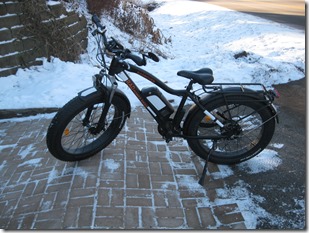
IMG_9575 Page forward to December 2018. I’m 70 and the only big moment in life I’m anticipating is my next bowel movement. No kids on the way and no demanding, unrewarding, dangerous as hell job to worry about. My grandson gave me his fairly worn-out eBike earlier this winter and I just got it back on the road. 

I bought a new winter helmet, since my usual bicycle helmet is colder than wearing nothing and isn’t really much protection. When the mailman delivered the new helmet, I had a bunch of normal errands to do and a bike ride on a 38oF December day seemed like the perfect excuse to go for a ride. I put on about 12 miles bombing around town and enjoying both the ride and my new much warmer gear (including some Bar Mitts I picked up at Red Wing Bicycle while I was downtown). Just to put some more miles on the battery and see what kind of range the bike had hauling my lard ass around town, I headed out the Cannon River Trail toward the Anderson Center at the west edge of town. I came to the gate that blocks all traffic except fat tire bikes (like mine), cross-country skiers, and hikers and scooted between the bars on to the trail. 

IMG_9591I made it about 30’ on the partially melted slush and the front tire zipped out from under me and dumped me face-first into the road. The slush was soft and slippery, but didn’t provide any buffer between me and the asphalt path. If you look at the middle of the front of the helmet, you’ll see the nice new dent I put in my nice new helmet on its first day on my head. Once again, I was knocked punchy for a few moments, but not unconscious this time. 
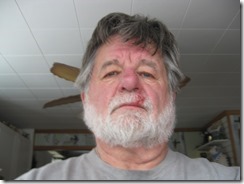
IMG_9589Once again, I punched a hole through my lip, but this time it was with a tooth. Once again, I coated my coat, pants, and bike with blood, but the hole was normal and self-healed after a couple of hours. Weirdly, it leaked saliva all over my lip for a couple of days, but it didn’t swell up all that much and while it pretty much squashed any whistling I might have wanted to do it wasn’t that limiting otherwise. No serious kissing, please. I might have been able to whistle through the hole before it closed up, but I didn’t think to try. Too late now. 

I wouldn’t have been out there on the snow if I hadn’t had the helmet, but I’d have been out there sometime this winter. You just have to ride snow sometime if you are going to live in Minnesota and be a biker. Once again, a helmet kept me from bashing my tiny brain out.

Jun 11, 2018

What it all Means

Ever think about that butcher's chart Icon plastered all over the Airframe Statistic? Your first thought should be how many first impacts occur to the areas of the head unprotected by all helmets that are NOT full face: 45%. Those ridiculous things I can only describe as “toilet bowl helmets” add another 12% of unprotected area over traditional 3/4 coverage helmets. I’m not kidding when I say, “That is not a helmet.” It is barely a hat.

Aug 14, 2017

#152 The Little League Dad Society

All Rights Reserved © 2016 Thomas W. Day

We've all witnessed the "little league dad" syndrome and some of us have suffered that arrogant, egotistical, under-achieving fellow personally. Some of us have even been stuck with little league dads and moms. Way back in 2014 (I Hate Racing #155 April 2014), I made my personal take on watching little kids on motorcycles pretty clear, "When a stadium motocross is broken up (too often literally) with a bunch of 8-year-olds plodding around a motocross track, smashing into each other and the track obstacles, I have to be somewhere else. I can't watch." Even worse, when I end up following a dad on his bike and his kid dangling from the back--feet a few inches from reaching the passenger pegs, in minimal clothing, and an ill-fitting helmet--I have to find another route to where I'm going. I've seen dead and mangled adults and I don't like it much, but I can deal with it. I'd just as soon live my whole life without ever seeing a dead and/or mangled little kid. I'm afraid I'd never be able to get that image out of my mind. I saw a dirt bike foot-peg-gutted high school kid, 40 years ago, and I'm still stuck with that image as if it happened last week.

I wonder how many parents have digested the real message behind the Will Smith movie, Concussion, or the book it is based on, Mark Fainaru-Wada and Steve Fainaru's League of Denial? As one of the doctors in the book said, "We're exposing more than 1 million kids to early-onset brain damage, and we don't know yet how to prevent it." Well, we know there are a lot more than "1 million kids" exposed to this because he's just talking about football. Between baseball, hockey, soccer, motorcycle racing, and a culture that tells kids they can knock each other around like punching bags without consequence, almost half of our kids are exposed to early-onset brain damage (resulting in chronic traumatic encephalopathy or CTE) on a regular basis. Another sports-related concussion researcher said, "If only 10 percent of mothers in American begin to conceive of football as a dangerous game, that is the end of football." Obviously, the possibility that 10% of American mothers don't "conceive of football as a dangerous game" pretty much proves that there are a lot of clueless mothers out there. Anyone who has played football for more than one afternoon knows it's a dangerous game. However, until recently we didn't know how dangerous. CTE has been found in the brains of 18 to 21 year old football players and the leading neurological researchers are now recommending that "kids under the age of 14 should not play collision sports as they are currently played. We believe they should not be playing tackle football." Likewise, it's pretty obvious that kids under the age of 14 should not be racing motorcycles. It's a well-known fact that when you're racing off road, "if you're not crashing you're not riding."

Peter Lenz, center, poses with mechanic Will Eikenberry, Dylan Code, Misti Hurst, and Keith Code. Lenz died at Indianapolis Motor Speedway.
Of course, this is an issue where following the money gets to core of the problem. Danger is why we like these high risk sports: football (394,350 injuries in 2012 with an average of 12 deaths per year for the past 25 years), soccer (172,470 injuries in 2012), baseball and softball (119,810 and 58,210 injuries in 2012), basketball (389,610 injuries in 2012), hockey, volleyball (43,190 injuries in 2012), wrestling (40,750 injuries in 2012), gymnastics (28,300 injuries in 2012), field and track (24,910 injuries in 2012), and motocross and road racing (for which there are no reliable statistics). Hell, we've even figured out how to make cheerleading dangerous (37,770 injuries in 2012). And there is a lot of money to be made (the NFL's 2014 revenue was $7.24B) exposing young athletes to death, disability, and damage to their long term mental health. However, we're just getting started with learning about brain damage and the fact that 76 or 79 studied NFL player brains found evidence of CTE hasn't sunk; especially NFL players and their families. Regardless, you would have to be delusional to imagine that motorcycle racing doesn't have these problems. The sad case of ex-NASCAR racer Fred Lorenzen is probably the first shot fired in motorsports and I suspect there is a lot of hidden damage out there in race cars, motorcycles, and every other contact sport. Now that (a few) doctors know what to look for, a lot more cases will be popping up.

The big sea change here isn't that we are surprised that long term consequences result from injuries. We expect knee, hand and arm, shoulder, and even internal injuries from motorcycle racing that will hamper the ex-racer later in life. Racing is dangerous, get over yourself, right? My hip replacement was due, according to my orthopedic surgeon, to "use and abuse" and genetic factors. Racing and riding off-road motorcycles would be major contributors to that use and abuse. I wasn't surprised and I haven't once looked back and wished I'd not ridden motorcycles when I was young and made out of "rubber and magic." The big change in attitude should come from the knowledge that "getting your bell rung" can have long term consequences to your mental health: resulting in CTE which is "essentially pugilistica dementia (boxer's dementia)" with side orders of memory loss, confusion, impaired judgment, impulse control problems, aggression, depression, anxiety, Parkinsonism, suicide, and progressive dementia. If you know your kid is being exposed to chemicals that could result in those symptoms would you keep him or her in that environment?

We use, semi-rationally, to justify risk is the associated reward. Those of us who chose to ride motorcycles, with some understanding of the risk we're accepting, have a collection of rewards that we believe makes the risk acceptable. The problem with this new knowledge is that the information is being aggressively repressed by the people who make the most money from these sports. In the case of football, the NFL has done everything possible (like Big Tobacco) to squash research and evidence that head trauma can lead to long-term cognitive problems. By "everything" I mean everything from creating bogus "research" to ridiculing researchers in public media to suing people for slander. I suppose murder hasn't been on the table, but you never know. Currently, their big argument has been that it's not "certain" that head banging is the cause of CTE. Since we're not absolutely positive that whacking on a kid's skull causes CTE, we don't have to stop it. Drug and chemical companies have used that bullshit argument for being able to continue polluting water, air, food, medicine, and the entire planet for a century. A more rational society would require the polluters to prove they aren't doing harm before they are allowed to do whatever godawful thing they want to do, but humans are mostly irrational. Maybe we're all brain damaged and it's too late to make any difference for the species?

In the meantime, I think parents should seriously reconsider the risk their children are taking for whatever weird cause they've used to justify putting a little kid on a motorcycle and putting that kid on a race track. Ten years ago, you could excuse this behavior with "it's not a problem, he'll shake it off and be ok tomorrow." Today, the evidence is good that not only will that headache and loss of memory stay around a while but it might become a whole lot worse in 30-40 years.

 MMM #183 May 2017

May 31, 2017

A Smart Helmet

The question is, would you wear a smart helmet? Another question might be would you buy one? But here’s an opportunity to go one step further and build your own:

Protect Your Smarts, Build a Smart Motorcycle Helmet

Aug 17, 2015

#120 That Is Not A Helmet

http://www.amazon.com/Geezer-with-A-Grudge/dp/B007RPQJ24

All Rights Reserved © 2013 Thomas W. Day

Everybody is getting on the "motorcyclists ought to be wearing helmets" bandwagon. MPR did a segment a few weeks about about the burst of motorcycle deaths in early 2013 and how few of the dead and buried were wearing "helmets." One of the local television noise generators repeated that theme and "moderated" the common sense recommendation by interviewing someone from ABATE spewing their tired "everyone just needs to look out for us" and "training is the answer" song and dance. For once,

ABATE and AAA were on the same page in that spring death-match propaganda blitz. They both quoted the same statistic that reported "wearing a helmet in a crash reduces the risk of death by 35 percent and the risk of brain injury by 67 percent." ABATE added the word "only" to each of those numbers, attempting to prove that helmets didn't really do much toward making motorcycles less suicidal. Sometimes, I'm not sure whose side those guys are on.

AAAhelmetAAA's front section AAAAdvice article ("Motorcycle Helmets Save Lives") included the picture at right. I see that as a failure to communicate. That silly looking lid is not a helmet. It barely qualifies as a hardhat. It's possible that useless baseball cap might provide some protection if a cup of crushed ice were dropped from a second story window and it landed squarely on top of the rider's head. Not likely, but possible. The chances that a pudding bowl helmet will save your life, your consciousness, or your pretty face is pretty predictable, though.

helmet-impact
It should be pretty obvious that a beanie helmet is good for about 20% of the impact that will coming your way when you hit the asphalt. If we wanted to be overly-optimistic, we could add the 19.3% of the forehead hits to the protected area, but I do not feel that is realistic. For example, Mr. AAA Douchebag's helmet at left makes a special effort to show his shiny forehead so that his admiring fellow douchebags will know who he is. That exposed area and the edge of the helmet above it provides plenty of leverage for the sliding surface to pull the helmet up and, possibly, away from that critical and fragile area of the skull. At least Mr AAA Douchebag has a 3/4 helmet on his pointy head.

gayhelmetGay little biker beanies (Don't get your panties in a wad, girlymen. I mean "happy" or "festive.") like the thing at left are pretty much useless as protection 80% of time when a helmet hits the road. Unless you can figure out how to slide down the road on the top of your head (without grinding through the cheap plastic this sort of cheeseball helmet is made from), you might as well be wearing a bicycle helmet (another useless piece of mal-designed "protective gear"). This kind of hat is a designer statement, like high-heeled red shoes. It is not armor. Obviously, biker beanies automatically go with biker face (see douchebag at left, again) and there would be no point in spending all those hours in front of the mirror practicing your biker face if you were going to wear a real helmet and be a real motorcyclist. How would anyone know how serious you are if they can't see your scowl?

I have no idea what percentage of helmet wearers are wearing this kind of crap, but when I see the words "Harley Davidson," "motorcycle death," and "was wearing a helmet" in the same news report, I automatically assume this silly shit is what the cops included in their crash report as a "helmet." If I haven't made myself clear by now, I do not consider anything of the sort even close to a motorcycle helmet. The sound of blubbering, poorly-tuned tractor motors naturally ties to either no helmet or awful helmets and . . . death by motorcycle. On the rare occasion I see a hippobike rider wearing a real, full-face helmet, it always causes me to do a double, or triple, take. Exposing my natural prejudices to the air of honest admission, it also automatically forces me to re-evaluate all of my preconceived notions about Harley owners. "If the guy is wearing real gear, is it possible his bike is not garage candy? Probably. Can I imagine that he rides it to work and for general transportation? Probably. Damn. Now where do I pigeon-hole this dude?"

I realize that nobody dresses to impress me. I don't even try to impress me. But I suspect I'm not the only motorcyclist who has a similar check-list. Even more important, you should know that your designer hat is not a real helmet and it will more than likely be useless in a crash. You might imagine that you're not going to crash and won't need a real helmet, anyway. I suspect those dead folks the media clowns were talking about this spring didn't plan on dying, either. Plan for the worst, hope for the best.


Jul 6, 2011

Failed Another Test

I can't do this with either of my dual sports, so I clearly bought the wrong bikes.

Jun 23, 2011

Asphalt Wars

This past weekend, one of the nicest people I've had in a motorcycle class took a hard spill near the end of the course. She entered a curve a little fast and decided to apply brakes while the bike was leaned over. The bike dropped into a lowside so fast that she didn't even have time to get her hands down to cushion the fall.

[This guy demonstrates the crashing "technique" pretty well.]

Unfortunately, our student was poorly protected by her gear. She really tore up her chin with a face-plant and her eye protection (sunglasses) caused significant bruising and abrasions to her right eye. Her 3/4 helmet provided about 3/4 protection, but since face plants account for 40-70% of injuries and impact points in crashes (depending on whose statistics you use) that description is misleading.

For me, her crash was harsh reminded of how unforgiving nature is. I haven't seen someone go down that hard for a few years. She was probably going about 15mph before braking, so her impact speed was no more than 10-12mph. The front tire slid out so quickly, she didn't even know she was in trouble until she was inches from the ground before reacting. She hit face-first, followed by a hard twist to her back, and a hard bounce across the asphalt where she lay still on her back for a few seconds. During that second bounce, her head was about 2' from the ground before coming back to earth hard. She tried to get up, failed, and lay back down with some muscle twitching before going still. The other coach and I signaled for the rest of the class to shut down and we ran for her. The other coach beat me to her by yards and he kept her still while I shut off her bike and moved it away from her. She was coherent but seriously in shock and bleeding. We patched her up, as best our medical kit allowed, and got her back to the trailer to take stock. She is a nurse and provided considerable assistance in her own care. She is tough and practical, so it really helped that there was absolutely no hysterics on her part. I was probably in less control than the actual victim. My co-coach was clearly the better care provider of the two of us.

A few years back, a couple of days before a long trip, I crashed my bicycle at about 2-5mph and shredded my right forearm. That incident was a reminder of how important a little gear can be, even at low speeds. Last weekend's crash was another wake-up call. The side and back of her helmet was rashed deeply. It is entirely possible that she would have been dead or seriously injured without that helmet, but it's also true that she would have been unhurt with a real helmet. Other than the head injuries, she had some minor scrapes on her arms and one shoulder. If she'd have wanted to continue the class, she could have without the head injuries.

Regardless of the pseudo-statistics the anti-helmet crowd blows around at us, the overwhelming majority of motorcycle deaths are due to head injuries. Not wearing a helmet is evidence of ignorance and foolishness and nature abhors a fool (the universe is full of vacuums, but fools don't live in a vacuum for more than a few seconds). Two of the three motorcycle deaths I have witnessed would have been prevented by a helmet. I suspect I just witnessed what would have been a fatal crash, but instead it was turned into painful but minor injuries by a helmet. A real helmet would have eliminated all but the slightest of those injuries. Motorcycle gear would have made the crash into a non-event. AGAT, folks. Wear it or pay the price.