Showing posts with label traffic. Show all posts

Oct 30, 2018

More Autonomous Problems to Solve

m.i.tsmartcarchoicescolo01"Should a self-driving car kill the baby or the grandma? Depends on where you’re from" poses a pretty funny question for the ethics department of autonomous car companies in this Technology Review article. Of course, if you are a half-decent motorcyclist there is at least one more option in their example picture; go off road and avoid them both. And what the hell is a baby doing crawling across a road in the first place. Maybe the best solution is to target that kid’s parents. They clearly should not be reproducing.

scenario1_0Another scenario from the article has the driver deciding whether to kill five jaywalkers or one. I say use the logic Fat Freddy’s cat’s cockroach general adversary used: “We got millions more where they came from.” It’s not like the world has a shortage of people or jaywalkers. If you want to march across the street against the light,e44e6fab0ed86e1eebe59fbb55e672e1 into traffic with a quartet of nitwits, I think you should enjoy the consequences.

Sarcasim, cynicism, and grumpy old man-ism aside, the above scenario is going to become far more common. We’re already living in a time when large numbers of nitwits walk into traffic concentrating on their cell phones, assuming the world is going to look out for them. Autonomous cars are going to bring a level of false security and confidence to that breed of non-sustainable human that will make the above scenario seem ordinary.

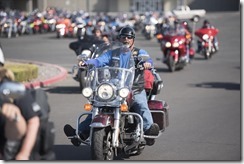
Likewise, when that ethics-challenged autonomous vehicle comes upon a parade of pirates or bicyclists(https://www.youtube.com/watch?v=rmTHk3sxSUA), go for the middle. nitwit paradeTake on the bigger issue—too many stupid people in the gene pool—and do the world a favor. Yeah, I know. It has been a long frustrating day and I need a whiskey to top it off and mellow me out.

Oct 2, 2017

Revolting, Revolving Roundabouts?

Roundabout ProposalBecause I’m an idiot, I tossed my name into the hat last summer as a Red Wing City Council candidate. One of the things I learned about my fellow Red Wingnuts during the election cycle was that lots of them are terrified of roundabouts. Many more are terrified in general. However, we now have two roundabouts in town and while they seem to be doing the job of reducing traffic hangups and routing vehicles through intersections without much trouble, they are still unpopular with a fair number of drivers and bikers (Motorcyclists are fine with them.). The myths around the hazards of roundabouts are incredible: truck drivers hate ‘em, bus drivers hate ‘em, motorcyclists hate ‘em, they kill birds . . . wait that  last one is windmills, sorry.

Having taught MSF classes for the last 16 years, it’s not hard for me to imagine why roundabouts are scary: merging is not a Minnesota driving skill. In fact, Minnesotans are practically incapable of competently merging under any circumstances and roundabouts require . . . [gasp] merging compence.

There are several incredibly simple merging opportunities in the the MSF’s Basic Rider Course (BRC) and the Intermediate Rider Course (IRC). Watching students fumble their way through those merging moments is always painful and I almost kill my voice yelling, “don’t stop, keep moving” a few hundred times every class. Nothing I do will prevent Minnesota drivers from becoming overwhelmed by the idea of a moving merge, though. Every class provides me with a frustrating moment of watching one after another of my students come to a staggering stop, jamming up the exercise, and wreaking another teaching moment.

Likewise, watching Minnesota drivers try to merge on a freeway onramp is flat-out painful. For a goup of mediocre drivers who are totally confident in their ability to tailgate any sort of vehicle at any speed for any number of miles under all situations, figuring out a zipper merge appears to be impossible.

I like to tell my BRC students, “If you merge like that in Southern California, they will run over you, back up and empty their weapons into your body, and run over you again as they abandon your lifeless body. Honestly, I don’t know if that is true any more. It’s possible that the whole country has abandoned competency. Regardless, I’m here to say I love roundabouts because I despise stop signs and hate stop lights. The Mythbusters did a pretty cool test on the efficiency of roundabouts vs. our clown car 4-way stops. You guessed it, Europe wins again. Statistically, they are a dramatic improvement over 4-way stops: “The Minnesota Department of Transportation says that roundabouts are safer and produce better traffic flow. Roundabouts show an 89 percent decrease in fatal crashes, a 74 percent decrease in life-altering injury crashes, and a 39 percent decrease in all crashes.” I believe it.

May 24, 2017

Crash Analysis

Take a look at this video and measure yourself and your take on this crash against the incident and the opinions expressed in the comments section.

It’s probably more than a little obvious that I put more than a little blame on the biker (I hesitate to call him a “motorcyclist.”) because his “braking” attempt was so lame and his assumption that the job of everyone in the world was to be looking out for a speeding motorcyclist. I used to see this kind of oblivious-to-reality lane splitting in CA all the time and, like this guy, they were astounded and hysterically angry when ever their mindless riding tactics knocked them on their asses. I'm a little surprised that I don't see this kind of crash every day in Red Wing. Pretty much ever rider on this kind of lame-ass machine is incapable of the most basic evasive maneuvers.

Feb 8, 2013

Now This Is Funny

The headline, "Commuters' wasted time in traffic costs $121B" flashed across my Comcast "news feed" today.The opening paragraphs of the article read, "The nation's commuters are adapting to increasing traffic congestion by building delays into their schedules, but at a cost of $121 billion in wasted time and fuel, according to an annual study of national driving patterns released Tuesday.

"The new report from the Texas A&M Transportation Institute found that Americans wasted an average of $818 each sitting in traffic in 2011. That also meant more carbon dioxide entering the atmosphere.

"The worst commute in the country? Washington. Commuters in the nation's capital needed almost three hours for a trip that should take 30 minutes without traffic, according to the report. That compares to the least congested city — Pensacola, Fla. — where commuters needed only nine extra minutes.

"On average, Americans allowed for an hour of driving time for a trip that would take 20 minutes without traffic. The total nationwide added up to 5.5 billion additional hours that Americans spent in their cars during 2011. . . "

 That's a big surprise? Seriously? Where do these birdbrains live where they suddenly realize that Americans spend a good bit of their lives sitting in stalled traffic? This was old news in 1975.

We, of course, have a solution: motorcycles and lane-splitting. Move 10% of the daily commuters on to motorcycles and let them split lanes and keep moving and the bulk of the congestion problem goes away.

Of course, the problem is sort of fixed by the crashed economy. The worst year, so far, for congestion was 2005. Maybe the economy will just stay tanked and we'll all go back to walking from overpass to sewer tunnel. The brilliant researchers who pointed out this barely-known information said this all means the nation should think about "implementing transportation improvements to reduce congestion."

Dudes, we're here to help. Just let us.

Last year, traffic paralyzed Americans fired off 2.9 billion gallons of gasoline stuck in traffic. That's an improvement from 2005's 3.2 billion wasted gallons. More efficient, more mobile motorcycles could solve a lot of this problem, but I don't see it happening anytime soon.

Jan 12, 2013

So Many Things Explained

Being the media moron I am, I drove to downtown Minneapolis this morning for the Progressive Motorcycle Show. It's easier to say I did it than to explain why. A lot about the motorcycle business depresses me rather than providing a winter perk-up. The average age of the PMS spectators must be close to 100. The average weight is a little scary, too. (I mean of the motorcycles, of course.)

I've been going to the annual motorcycle show for almost 25 years. My first then-Cycle World Motorcycle shows were in LA, followed by 5 years of Denver shows before I moved to Minnesota in 1996. Back in the 80's, there was a fair amount of excitement before the shows because the manufacturers didn't pre-promote their new bikes in the media for a year before we actually got to see them. Also, there were a fair number of actual new models every year from all of the manufacturers. Since the turn of the century, the show is mostly about the new colors on the old bikes. Every couple of years, one or two new models might appear but, mostly, the bike show is about paint jobs and chrome and a half-dozen companies selling eye glasses cleaner.

This year's trip downtown was the most "interesting" part of my day at the bike show. For starters, I hate driving in Minneapolis. The city was designed by a band of illiterate professional wrestlers who took advantage of a sale on one-way street signs and randomly decorated the city with their bargain signage. Between the city's planned disorder and a variety of closed-for-repair streets and the usual Minnesota inability to move more than 3 cars through a 2 minute stop light, it took me almost 50 minutes to drive 15 miles to the convention center, which put me in the parking lot about 10 minutes before a meeting at the center was supposed to begin.

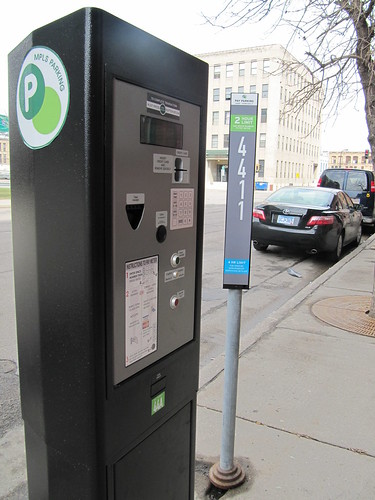
Like most badly managed cities in the country, Minneapolis has farmed out parking meters to a private company (in exchange for a little up-front cash to pretend-balance a previous year's budget). The new meter system consists of numbered posts with central parking ATM where you can use a credit card or cash to buy time. The software in this system is typically user-hostile and about as cleverly designed as most of the state's websites.

With ten minutes to spare, I lucked out and found a space right next to the meter-ATM. However, there were four geezers in pirate outfits surrounding the meter and by the time I got out of the car, they were joined by three other geezers (all wearing Hardly gear). The scene resembled a pack of chimps surrounding a computer that smelled like bananas. Twenty minutes later, I'm freezing and not one of the Harley chimps has figured out how to pay for their parking. Two have given up and gone back to their cars for heat. I'm joined by a young guy dressed in shorts and a tee-shirt. He seems to think that his lack of planning should put him in front of me in the line of deranged monkeys, but he's disappointed. Twenty minutes later, the last of the Harley chimps either figures out how to pay for parking or leaves willing to accept a ticket, I don't care which.

I pay for my space and run to the convention center, arriving at the Victory booth 15 minutes late. No one is there and I didn't see anyone from the magazine in the 3 hours I spent prowling the displays and taking pictures. I did see more Harley chimps than I usually have to tolerate in a decade and relearned that those characters can't walk any better than they ride, drive, or decipher parking meters.

Jan 10, 2013

Another Lane Splitting Argument

Not gonna happen here, but it should:


While lane splitting is practical, necessary, economical, reasonable and safe, there aren't enough motorcycles on the road in the US (even CA or the rest of the west coast) to make legislation worthwhile. Like the foolish "Start Seeing Motorcycles" campaign, there needs to be a lot more motorcycles on the road before anyone will care about making motorcycle commuting more efficient. Who cares how easy and efficient it could be for people commuting on unicorns or Pegasus? There is no such thing, so passing laws to make life easier for imaginary transportation systems is silly. Likewise, with 0.001% of the traffic on the road being motorcycles, who cares if we get there faster?

I disagree with their position on riding with a finger or two on the front brake. Braking is the right response only occasionally and can be catastrophically the wrong move more often than not. Preparing yourself for the wrong move with poor technique is a dumb idea.

May 24, 2012

Motorcycles in Traffic

A recent TML (Transport & Mobility Leuven NV, a Belgian transport specialist organization) study argues that if one-in-ten motorists converted to motorcycles, traffic flow would be substantially improved in Europe's already-more-modern transportation system. In an article titled "Why commuting by motorcycle is good for everyone" in the London Telegraph, Kevin Ash explains the conclusions of the study and does his bit to promote motorcycling, lane sharing, and filtering to a society that has already joined the 20th Century (You read that right, the US hasn't even evolved to the last century's standards, let alone the current one.) and encourages all of those activities. Ash's article refers to substantial reductions in commuting time, vehicle emissions, and efficiency due to the estimated effects of increased (to 10% of total traffic) motorcycle use. I was not able to find the original study, so this is all second hand information. (Thanks to Ian for the heads-up on the study.)

Unfortunately for US motorcyclists, the US EPA would not be able to confirm either the increased inefficiencies or the lowered pollution contribution of motorcycle use in any state other than California; and pollution numbers don't look better by much, even in CA. Part of the problem is the EPA is hobbled by rules that force the agency to look at pollution-per-gallon of fuel used, rather than emissions-per-mile driven. This idiot rule limits the efficiency of any US-sold vehicle, motorcycles included, since manufacturers are forced to work at eliminating fuel exhaust output in unrealistic conditions (on a dyno with no regard for miles traveled). The oil companies have to love this (and, undoubtedly bought the necessary politicians to keep this stupid rule in force), but the rest of us suffer 1960's efficiency vehicles to keep oil use and profits high. As always, we have the finest government money can buy.

Nov 18, 2011

Why I Pulled You Over

All Rights Reserved © 2009 Thomas W. Day

"Do you know why I pulled you over?"

"My best guess is that I didn't put a foot down at the stop sign." (And, of course, you're trying to meet your quota without expending a lot of effort.)

"That's right. You didn't come to a complete stop back there."

"Yeah, I did. I even rolled backwards a little bit waiting for traffic to settle down."

"There is no way you can come to a complete stop without putting a foot down."

"I can." (If you were paying attention, you'd have noticed that I was stopped and balanced for a few seconds before we started this inane conversation.)

"I don't care about those motorcycle stunts. Tell it to the judge. I'm a police officer and I know you can't come to a complete stop without a foot on the ground. I need to see your license, proof of insurance, and registration."

So went my first minutes in Linton, North Dakota. A minute was all I'd planned on spending in Linton, but that turned out to be a pipedream. While the cop went through his routine of checking me out for warrants and past evil behavior, I thought about all the conversations I've had with cops and judges over the years regarding the things "you can't do on a motorcycle." Considering all of the false information the law has to work with regarding something as well-documented as motorcycling, it's not hard to understand why the legal system is so incompetent when it comes to dealing with complicated things like treason, corporate and bank fraud, identity theft, environmental catastrophes, and insider trading.

Anyone who's ridden or watched observed trials knows that really good riders (not me) can spend a good bit of time not moving without putting a foot to the ground. At a 1980's US national enduro, I caught up with a trio of US pro riders at a check stop. They were sitting with a leg swung over the tank, having a conversation, with no feet on the ground, and no kickstands down; just showing off their balance while waiting to get their timesheets punched. I have never been able to do that or anything close to that. But, if I'm not concentrating too hard, I can stop and stay balanced for a few seconds while I inspect intersection traffic. I feel safer and more in control of the bike when my feet are on the pegs than when they are on the ground, so I try to stay in that position whenever possible.

I did not end up receiving a ticket in Linton, so I shouldn't look that gift horse in the mouth. I'm old, well documented, wearing Minnesota Safety Center patches on my gear, and a likely candidate to be sent off with a warning. Your North Dakota small town cop mileage may vary, especially if you don't when to shut up or you are young or if you don't look familiar and harmless.

The point is, the law doesn't often reflect what the MSF trainer website calls "best practices." The law is intended to provide "guidance" for cops and beginning riders. Riders (and drivers) looking out for John Law and worrying about what might be called illegal behavior probably causes as many crashes as it prevents; if it prevents any at all. I know that every time I see a cop I wonder what half-assed, unwritten or badly written, non-existent micro-law I might be breaking and it makes me nervous enough that I make foolish mistakes in attempting to avoid whatever weird thing I've heard cops are pulling bikes over for this week. Because of their unpredictability factor, I put cops pretty high on my list of life-threatening highway hazards.

Of the instances I can remember, in my 45 year motorcycling career I've been stopped and ticketed (or threatened with tickets) by cops for:
  • "Reckless driving"; standing on the pegs while crossing obstacles (this has happened more than once),
  • "Failure to keep in proper lane"; moving in the lane to increase visibility or to avoid slick spots or pooled water,
  • "Careless or negligent driving"; not using hand signals along with the bike's turn signals or turning right on red when traffic is oncoming, about a 1/2 mile in the distance (right on red was legal, the cop just thought I was being too "aggressive"),
  • "Signals; method required"; not signaling while merging into freeway traffic (in a state where motorcycle turn signals are not required and . . . is there any other option other than turning left into the traffic lane while merging?)
  • "Driving too fast for conditions"; 3mph over the posted 65mph and at least 10mph under the velocity of the rest of traffic,
  • "Parking improperly"; not parked parallel to the curb, but with the back tire against the curb and the bike pointing out toward the street,
  • "Windshields to be unobstructed; wipers required"; seriously, I was wearing a 1970's Bell Motostar full-face which the cop deemed "too restrictive" for proper vision.

Motorcycling and bureaucracies combine as poorly as oil and British engineering. Back in the 70's, I argued with a Nebraska DMV employee that the state's license test advice for crossing railroad tracks or for hitting a pothole was blatantly wrong and downright dangerous. For that matter, the Minnesota motorcycle test's "best" lane position advice is questionable. In the 90's, Colorado's motorcycling pamphlet offered some pretty funny advice regarding the use of the front brake. California's motorcycle handbook might still have some really dumb advice about merging into fast-moving freeway traffic. In fact, the 1980's California DMV advice would regularly get you a ticket for "merging below the speed of traffic." This list could go on for hundreds of pages. [Feel free to contribute your experience with idiot motorcycle traffic laws or equally goofy enforcement.]

I consider all of this to be examples of bureaucratic incompetence, ignorance, and/or abuse of authority. Fortunately for me, so did the traffic court in every instance. Because I've had such erratic "luck" with law enforcement, it's hard not to keep two eyes out for official traffic traps and no eyes on other traffic and road hazards.

So, when I see one of those "public service" announcements that claims the HP or local cops are working to reduce crashes, I suspect the intent. If officialdom really wanted to save lives on the highway, they would do these three things immediately:
  1. Make the driving exam about 5000% more difficult and quit handing out cage licenses in Cracker Jack boxes.
  2. Drop the hammer on tailgaters; one rear end crash and you're a bus rider for life.
  3. Detach cell phone use from driving. If the phone is moving more than 3mph, disconnect the call.

All that "get tough" marketing is nothing more than justification for activity that doesn't contribute much to public safety. Once you put the fools into the flow of traffic, pretending to be protecting them with nutty traffic laws is cynical and opportunistic.

On the other hand, at the Isle of Man:

Jul 25, 2011

Lane Sharing Study


Steve Guiderian has published a study, "LANE SHARING: A GLOBAL SOLUTION FOR MOTORCYCLE SAFETY, which compares the safety record of the only state in the US that allows traffic filtering and lane sharing with the abysmal record of the rest of the country. This is, as far as I know, the only study that uses data instead of emotion and speculation to look at the safety of this traffic management tactic. His conclusions found that "California does have a lower rate of fatal rear-end motorcycle crashes when compared to other similar motorcycling states. This figure also shows that the rate of fatal rear-end collisions in California is also lower than the national rate, which includes many states with a limited riding season and fewer motorcycle riders." Guiderian also found that "California has fewer motorcycle deaths involving a motorcycle rearending another vehicle, and significantly fewer deaths from a motorcycle being rear-ended by another vehicle."

One aspect of lane sharing that Guiderian does not address is the fact that lane sharing increases the viability of motorcycle commuting, which would increase the visibility of motorcycles in typical traffic which could also result in an improved motorcycling safety record. If you have ridden in California, you know there is no downside to lane sharing. Superstition, fear of the unknown, and conservative timidity is all that prevents all 50 states from allowing lane sharing. Claiming safety as one of the restraints is unbelievable.

Feb 25, 2011

The Great Fraud

Have you ever sat at a stop light cursing the morons who "timed" that appliance so that, no matter which direction traffic is coming from, traffic is impeded by the light? Have you ever wondered why a stop light was necessary at all at a particular intersection? Are you old enough to remember "yield" signs? Do you remember how well they worked? This British study proved that stop lights are, in fact, the gigantic waste of energy that many of suspect they are. In a world of vanishing resources, increasing fuel costs, and more sophisticated vehicle-driver communications systems, stop lights are as archaic as buggy whips.

For that matter, stop signs are a historic hang-over of when public employees had near-infinite power to make irrational decisions and nobody questioned their "expertise." Today, at least half of the country seems to believe that government officials are incapable of doing anything right. I wonder why that opinion hasn't spread to the gross oxymoron "traffic control?" Minnesota is even dumb enough to put stop lights at freeway entrances, creating gigantic lines of smog-spewing vehicles at every rush hour intersection, slowing freeway traffic to a crawl, training drivers to merge incompetently, and wasting fuel on an irresponsible scale. We experimented, a few years back, with shutting off the lights. Found that traffic was unaffected in any positive way by the existence of the lights, and . . . the lights were turned back on.

That's not entirely true. MnDOT's 8 week 2000 study actually concluded that ramp lights provided all sorts of traffic enhancement value. So, they turned them back on, sort of. After making gigantic claims about the state's light-controls, MnDOT reduced the operating time of the lights, sped up their operation, and effectively eliminated the lights' purpose during rush hour. Now, the only time the lights hold you up is when traffic is low and the lights are a complete waste of energy. 

A few months back, I had the pleasure of driving through a small Minnesota town that had not been hit with the moronic neighborhood stop sign bug and, instead, had a well-placed collection of yield signs in their place. Neighborhood traffic flowed smoothly. People were considerate and I felt like I'd stumbled on to civilization in the midst of a culture of ignorant savages. Letting regularly timed lights control irregular traffic flow is lazy, ignorant, and inefficient. It's time the damn things are torn down and the department that put them up is disbanded.

Jul 27, 2010

Highway IQ

All Rights Reserved © 2006 Thomas W. Day

I stare into every car, truck, van, or SUV that shares the roadway with me. Women probably think I'm checking them out. Sometimes there might be an element of that. I'm human. I stare at guys just as often, though. No matter what they think, I'm not checking them out. I am stereotyping them, though. I know that's politically incorrect, but there it is. Like the marketing gurus say, "impressions are everything." Or "image," something like that. I don't have time to get to know these people. I'm not even interested in doing so. I just want to know, as quickly as possible, what kind of hazard they present to me. Cops call this "profiling." Lawyers get really upset at this practice. So sue me.

The average person has an IQ of 100 points. I grant that and start from there. My built-in point system adds or subtracts from that number almost as quickly as I can make out the interior of the vehicle. From there, I either disregard the driver, more or less, as a threat or apply evasive tactics to get as much distance between me and the hazard. The dumber the driver, by my IQ accounting system, the quicker I want to escape their sphere of disaster influence. You probably do the same thing, either more or less aggressively than me.

  • Driver is in a 4(or more)-wheel vehicle: -5 points (How smart do you have to be to drive a cage?)

  • Driver is a cop. This class of government official has an inflated sense of driving skill, not reflected in performance. They are prone to make sudden, irrational moves when their radio distracts them. They regularly ignore stop signs and stop lights. They scare the crap out of other drivers, making everyone in their vicinity a little less skilled and attentive: -10 points.

  • Coffee, hairbrush, and/or cigarette in hand: -15 points for each item

  • Driver is tipped at 45 degrees, so that his (always a guy) head is right under the rear view mirror: -20 points (This appears to be a Minnesota thing, because I've never seen it anywhere else, but it always means the driver is drunk, stupid, physically incapable of holding himself upright, or all three. I treat this driving posture as a flashing "beware of idiot!" sign.)

  • Backwards baseball cap, blue hair, cowboy hat, or ski mask on driver's head: -25 points

  • Coffee in face or driver is most often looking in any direction other than the vehicle's path of travel: -30 points

  • Driver looking at self in rearview mirror with hairbrush, coffee, or cigarette in hand: -40 points

  • Cell phone in use or beer in hand: -50 points

  • "Start Seeing Motorcycles" or other pro-biking sticker on the vehicle: +2 points

  • I catch the driver's eyes in the rear view mirror: +10 points

  • After seeing me once, the driver looks again every few moments to see if I'm still there: +10 more points

  • Both hands on wheel, head and eyes in motion: +25 points

  • The driver is towing a trailer full of dirt bikes: +50 points

After I've made the above calculations and classifications, I use a modified version of the David Roth (ex-Van Halen frontman, current-EMT-has-been) crowd intelligence rule. I roughly count the number of vehicles in a 100' distance, front to back and both sides, of the vehicle and divide the driver's IQ by that number. In heavy traffic, everyone is a menace to my safety, almost by logical default. I'm the least likely vehicle on the road to harm the passengers of another vehicle, so I'm in the logical space for an escape route for other vehicles.

Just to calibrate your appreciation of my scoring system, an article in Scientific American Magazine once stated, ""Adults in the bottom 5% of the IQ distribution (below 75) are very difficult to train and are not competitive for any occupation on the basis of ability. . . " and "Persons of average IQ (between 90 and 100) are not competitive for most professional and executive-level work but are easily trained for the bulk of jobs in the American economy. . . " That's pretty cold, isn't it? Nature and the highway are cold as the floor of an icehouse. As far as my own survivability is concerned, a web article on IQ gave me the following information about the brainpower behind the numbers and I've added my own "Estimated Driving Skills" column to assess my own risk based on the driver's IQ:

IQ RangeEstimated Driving Skills (Alert Level Color Code)
Below 30Flashing Red: This driver is clearly an unpredictable moron, an outrageous hazard at any speed, expect any damn idiot move from this rolling example of chaos theory. Ultimate alert.
30 to 50Red: Mostly unpredictable, slow-witted, prone to panic and irrational lane changes. High alert.
50 to 60Orange: Unless a slight change in traffic, road condition, or the moon's position relative to the sun occurs, you can probably count on this driver to remain stable. Check for distracted behavior every second or two.
60 to 74Yellow: Loud noises, bright colors, anything sparkly or in motion will distract this driver, but he/she will probably do something mildly predictable when panic occurs. Moderate alert.
74 to 89Blue: Mostly, this driver is stable. Pay special attention to this driver at intersections, on curves, and near fast food entrances. Fairly low alert.
89 to 100Green: Probably not a risk, if anyone else in the above categories is sharing the road, this driver warrants minimal attention. I'd still avoid spending any time in an adjacent lane with this driver.
Above 100Invisible: The chances are slim that this driver provides much risk. Based on past experience, one of these guys will probably be who kills me.

I realize these generalization are culturally "unfair," "biased," and even irrational. They are based on my nearly half-million miles of motorcycling and they are habitual. I constantly and automatically balance my belief that most people are decent and well-intentioned and that most drivers are nuts and "out to get me." My riding state boarders on paranoia, I'll admit. My confidence in my ability to deal with these contradictions varies with the road conditions and my concentration. You'd think that this would take the fun out of riding a motorcycle and it does put a damper on outright highway euphoria, but I'm disinclined to that mental state as you might have noticed. Riding a motorcycle is risky and that's part of the attraction. However, there is a definite line between assuming risk and committing suicide and evaluating the folks I share the road with is part of my risk assessment.