Showing posts with label competition. Show all posts

Dec 2, 2019

How the Cheap Bike Challenge Saved My Retirement

Remember the infamous Minnesota Motorcycle Monthly Cheap Bike Challenge? Probably not. Back in the dark Great Recession days of 2009, the gist was, “Each entrant was to be given $300 and two months to find a bike and prep it for an event that would require the riders to ride an unspecified distance and complete special challenges. Like the International Six Days Trial, the event would test both man and machine.” Mostly, we spent a few weeks (or days, in my case) preparing a junk motorcycle to ride and, then, toss in the dumpster. My bike, a long-abandoned 70’s Honda CB-450, probably should have been left in that garage to finish returning to iron-oxide undisturbed.

There was a moment in my last-ditch attempt to find a motorcycle that had lasting effect on me. A Minnesota Sportbike group acquaintance emailed me that he had the perfect bike for the Challenge: a 1980’s KLR250 with a “new motor.” Turned out, the new motor had been “stored” in a cardboard box under a picnic table in the owner’s back yard for at least a decade. The motor was seized, the gas tank was full of smegma and rust, the wiring was rat-eaten, and the rest of the KLR was a mess. More to the point of this essay, the 6-or-8-car garage the KLR came from was jammed full of motorcycles in similar condition. I don’t think a single bike in that garage was salvageable without major money and time spent. Putting my clueless, rude foot in my mouth, I asked, “Why do you have all of this crap?”

The owner’s answer was, “Tom, when I was a kid I realized that when I sold a motorcycle I spent the money and then I didn’t have a motorcycle or the money. So, I decided to keep every motorcycle I ever owned.” That answer scared the shit out of me. Not that I had a collection of junk motorcycles or ever wanted one, but I did have a similar hoarder fetish for fine and not-so-fine microphones. At the time, I owned at least 50 microphones and I could easily imagine myself owning ten-times that many.

But I wanted to retire and I knew to do that my wife and I would be downsizing considerably from our 2700 square foot 1800’s farm house with an 850 square foot garage and a normal recording studio in the attic and 2 1/2 acres of Twin Cities yard. So a few years later, I made a retirement/downsizing plan: I would sell all but a few microphones; to allow just enough toys for hobby recording projects. Outside of that normal remainder, I’d sell the rest of my collection and put the money directly into my house principle. My end goal was to own our home before I retired.

In the end, I didn’t quite reach that goal, but I did only have $14,000 to pay off from our original $106,000 home loan. I haven’t once wished that I’d have kept any of the equipment, the extra space (we downsized to 1100 square feet and could go normaler), or even the microphones I’d owned since I was a very young man.
Collectors all over the world are discovering that the market for their collections is shriveling. New stuff is consistently better in every way than old stuff and younger consumers are unwilling to pay exorbitant prices for products whose sole intrinsic value is "that it is old.” A couple of my friends are muscle car collectors and they’ve seen the value of their collections practically disappear in the last decade. Obviously, the Great Recession put a hit on a lot of that stuff, but so has a hard dose of reality. Vintage guitars and guitar amps, pro and home audio equipment, motorcycles, dishes and dolls, and all of the other crap that Boomers and their parents collected are ending up in the local land fill.

At least four of the microphones that helped me pay down my mortgage had more collector value than real value. Two were a prestigious Danish manufacturer’s 1970’s instrumentation microphones that I’d snagged in an estate sale for a pittance at least a decade earlier. Their selling price about took my breath away and really took a hit out of that home loan. Likewise, two big German tube mics brought an unrealistic price; especially compared to the price I’d paid for those instruments 40 years ago.

So, if it weren’t for the freak-out I suffered hunting down a ride for the Cheap Bike Challenge, I might not be comfortably retired today in a paid-for house with some cash in the bank. On more thing I have to thank Victor and my MMM editors for my 20 years with the magazine. Not only was it a great ride, but it still is.

Jul 11, 2018

The Market Had Its Say?

Bicycles vs Motorcycles (3)This week, I made the once-every-couple-of-months Twin Cities tour with my wife. Mostly, she had chores and errands to do, but when she stopped at Har Mar Mall to buy art supplies, I snuck out to peruse Barnes and Noble. I got stopped at the magazine rack looking at electric bicycle magazines and articles. After a bit of that, I decided to see what is left of the motorcycle glossy press.

It took a while to find either motorcycle or car magazines. The “Transportation” rack is as far from the entrance and traffic as possible and appears to be barely maintained. Several of the magazines were May and June issues. That was true for the car rags, also. On top of that neglect, a good number of motorcycle “magazines” were actually retrospective “special issues” that could have been sitting on the shelf for months; or years. Along the same lines, a Rolling Stone “special issue” was about Mick Jagger, if that gives you a clue as to the currency of that magazine format.

Bicycles vs Motorcycles (4)On the other hand, the bicycle section was featured under “Sports” and there were a lot of magazines and articles about electric bicycles in both magazines dedicated to electric bikes and the more mainstream mostly-manual powered bike magazines. The big thing here was that there are a lot of bicycle magazines and there is a lot of interest in electric bicycles; for transportation and sport. A couple of the magazines were almost as fun to read as the old Dirt Bike magazine; when it was edited by Super Hunky Rick Sieman. None of the last twenty years of dirt bike magazines have even come close to that high bar. As I suspected, the traditional motorcycle guys are putting a foot into this water, too. Electric Bike Action magazine had a big feature about Yamaha’s new electric bicycle series. To be sure, in true bicycle and bicyclist fashion, there was a lot of incredibly stupid stuff inside those magazines.

Bicycles vs Motorcycles (2)A line that particularly struck me as hilarious in the Electric Bike Action Yamaha article was, “At first we wondered if they were going to sell the bikes at their powersports dealerships. They only plan to incorporate those e-bikes into powersports dealers that already have a bike shop component, and those are few and far between. There’s a big difference between knowing how to work on a motorcycle and and knowing how to work on an electric bike.” That is true, kiddies. Anyone who can work on a fuel-injected, electronic ignition, fly-by-wire throttle-controlled, ABS’d, and state-of-the-art motorcycle will find electric bicycles to be too simple to be interesting. The customer base will lower that bar even further.

Times are changin’ and they are changin’ a lot faster than many expect. Powersports dealers are beginning to scramble for new revenue sources. It’s no stretch to imagine that a dealer who sells a few motorcycles, a few more ATVs, even more boats, and a buttload of golf carts will find a lot of reasons to become one of those “powersports dealers that already have a bike shop component.” A few bicycles on the showroom will cost a lot less than a few motorcycles that can’t be moved at any price. If that’s what it takes to get in on the electric bicycle boom, I suspect it won’t slow many dealers down.

Mar 28, 2018

A Generation of . . . What?

26LONGMAN7-master675Not long ago, an acquaintance in the motorcycle business said that “Millennials are a bunch of coddled wimps and that’s why they don’t ride motorcycles. It’s too dangerous.” Of course, riding a motorcycle is insanely dangerous, but I see Millennials doing dangerous things all the time; on bicycles, skates and skateboards, skis, a variety of surfing toys, rocks and mountains, boats, and even motorcycles in the X-Games. I don’t think the danger is the issue. There is something else going on here.

boomersThat is a good thing, too, because my generation has gone bananas. Between the idiocy of handing billionaires billion-dollar sports stadiums paid with taxpayers money and stupid crap like universities handing out football scholarships to 9-year-olds, it’s clear that the “adults” in our society need to grow up. Obviously, the whole Boomers and Bikers silliness was not a sign that my generation had a lick of sense. They parade their senility through towns like Red Wing as if they imagine nobody would ever think about laughing at their pirate outfits and godawful motorcycling skills. But they are very, very wrong. I’ve been hanging out with under-30 kids everywhere from Red Wing to downtown St. Paul to Pacific Coast Highway and they consistently think these folks and the activity/sport they represent are comedic, at best, and despicable on average. For the last thirty years, Boomers and the industry has done their best to make motorcycling look as ridiculous as possible. The reward for all that silliness is the current non-cool status of motorcycling. Add to it the fact that most small cars are more fuel and cost efficient that motorcycles and you have a perfect storm of obsolescence.

An interesting parallel is the music business, at one end electric guitar sales and at the other the old fashioned record labels and music distribution. The Washington Post published an article titled “The Death of the Electric Guitar” that explained a lot of the reasons why the electric guitar may be an old guy’s instrument. This story should sound familiar, Richard Ash, the CEO of Sam Ash, the largest chain of family-owned music stores in the country, said, “Our customers are getting older, and they’re going to be gone soon.” Or how about this fact, “Over the past three years, Gibson’s annual revenue has fallen from $2.1 billion to $1.7 billion, according to data gathered by Music Trades magazine. The company’s 2014 purchase of Philips’s audio division for $135 million led to debt — how much, the company won’t say — and a Moody’s downgrading last year. Fender, which had to abandon a public offering in 2012, has fallen from $675 million in revenue to $545 million. It has cut its debt in recent years, but it remains at $100 million.” Fender’s weird defense of its business model includes the odd statement, “Ukulele sales are exploding.” Ukes were a brief fad, but not a meaningful shift in popular music. Scooter sales were doing pretty well, for a while, but that didn’t mean much for the motorcycle industry, either.

IFPI_global_fullAt the label end of the music music industry, the business has been so deformed from the gatekeeper format of the previous century that “Gotye created his song ‘Somebody That I Used to Know’ in his parents' house near Melbourne, Australia. The self-produced track reached number one on more than 23 national charts and charted inside the top 10 in more than 30 countries around the world. By the end of 2012, the song became the best-selling song of that year with 11.8 million copies sold, ranking it among the best-selling digital singles of all time,” according to an Elite Daily article titled “How One Generation Was Single-Handedly Able to Kill the Music Industry.” Wimps don’t whip international corporations at their own game. These kids have totally changed the damn game. There has been some yip-yap about the music industry “recovery,” but that is a funny term for seven years of stable gross sales with dramatically changing income sources (see the chart above). Sales of physicial media are about a quarter of their 1999 peak while digital distribution, including direct sales, is growing exponentially.

5-Luxurious-Designer-Electric-Bicycles-Bicicletto-electric-bicycle-2-600x388How does all that relate to disappearing motorcycle sales and declining motorcycle use? I’m not sure, but I think there is a connection. The times and the tools are changin’. My grandson has repeatedly said he would get a motorcycle license before he’d be interested in a car. He would, also, rather have an electric motorcycle than a gas-burner. He’s not alone. Since electric motorcycles are barely making a dent in that market, electric bicycles have really stepped up and are crossing the line between bicycles, scooters, and motorcycles; filling every motorcycle niche from vintage to cafe racer to competitive sports with 50-100 mile ranges and 20-to-40-and more-mph top speeds. Like the early years of the motorcycle, there are dozens of electric bicycle brands and you can buy them everywhere from dedicted high-end botique stores like Pedago to low-end offerings from Walmart.

The music business didn’t die. It moved to streaming media, movie and television soundtracks, and on-line digital purchases. Motorcycles won’t die out, but they will change radically. The brand names we recognize today may be as obscure in 20 years as Whippet, Stutz, Red Bug, Nash and Rambler and Nash-Rambler, Packer, and Oldsmobile. At one time there were thousands of auto manufacturers and there have been at least half that many motorcycle brands in the not-so-ancient history. As this electric vehicle revolution plays out, it’s going to be a survival of the fittest environment and there appears to be little evidence that the current brand names are in any way fit; especially the two prominent suck-squeeze-bang-blow US brands. With some luck, minimal incompetence from both Zero’s managment and the US government, and a few changes to motorcycling’s image and purpose, the US could still be a world player in the future market.

Aug 27, 2017

Running from the Sun

The day before the total solar eclipse, I did what I like to do the most: I took a trip in the opposite direction of everyone else.

About a year ago, our plan was to drive to Broken Bow, Nebraska and camp there the night before the eclipse. Nebraska is expecting 500,000 visitors on Monday. People from all over the continent and world have been staking out campsites since last week. The total population of that state is 1,896,190 and 1.3 million of those folks are in the greater Omaha area and another 285,000 live in the greater Lincoln area. Lincoln is sort of in the path, at least at the 90-something-percent area, but the rest of the towns and villages along that route through the state are barely able to cope with their own shrinking and struggling populations. It ain’t gonna be fun getting into or out of that state on Monday. Nebraska’s roads, away from the Interstate, are poorly maintained and marginally safe at their best: due to unskilled and distracted local and truck traffic. I love US20 across the top of that state, especially as a route to the mountains. Kearney is a town that holds a fair number of fond memories for my family. But on the best, uncrowded weekday afternoon, you can not predict when a trucker will decide to cross the centerline and test your reflexes. Kearney, on it’s best day, could probably put up 500 visitors. Grand Island is long past it’s best days.

So, we (my wife, Elvy, and I) decided to do something different. She’s hot to see the sun go dark, so she is going to try to be where ever she has to be to have clear skies at 11:30AM on 8/21/2017. Not going for the perfect 100% eclipse, but just a good look at what she can get. If it’s clear that afternoon in Red Wing, she’s going to stay home. I’ve been trying to get a few days to myself in Canada for a breath of sanity all summer. I’m back in Guitar Repair and Construction school in another week, so this is my one and only chance at the trip north. So, that’s where I went: to Thunder Bay for a week.

My long-time rule about crowds is, “See where they are going and go somewhere else.”

Jan 1, 2016

Being Customer Hostile

VBR3 Pictures 032-1
All Rights Reserved © 2007 Thomas W. Day

No sport works harder to be spectator-hostile than US observed trials. If you aren’t a big mile hiker, you might as well stay home since you have no hope of enjoying more than 20% of a typical trials event. If you aren’t an expert puzzle-master, forget about deciphering the “spectator map” typically handed out at these events. If understanding the rules to the sport you’re watching is important, forget about that, too. After a few minutes of watching any US observed trials, you’ll quickly come to the conclusion that there are no real rules to this sport.

After watching the dismal performance of US riders and the terrible spectator turnout at the absolutely amazing 2004 and 2005 World Championships in Duluth, I took a hiatus from the sport. We, clearly, suck at this as a nation. If there were 100 riders competing in a world event, our riders would be in the last dozen finishers, consistently. Usually, US riders don’t even have the balls to compete in world rounds, at all. This year, for example, Pat Smage was the only US pro rider in the Trials Training Center event at Sequatchie, Tennessee in the first US World Round event since 2008. Smage finished 12th and 11th of 13 riders. Pat scored well over 100 points in each day while the top 3 riders had less than that his point count, collectively. Points are a bad thing in trials. A perfect score is zero; think “zero errors.” When our guys try to take on the world-level competitors, it’s pretty obvious that trials isn’t even a third-tier motorsport in the US. I suspect if there is a Hoverround Mobility Scooter Olympics, it gets a better participant and spectator turnout than trials. The last time we didn’t suck at the international level was 1979, King Bernie might be our only trials accomplishment; ever.

Part of our poor showing in the sport is that, nationally, the sport is not well promoted; and never has been.

Sections are designed to be obscure and confusing to the uninitiated; i.e.. spectators. “If you don’t care enough to know the codes, you aren’t welcome” is the message broadcast loud and clear to every new visitor to an observed trials event. For example, identically numbered sections are side-by-side with the “understanding” that spectators should know that if the section start is roped off it is a Sunday section, although on Sunday the Saturday sections were still open and unmarked. I walked by more than a few frustrated spectators on the Saturday event who were patiently waiting for riders who wouldn’t come for another 24 hours. When I mentioned them to one of the checkers, he muttered something about “fuckin’ rubes” and went back to examining his navel until the first batch of riders arrived. When I walked my dog back to the stranded spectators and told them the real section was just a couple hundred yards down the trail, they decided it would be more productive to head back to the Aerostich rally and watch a few of the presentations in the air conditioned chalet. To be honest, I had some of the same inclinations after waiting for an hour and a half for the expert and pro riders to get to sections 4 & 5. I’ve been putting up with the rock and roll star character of observed trials for 40 years and the prim donna attitude toward spectators still gets to me. (Just like waiting until 9:15 for an 8:00 show to start will remind me of why I rarely spend much money to watch a rock show in my impatient old age.)

The worst-riders-first order of events is super rider-friendly, but makes for long, boring periods for spectators. Mixing experts and pros with the intermediates, support riders, and other classes would make waiting a section more rewarding and would force the pros and experts to be more creative in their route planning, since they wouldn't be able to make a committee decision on the test route for a section.

I fear this is all pretty academic judging from the current state of decline in US observed trials. There were a single handful of “pro” riders and not that many more expert riders in Duluth for the last two events of the 2013 NATC/AMA championship season. The people participating seemed as dedicated to the sport as ever, but their numbers are depressingly small. I heard factory guys complain of bare bones support for their riders and it’s pretty obvious that the incredibly costly commitment pro riders take on to ride the US series isn’t even close to a paying venture. Trials has become a motorsport of the bored rich, at the national level. That is never a good thing for a sport that pretends to want to become popular, just ask polo players about that, if you doubt my opinion.

May 29, 2013

Fighting Over Small Stuff

When I first started teaching MSF classes, I tried to take every opportunity to ride the state's motorcycles in the course demonstrations. I felt that I had a pretty good grasp of the program's text and post-exercise analysis, but I was still doubting the concept of "traction" and some of the other core principles we were teaching. When I became an instructor, the qualification process "proved" that I could ride well enough to teach the course but I wasn't yet completely convinced. After my first year, that was no longer an issue and I found plenty of opportunity to ingrain the ideas and practices into my normal riding routine.

Like most of the state's instructors, I would still rather "ride than talk." For the next six or seven years, anytime I was given a choice between talking or riding I always chose riding. There is an aspect of showing off in doing the demos that is probably unhealthy and less-than-useful for our students. I have yet to work with an instructor who doesn't do some of that and I sure do. However, the compulsion to ride over standing around yakking and hanging out seems a little out-of-place with a group as diverse as our instructors. About five years ago, I began to ride my KL250 to class and most everywhere. When I moved to the small bike from my V-Strom my interest in demo'ing on the state's bikes began to decay. When I bought the WR250X, riding over talking took a big hit. Most of the time I pick whatever option will move the class along the most efficiently. If the other instructor talks too much about stuff not in the program or "enhancing" the same material until eyes glaze over and brains shut off, I'll take more turns talking. If it's taking too long to setup the range and do the demos, I'll ride. Otherwise, I don't care which I'm doing.

The fact is, my WR is so much more fun to ride -- everywhere -- than anything MNDOT owns that I don't get much out of riding the state's bikes. Figuring this out made me realize something about my co-instructors: they don't have anything as cool as the state's bikes to play with!

This all reminds me of a couple of neighbors and friends who own large, noisy motorcycles that require rearranging of the garage before the motorcycle can peek out of it's winter hibernation hole. Both of these guys are terrified of riding on the freeway and neither put more than a thousand miles a year on their bike. I am clueless as to their motivation for owning a motorcycle, other than the obvious fact that they have tied some of their self-identity to the idea of being "a biker" and owning a motorcycle is a prerequisite for that fantasy. That is a lot of stuff to mess with for a delusional self-image, isn't it? Insurance, maintenance, giving up useful garage space to a useless toy, frustration, and the continual disappointment that must come with looking at the tarp-covered hunk of hippobike every time you strap into the old family cage.

Knowing that most of my co-instructors drive a cage to their classes and all of the few who ride are one liter-or-better gigantatrons, I suddenly have something slightly like sympathy for their desire to ride something fun. Now, if I could only convince a few of them that small bikes are more practical than large.

Aug 27, 2012

Shaft, Chain, or Belt?

Because one of MMM's contributors recently suffered a catastrophic chain failure on her Versys, a bunch of us got into a conversation about shaft drive vs. chain drive vs. belt drive. My editor, Sev Pearman, is radically in favor of shaft drives over practically everything, especially chains. One of the technical contributors and a recently successful racer, Dave Soderholm, argued for belt drives. I'm old, not easily convinced by emotional arguments, and stuck with the experience of my lifetime, so I'm mostly on the side of chains and have no particular objection (other than cost) to shaft drives and seriously doubt the reliability of belts because Harley uses them and they are only found on cruisers and other toys (like electric bikes).

Here is some of the text from that discussion:

------------------------------------- 
From: Cat on a Kawasaki 
Sent: Sunday, August 19, 2012 6:38 PM 
 Subject: Why my next bike will be shaft driven 

 Sunday ride, nice weather, going to get my nails done then off to a barbecue. Wait, what the hell...? (I watch in my mirror as my chain spins away on the road behind me) This is on 35W southbound, south of the Lake exit and north of the US-10 W exit. ONE vehicle stopped -- ONE!!!? -- a Goldwing rider and his wife. I'm glad they stopped. And I'm /very/ disappointed with the rest of the motorcycling community.

 -------------------------------------------
From:  T.W. Day 

Was it a replacement chain, a new/old chain, or a clip/riveted master link? I've been on bikes since the 60's and I've never had a catastrophic chain or sprocket failure. Obviously, they happen, but drive shafts fail too.  I had a CX500's bevel gear toss a tooth on a trip to SoCal in the 80's. I lucked out and it happened (or jammed) at low speed. I was able to pull the final drive apart, pick out the pieces, and limp back home where I rebuilt the thing. I've had infinitely worse luck (1/0) with drive shaft bikes than chains, when it comes to catastrophic failure. 

Thomas Day 
Minnesota Motorcycle Monthly Magazine 
http://http://mnmotorcycle.com/ 
http://geezerwithagrudge.blogspot.com/ 
thomas@motorbyte.com
 -------------------------------------------
From: Cat on a Kawasaki 

It was a master link on a replacement chain that had about 8000 miles on it. The chain chopped a chunk of aluminum out of the protector-thingie (I have no idea what that part is called), but there weren't any cracks or other damage. Whew! I still don't know why the clip came off. I found the master link in the chain lube goo - it was bent as if it had taken some pretty good pulling stress before it finally gave out.  

 -------------------------------------------
From: "T.W. Day" 

Thanks for the update. That's an interesting failure mechanism. In at least a couple hundred-thousand motorcycle miles, on and off-road, I've never had that happen. I'd be suspicious that the master link clip had been installed improperly, had been reused, or that the master link plate had not been compressed all the way, allowing the clip to sit on the edge of the pin grooves rather than firmly in the grooves. There is a good reason for using riveted master links, but I've never been afraid of the field-repairable style links and haven't had a failure in 40 years of riding. 

I have had three drive shaft bikes; a 1979 CX500 Honda Deluxe and a pair of XTZ550 Yamaha Visions. They were all reliable performers, if a little overweight. There is maintenance to be done to the rear drive and most riders blow it off, sometimes resulting in short drive life. The rear drive oil should be evaluated every time you replace the rear tire and that is a messy, time-consuming process. Some folks recommend changing that oil every time you replace the engine oil. Usually the splines at the end of the drive need to be greased at the same intervals. I know guys who have never changed that oil and lucked into long mileage and I know guys who blew off the maintenance and ended up with $2,000 in driveline repair costs for their lack of effort. I know at least one guy who did all of the maintenance required and still had a rear drive fail at 20k miles. "Maintenance-free" is a marketing delusion, especially if you go anywhere interesting on your motorcycle. 

Rocks are a drive belt killer. A moderately hard fall can bust drive shaft cases. A long ride in a hard rain can completely de-lube a chain and set it up for early failure. You buys your toys and you takes your chances. 

If you've read my stuff, you know I am unaware of this "motorcycle community" of which you speak. Motorcyclists are just people with no more connection to any overall community than the typical American voter. Waving aside (the motorcyclists' equivelant of saying "I'll pray for you" or "I'll hope for the best, assuming I don't have to put out any effort to help you"), I've had as much luck with old and young guys in pickups stopping to offer assistance as I have motorcyclists. For some reason, guys in driving pickups and wearing cowboy hats have been more valuable to me than anyone in or out of a helmet. 

 Mark Lawrence, by the way, is one of my favorite maintenance resources for practically all things motorcycle. His take on drive shave maintenance is worth reading. Mark was way ahead of the curve on the V-Strom 650 and his advice has kept my bike going strong through some tough times and places.

 -------------------------------------------
 From: Soderholm, David 

 Belts are the way to go - strong / light / quiet / clean / lash free / minimal input into suspension..........perfect drive for a street bike. 

 -------------------------------------------
From: T.W. Day 

 I've never had or ridden a belt drive bike. I've always questioned the strength and durability of belts. Of course, nothing I've ever owned has been a committed "street bike." Sooner or later, we're going riding on dirt roads and I suspect that could be a weak "link" for belts. Since a belt is, by design, a continuous loop, doesn't that mean considerable disassembly for replacement? 

 -------------------------------------------
From: Soderholm, David 

That's a good point Thomas, but most belt drives have a very long to life time interval period on replacement. They are also tested for rock and gravel off road during development. They are very tough.......
 -------------------------------------------

From: Sev Pearman

The shaft drive thread 
Pfft Anecdotal evidence 
And all 1800 Goldwings are shaking death traps. I know, cuz the innernets tell me. 

 -------------------------------------------
From: "T.W. Day" 

If "anecdotal evidence" is all we have, it's infinitely more valuable than myth and wishful thinking. The only discouraging word I have about the Tenere is the 42mpg bit. A shaft, one way or the other, is barely a consideration for me. I liked that bike and liked my XTZ550 Visions. If the Tenere came in a 65mpg 550 and at least $4k cheaper, I'd be on it. My point is that shaft drive is a wash, in the long run. And I've had a few of these bikes for long runs. I've never had a single sided shafter, though. That might have some serious advantages, maintenance-wise. The Honda Hawk is one of my favorite machines, concept-wise. I don't know anyone who put big miles on one, though. I know people who have them, I'm just not impressed with 15k miles of use


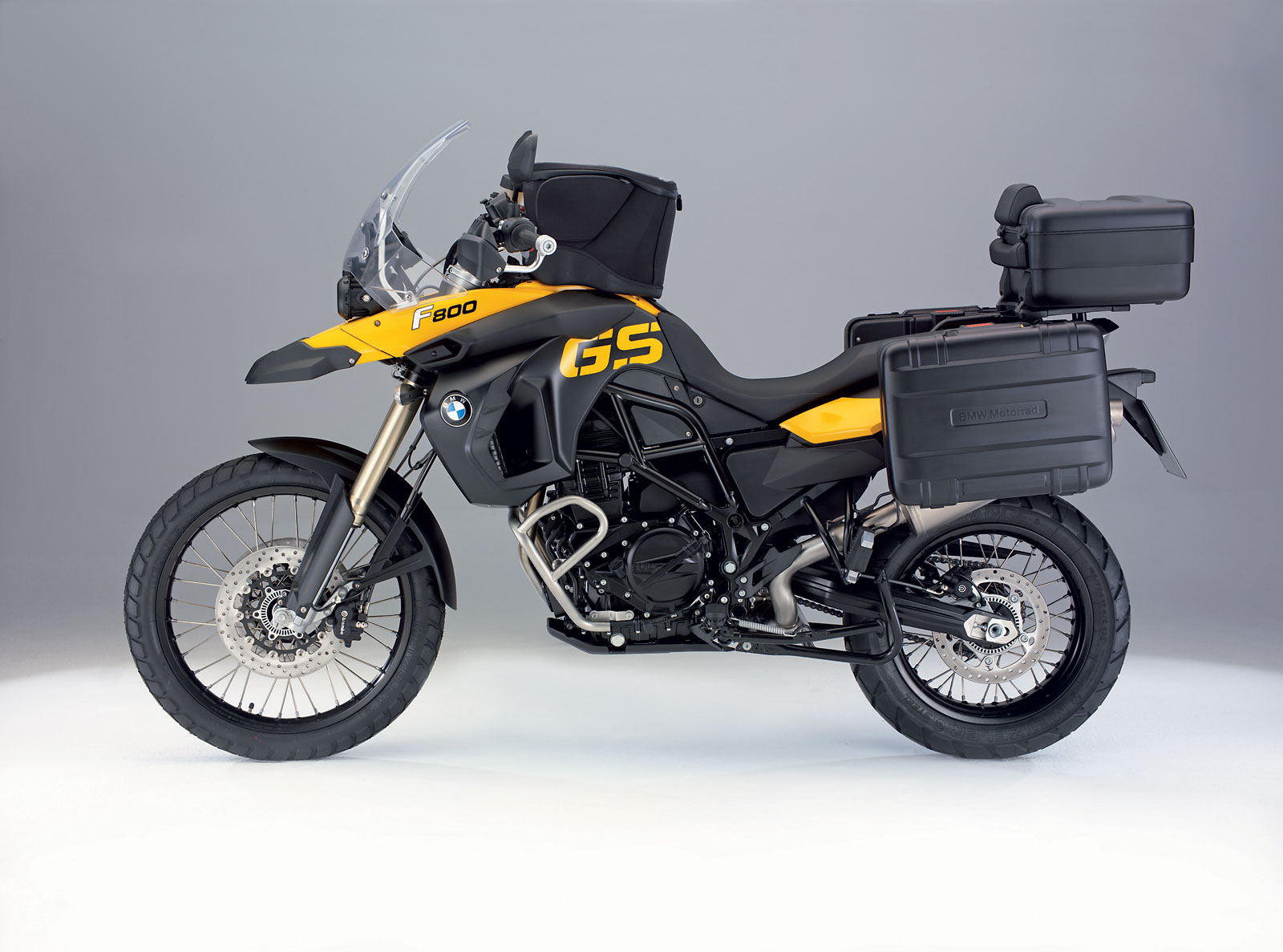
Does the fact that BMW put a chain on their F800GSe do more than provide "anecdotal evidence?" (I know, the picture was on the internet.) At one of the first Cycle World bike shows I attended in Minnesota, BMW displayed one of their their non-factory Paris Dakar boxers, which was chain drive. I have always wished I'd taken a good picture of that bike. I never seem to have a camera out or an audio recorder running when it really matters. Clearly, I do not belong in the news business. 

Let's face it, it doesn't much matter to people in my socio-economic bracket. There isn't an interesting shaft drive available in my low-ball price range. There is no chance I'm going to own a five-digit motorcycle, ever. There is little chance I'd ever want a drive-shaft cruiser, which might be in my price range but I'm not that old, yet. (I don't plan to live that long, either.) So, if there is a small reliability/price advantage, the initial cost overwhelms the conversation. If that were all there were to it, I'm sure all factory on and off-road race bikes would be belt or shafties. Since they are overwhelmingly chain driven, there is clearly more to it.


 -------------------------------------------
From: Sev Pearman

I don't think that is accurate. Permit me to add this observation

Cruisers and tourers may run belts (a/o shafts) due to fixed FD ratios.  No one cares to adjust it do the FD ratio is fixed. Having said that, BMW & M-G offer a variety of REAR pinion ratios to alter overall ratio

Sport bikes and offroad machines have stayed w chain because it is easy to adjust when gear ratios are changed

If not, a rider would have to stock x different length belts for as many possible FD gear ratios

This is a question of final drive ratio adjustment, not reliability


 I pity the poor salesman who has to sell you any machine 
:•D 

-------------------------------------------
From: T.W. Day

I always buy used from owners, never dealers, at the lowest price I can beat out of the seller, and rarely want anything badly enough to worry about the deal if it falls through. No salesman wastes much time on me because it is, apparently, obvious the moment I walk through the doors than I'm just looking. I bought my first and last new bikes in 1974 and only new car of my life in 1973. "Fool me once, shame on you. Fool me twice, shame on me." I rarely go back for a whipping twice, unless getting my ass kicked at the race track counts. 

Do you have evidence that chains are standard because of the adjustibility or is that opinion?  

I doubt that a lot of gear ratio modifications take place in the Dakar or in enduros and cross country races, Isle of Man, and the rest of the endurance racing world and I suspect that if reliability was a serious issue with chain drives, even road race tuners would find a reasonable way to adjust gear ratios; as you've mentioned BMW and MG do already. I don't think the drive issue is as clear and simple as you appear to believe. I think the racetrack is equivalent to tens of thousands of miles of "normal" use, so if drive shaft systems possessed reasonable power-to-weight and efficiency performance and provided a reliability advantage, we'd be seeing them on the track. 

The fact that belts are practically non-existent outside of the low-performance, maintenance-ignorant cruiser market says a lot to me. I have no objection to drive shaft power transfer, but I'm unconvinced they are the bulletproof, no-maintenance, cost-effective drive line you're hoping they are. 

I'm also unconvinced that encouraging already-barely-conscious riders to buy "let's pretend these are no maintenance" bikes is a good idea. Going over the chain is just a small part of what ought to be good, regular maintenance. It's not difficult to make daily maintenance a reasonably clean activity. It does force us to look at axle bolts and adjustments, and to scan other parts of the bike. It gets us closer to the "Zen" of motorcycle maintenance and that's always a good thing. 

Now, when you get back from 2,500 mile (2,000 off-pavement) North Dakota ghost town tour and can still say, "Time on Victory bikes has made me a believer in belts as well," I'll reconsider. Until then, I'll see your "pfft" (although I'm not sure what means and raise you a couple of "humphs." A few piddling miles around town doesn't convert me to abandoning a system that has only improved dramatically in my lifetime. 

-------------------------------------------

Some of you folks are more experienced, technically more capable, and bigger thinkers than me. What are your thoughts, opinions, and what facts can you bring to this debate table? 

Nov 8, 2010

Listening and Living

In the 60’s and early 70’s, Harley and what was left of the British motorcycle industry sort made a stab at addressing the bottom-up-market attack from Japan. Harley branded Italian (Aermacchi) machines and provided minimal support. BSA gave us the infamous 441 Victim that may have sealed that company’s fate all on its own. Triumph and BMW fought back, slightly more effectively. In the end, HD devolved into a portion of a bowling ball company's holdings. BSA and Triumph vanished into bankruptcy. Triumph manged to struggle back, but mostly as a high-end make of rich kid toys. Never again have any of those companies made motorcycles for folks who don't have $15-20k to dump into a recreational vehicle.

Now Japan is on the short end of that same stick. Indian, Malaysian, Korean, Taiwanese, and Chinese motorcycle and scooter manufacturers are cranking up production and aiming product at the low end of the US and world markets; the entry level rider. If history was an indicator, you'd expect Japan to respond with bigger, more expensive, less efficient, less reliable vehicles as a response. That's what American and British manufacturers did. Maybe not so.

One advantage Japan has over their stogy 1960's US and Euro competition is that they never gave up on the cheap, functional stuff. They just quit bringing it into to the US. Maybe that's changing. Honda is taking a chance on US riders with the 2011 CBR250R and CBR250X ABS. This is the kind of bike that Japan has left at home or Europe for the last 20+ years, assuming we are too fat, dumb, and rich to ride a motorcycle that has a functional purpose. As usual, Suzuki started the experiment with the TU250X, a fuel injected street bike with manners and abilities. Honda's entry is less practical, but it might be more fun. Yamaha and Kawasaki are sitting this one out, waiting to see if Suzuki and Honda have discovered something new about the American market. By the time they have their answer, they might starve their US dealers to death and miss the whole event.

 The competition doesn't have the dealership problem. Like the Japanese manufacturers in the 1960's, anyone who has a retail outlet appears to be capable of grabbing a Hero, Royal Enfield, Hyosung, Chang Jang, Kymco, SYM, Baja, PGO, or whoever-pops-up-next dealership. The Pep Boys have carried a few brands of Chinese-made motorcycles. So does a filling station a couple of miles from my home. A local hardware store hustles the Hyosung brand, servicing the bikes along side their lawnmowers and snowblowers.  When I was a kid, our local Suzuki dealer also sold Sony televisions, Bogen sound system equipment, and lawnmowers. Our Honda dealer was, primarily, a farm equipment dealer. Yamaha and Kawasaki were sold out of a handyman's Quonset shed along with his regular home repair services. Only BSA/Triumph and Harley Davidson had actual dealerships in town, both of which went out of business by 1968. So it was, so it is.

Will Japan hang on to this business? Your guess is as good as anyone's and probably better than mine.

Feb 13, 2009

What the Show Showed

I spent a few hours staring at bikes, bikers, gear, and the usual suspects at the Cycle World Motorcycle Show this afternoon. There are, in fact, some cool new motorcycles, but (as my editor, Victor, suspects) they will probably be economic failures.

Honda, Yamaha, and Kawasaki have new 250cc dual purpose street bikes. A variety of companies have mid-sized bikes, most of which are not new. Honda put a lot of effort into displaying their new Fury VTX chopper-thingie. It is one of the silliest vehicles I've seen since my last visit to Pioneer Village in central Nebraska. The average age of the characters surrounding the Fury had to have been over 60. The same sort of geezer was seen climbing off and on of the Polaris Vision.

Friday afternoon wasn't a good day to judge the turnout or the character of the Minnesota crowd, but I talked to several people who said the show was down at least 20% at all stops. There is an air of desperation you can almost taste coming from the vendors. The customers emit something more like resignation.

I got home in time to watch a PBS movie called "Horatio's Drive" about the first cross-country auto trip, in 1903. About half way through the movie, our youngest daughter called to tell us she'd been laid off by Bank of America. She is an optimist and is convinced that she'll find a job soon. I've been through this sort of economic mess before, in the 70s through the 80s, and I hope she's right, but I worry for her and my son-in-law.

Times have been bad before. The country was less organized, more socially-segregated and stratified, and more destitute in 1930, but we don't know where we are in the curve of the current economic catestrophe.

If I get my druthers, we'll struggle through this recession/depression for long enough that many of the social inequalities and irrationalities get fixed but not so long that the nation seriously suffers. I'd like to see a little resurgence of American frugality and, along with that, a little attention paid to small motorcycles because of their economy and practicality. I don't, honestly, care if gas costs $5 a gallon at the end of the decade. That might be good for motorcycling, too. I would provide some initative for us to cut free from foreign oil.

I wouldn't mind if the whole gangster biker fad died a painful death. If the Angels, Outlaws, Bandidos, and the rest of them all end up replacing the crowd in Guantanamo, I wouldn't care. If even looking like that bunch of degenerates caused bikers enough trouble that leather fringe, bandanas, and Valley People butt-less chaps became fashion misstatements, I'm good with that.

In the end, maybe Honda will have to back off of their Orange County biker junk-mobiles and return to promoting the Nicest People. That's a future I can look forward to.