Showing posts with label manufacturing. Show all posts

Jan 28, 2017

The Dominoes Are Falling?

Erik-EBR-1900RXOnly a short while after Polaris announced the Victory Motorcycles are goners, Eric Buell Racing gives up, again. In their January 28 press release, the company said, “The company, which is the sequel to Buell Motorcycle Co. that Harley-Davidson Inc. owned for more than a decade before dropping the brand in 2009, says it will begin a wind down of production operations next week.” And “This difficult decision was based primarily on EBR facing significant headwinds with signing new dealers, which is key to sales and growth for a new company. In addition, EBR has had limited production in 2016 and 2017 that was under goal. The combination of slow sales and industry announcements of other major OEM brands closing or cutting production only magnified the challenges faced by EBR.”

Well, nuts. That is about it for US production of anything resembling a world class competition motorcycle.

Dec 26, 2015

VW, Not A Motorcycle Company

Volkswagen_DucatiTwo years ago, I was just recovering from the misery of owning a VW-based Winnebago Class C RV. Needless to say, I was pretty disgusted with Volkswagen. It’s sort of reassuring and heartening to see that the rest of the world has joined in my disgust for the delusional German maker of mediocre vehicles and standard for half-assed engineering. While Germany is desperately trying to paint this pig pink, "VW scandal has not hurt German reputation, Merkel says," the country’s entire economy—largely dependent on auto manufacturing—has been put in jepardy by VW’s internal arrogance, delusions, and criminal behavior. As I wrote in “Delusional Self-Image” (February, 2014), “As demonstrated by their semi-crazed explanation for shriveling and lower-profit markets, VW/Porsche marketing dweebs seem to be disconnected from reality.”  As climate change deniers, war mongers, trickle-down economists, and free lunch believers keep discovering to their dismay, reality has a nasty habit of showing up uninvited. As best I can tell, VW is pretty much completely under the control of the marketing morons, which means they’re going to have one hell of a hard time fixing any of their problems. If there is one thing I know about marketing asshats, it is that they don’t know how anything works and couldn’t fix a hole in a paperbag with a truck load of duct tape. “Far Fig Newton,” my ass, and I’m not the only one who thinks VW has put Germany, the Euro, and a lot more in jepardy:

VW_matt_cartoon_3450195bI think the origins of VW’s problems came from the nutty idea that shutting out independent repair centers would improve VW’s customer service reputation (which has never been good). VW cut off the usual DIY service manual outlets in the mid-90’s and starting charging independents a whole lot of money for access to VW’s online service information system. Since most good shops don’t seen enough VW product to make paying $400 a month for service information worthwhile, lots of good independents simple quit working on VWs. The hope was that this would drive VW owners to VW dealerships for service. That probably is what happened, but what also happened was that lots of people who might have considered buying a VW didn’t because their local VW dealer was the usual ripoff shop.

The largely-unappreciated independent service center quality control loop was broken, too. Regardless of a manufacturer’s intention, it is almost impossible to stop complaints from an independent service tech from getting to the right ears. Piss one of these guys off with a manual or service procedure that results in screwing up one of their customer’s cars or costs them a repair bill and you’ll hear about it. Obsolete a critical part that means a tech will have to apologize to customers for not being able to fix their vehicle and someone in the Parts Department is going to get an ear-full. Kill that free system check and you end up being Volkswagen; deaf, dumb, and arrogant. Because all of VW's internal quality systems are closed loop, internally, they are not driven to fix their system and probably don't even know it's broken. Actually, it's pretty obvious that VW has no idea what the outside world thinks of them. I think they are getting an idea now, though.

VW_fitzsimmonsIt has always amazed me to hear the constantly repeated claim that VW is the “largest car manufacturer in the world.” I can only suspect that they make some really, really physically huge Hummer knockoffs, because I can not fathom how VW could be outselling any of the Japanese Big Three, Ford, or, even, Fiat. After this dropping-of-the-drawers, I suspect Toyota will be sitting on top. There are so many things wrong with that picture I am overwhelmed and confused. (The next Led Zep hit?) VW hasn’t made a decent vehicle since the 1967 Beetle. At least, in my opinion, and nobody sensible made big reliability claims for the old air cooled VW shit. Those silly vehicles were just fun to drive, fix, and look at while they were cooking on the side of the road after catching fire from overheating or a fuel system fault.

As you probably know, VW/Audi bought Ducati. I can’t guess why, Wired Magazine’s article about this curious aquisition included the funny but probably unintentionally ironic comment, “If VW started selling Golfs that went 175mph, but cost $75,000, got 8 mpg, required $5,000 services every 4,000 miles and blew up after 20,000 miles, VW would be in a lot of trouble.” Actually, VW Golfs are not particularly reliable, are expensive to repair, and the only thing they don’t have that Ducati makes claim to is the 175mpg top speed. Although, I suspect if you were to occasionally push the Golf GTI to its claimed top speed of 155mph, you’d probably also be rewarded with “8 mpg. . . $5,000 services every 4,000 miles and . . . 20,000 mile” engine life. There are understandible reasons why VW/Audi would feel compatible with Ducati (and Ducati owners): 1) advertised performance is more important than real world performance, 2) the product’s owners are easily deluded into believing that the product’s perceived quality image will rub off on the owners, 3) reliability is an inconsequential feature, 4) a dealer network is unimportant and dealer support is a waste of effort, 5) customers are what you have before the sale and suckers are the fools who show up with one of your products expecting service or support.
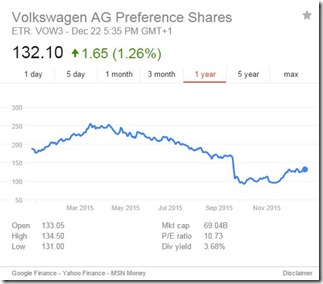
vw stockOk, so I’m wrong. VW is a motorcycle company, just not a very good one and not one that will ever see a dime of my money. Of course, VW/Audi has to survive this $9B+ disaster and still have customers gullible enough to buy their crap when this is over, so we’ll see if VW can sell cars or motorcycles.

Jul 2, 2012

What's the Opposite of a Grudge?

A couple of weeks ago, I listed ten (just to keep it short) companies, products, and concepts that have earned my long-lasting distrust. During the following week, I ended up at my neighborhood motorcycle accessory store buying replacement summer gloves and discovered that I naturally passed over several brands because of mediocre past experience and immediately picked out a couple of versions from the one brand the store carries that I generally like. From that experience, I decided to list a few of the companies, products, and concepts that I have (probably) unreasonable faith in
  1. icon -- icon is, in fact, the company that provided the motivation for this rant. Some time back, I reviewed a pair of mid-priced icon gloves. Five years later, those gloves are still providing good service. A few years later, I reviewed a pair of icon ventilated pants that I still wear, often. Both products have been reliable, tough, and functional. When I stood in front of that rack of gloves, icon was my only real options, since I've been burned by TourMaster, Alpinestars, and FirstGear. Joe Rocket was an option, but the first pair of gloves I picked up had failing seams, I went for the icon twenty-niner and have been very happy with the choice. Lousy gloves are a memory that sticks with a rider for a long, long time. Good products have the same sticky quality.
  2. Aerostich -- Just mentioning this brand is 'nough said. Aerostich makes great products and I've reviewed so many of them that it would take a page just to list the wonderful products I've bought from the company. Even the products they carry that are manufactured by other people are checked out as thoroughly and supported as consistently as their own stuff. Aerostich/Riderwearhouse is a great American-made company.
  3. Yamaha -- Over the years, I have owned a variety of Yamaha motorcycles and scooters.The first was my wife's MX100 which gave her spectacular service for years before she sold it. She has nothing but fond memories of the bike and out grandson still wears her old bumblebee yellow Yamaha jersey. My first Yamaha street bike was a 1982 XTZ550 Vision that suffered at least 50k miles of LA commuting traffic before I sold it and bought a 1986 Yamaha XT350 that I still regret selling almost a decade later. Along with the XT, I owned a 1983 Vision that moved me from California to Indiana to Colorado and, finally, was sold for a profit to a guy who drove his truck all the way from LA to Denver to pick it up. My 1986 TY350 was and is, likewise, one of my all-time favorite motorcycles along with the pair of 1992 850 TDM's I owned and loved. The current mechanical love of my life is my WR250X, the most fun motorcycle I've ever ridden. The Super Ténéré I reviewed last week joined the list of impressive Yamaha motorcycles I've experienced. I've only owned one Honda, but it was an equally excellent motorcycle. My experience with Suzuki has been less consistent. My two Kawasaki's have been disappointing.  Yamaha has done very well by me and that makes any Yamaha vehicle look a little better than the rest, in my view. 
  4. Dell Computers -- I own four of them: two Latitude 410 laptops, a desktop tower, and the 1012 Netbook I'm working on as I write this. The Latitude 410's were the convincer for me. After wearing out a half-dozen laptops on my motorcycle trips, including two of the grossly misnamed Panasonic Toughbooks, I stumbled on the 410 just before I left for Alaska. 70,000 miles and hundreds of hours later, that first unit is still working. So, I bought another. And another. And . . . Dell's customer service has been exceptional and knowledgeable, on the rare occasion I've needed it. 
  5. Avon Tires - Way back in the 1970's, I was commuting about 60 miles a day in a VW Beetle. The Nebraska roads were poorly maintained, there was often black ice and drifted snow to contend with, and I went through a VW motor about every 60k miles and a set of tires every 15k. A rally driving friend recommended Avon tires and I bought a set. They outlasted the VW's motor and were great on those crappy roads. The whole time I lived in California, all of our cars wore Avons, but I didn't discover Avon motorcycle tires until I put a pair of Distanzias on my V-Strom. After getting 3-5k out of the previous rear tires, I doubled that with the Avons. I don't drive that much these days and my car tires usually dry out and start weather cracking before the treads are 2/3 used. I put pretty much anything that fits on the cage and, sometimes, I go cheap on the bike when city commuting is the primary task. When I'm going long on the bike, I'll go with Avons. I have never been disappointed with an Avon tire.
  6. Chase Harper - Currently, I do not own any of their products. However, I have had several in the past. Their product support (warranty and repairs) is second to none. I owned a pair of Grand Millennium 4000 saddlebags for 30 years and wore them out, twice.  The company not only repaired the bags under warranty both times, but they upgraded the bags to current design standards each time. 
It's a short list, I know. I imagined I'd come up with at least ten companies, but I didn't come close. I've hung on to this post for a couple of weeks, hoping that I'd remember a few more companies on my preferred vendor list. There aren't many to choose from. Forty years ago, a Peavey sales manager explained to my partner why Peavey products were such crap, "Dan, there will never be a pre-CBS (Fender or Harley) Peavey market. We don't want any of our current products having to compete with our older products." Most modern corporations can make that same claim. None of their new stuff will last long enough to leave a memory for the majority of consumers.

An executive I worked with three decades ago once complained that "customer loyalty" is dead. He was the kind of guy who believed that warranties are made to be ignored and all of the inventory of a crappy product should be sold before the product is abandoned. He argued that our customer warranty database was a waste of time and effort, even though we were one of the few companies that stored the data customers filled out on those usually-worthless warranty registration cards. For ten years, I beat back this guy's arguments and we developed a loyal customer base that had high expectations of our company and paid a small premium for our products. A few years later, the company moved production to China, shipped a collection of marginally reliable and under-performing products, and wiped out thirty years of reputation in a few short years. Now, they are one of many equally positioned companies and battle for the lowest cost point, since customers are no longer loyal to the brand.

Customer loyalty is a two-way street. To get it, a company has to be loyal to its customers. Most companies can't even manage to be loyal to the country that provided the resources for their existence, let alone the customers who buy their products. The cost for that disloyalty is that the products become a commodity that can be purchased equally reliably -- or unreliably -- from any vendor. Once you're in that world, the only advantage you can offer is price and that means quality is sacrificed even more and customer loyalty slips away even further.

The high price for maintaining customer loyalty is beyond the capability of most corporate management. In my life, that has been the most obvious thing that is slipping away from US corporations; management with ability. The skills that we have lost and are least likely to regain are intelligent, skilled management with foresight. We can't build stuff because manufacturing management requires the most energy, talent, and commitment. Any lazy idiot can invent fraudulent security "instruments" and sell them to other fools; as long as we're willing to give up on being a nation ruled by law. The few companies that still do business responsibly and are customer-oriented deserve our business more today than ever.

Oct 7, 2011

Marketing = Engineering/Invention?

This sort of off-topic, but . . . live with it. It's my blog.

All the media hand-wringing about Steve Jobs, "the 21st Century's Thomas Edison," is going a long way toward explaining to me why the country is going down the tubes. To be sure, it's a sad thing when a relatively young (55) man dies of a terrible disease (pancreatic cancer). However, I can't help but get a little cranky when a marketing guy whose claim to fame is based on his response to colors and rounded corners is regarded as a brilliant inventor. Even worse, when that marketing guy is getting credit for "inventing the personal computer" (not even close), being first to produce a portable digital audio device (not even in the running), and for creating a whole new market for "smartphones" (again, Apple was practically last to the market). This is a guy who lied to his partner about the payment for an early product design assignment with Atari, took credit for doing the design work when he was only the delivery boy, and cheated his partner (Steve Wozniak, the real founder of Apple and the only genius of the two Apple founders) out of $2,250 of the $5,000 contract.

Really? This is what passes for a great man in what's left of the United States of America?

"The Woz," as always was exceptionally generous about his memories of his "friend" when interviewed yesterday. I met Steve Wozniak in the 80's and thought he was one of the coolest, nicest, most humble brilliant and rich guys I've ever met. Another corporate CEO I knew pretty well at the time was a Jobs-worshiper, which was all I needed to know at the time about Steve Jobs. This guy was a lazy, credit-absorbing, blame-shifting shark and anything he liked I was probably not going to want to be near. Later, I got to know a few design engineers who had worked for Apple and they had been trashed and burned by Jobs at Apple and had nothing but bad things to say about the guy and nothing but hero worship for Wozniak.  Wozniak's analysis of Jobs was that he "was a good marketer and understood the benefits of technology." I think that's a near-perfect analysis of Jobs' contribution.

But that's not my point. The point is the boys and girls (none competent enough to described in adult terms) of our mass media no longer know the difference between inventors, engineers, scientists, and the people who take advantage of those skills. If perception has become that knowing how to sell crap is the same as knowing how to make it, what's the point in going through the effort to learn how to do actual productive work? Obviously, this is the conclusion young people make when they blow off science, engineering, and technology and take the easy route to business and finance degrees.

When a character like Keith Wandell, who can barely be described as a rider let alone a motorcycle engineer,  can be put in charge of a genius like Eric Buell and can conjure up the gall to shut down the only progressive division of an otherwise backwards, failing, obsolete product line, we are heading for membership in the long list of failed empires. Wandell isn't fit to take on the task of being Buell's secretary, but that's not the way business works in the declining US of A. Secretaries are running the asylum and inventors are sidelined as an unnecessary evil in a country that imagines product invention, R&D, design, and manufacturing can be farmed overseas and the easy part, marketing, will remain a US-only task.

In my experience, if you can do the hard parts you can do the easy parts. IBM discovered that when they shipped PC production to Japan and, suddenly, produced a truckload of competitors for themselves. Apple doesn't build anything these days. If you can find a "Made in the USA" sticker on anything with an Apple logo, I'd like to see it. If you can't make it, you can't design it. If you didn't design it, you're just a salesman and salesmen are a dime a dozen.

Nov 8, 2010

Listening and Living

In the 60’s and early 70’s, Harley and what was left of the British motorcycle industry sort made a stab at addressing the bottom-up-market attack from Japan. Harley branded Italian (Aermacchi) machines and provided minimal support. BSA gave us the infamous 441 Victim that may have sealed that company’s fate all on its own. Triumph and BMW fought back, slightly more effectively. In the end, HD devolved into a portion of a bowling ball company's holdings. BSA and Triumph vanished into bankruptcy. Triumph manged to struggle back, but mostly as a high-end make of rich kid toys. Never again have any of those companies made motorcycles for folks who don't have $15-20k to dump into a recreational vehicle.

Now Japan is on the short end of that same stick. Indian, Malaysian, Korean, Taiwanese, and Chinese motorcycle and scooter manufacturers are cranking up production and aiming product at the low end of the US and world markets; the entry level rider. If history was an indicator, you'd expect Japan to respond with bigger, more expensive, less efficient, less reliable vehicles as a response. That's what American and British manufacturers did. Maybe not so.

One advantage Japan has over their stogy 1960's US and Euro competition is that they never gave up on the cheap, functional stuff. They just quit bringing it into to the US. Maybe that's changing. Honda is taking a chance on US riders with the 2011 CBR250R and CBR250X ABS. This is the kind of bike that Japan has left at home or Europe for the last 20+ years, assuming we are too fat, dumb, and rich to ride a motorcycle that has a functional purpose. As usual, Suzuki started the experiment with the TU250X, a fuel injected street bike with manners and abilities. Honda's entry is less practical, but it might be more fun. Yamaha and Kawasaki are sitting this one out, waiting to see if Suzuki and Honda have discovered something new about the American market. By the time they have their answer, they might starve their US dealers to death and miss the whole event.

 The competition doesn't have the dealership problem. Like the Japanese manufacturers in the 1960's, anyone who has a retail outlet appears to be capable of grabbing a Hero, Royal Enfield, Hyosung, Chang Jang, Kymco, SYM, Baja, PGO, or whoever-pops-up-next dealership. The Pep Boys have carried a few brands of Chinese-made motorcycles. So does a filling station a couple of miles from my home. A local hardware store hustles the Hyosung brand, servicing the bikes along side their lawnmowers and snowblowers.  When I was a kid, our local Suzuki dealer also sold Sony televisions, Bogen sound system equipment, and lawnmowers. Our Honda dealer was, primarily, a farm equipment dealer. Yamaha and Kawasaki were sold out of a handyman's Quonset shed along with his regular home repair services. Only BSA/Triumph and Harley Davidson had actual dealerships in town, both of which went out of business by 1968. So it was, so it is.

Will Japan hang on to this business? Your guess is as good as anyone's and probably better than mine.

Sep 15, 2010

In Pursuit of Quality

All Rights Reserved © 2010 Thomas W. Day

The most recent owner/manufacturer of the Norton label claimed that he's only going to be capable of making 2000-4000 bikes a year because "Nortons are essentially going to be handmade . . . you simply can't maintain that level of quality and control with large-scale production."

Funny. Nortons have never been particularly famous for "quality," unless oil puddles, unreliability, and no competitive advantage in power, handling, or any other performance category has become a quality value. The definition of quality this corporate goof is using is one that is mostly centered around cosmetics and no-expense-spared handiwork. That's a definition that only the richest folks can appreciate.
2010 Norton Commando 961 Cafe Racer
An old manufacturing maxim directs the fruitcakes in marketing and the delusional loonies in sales in the reality, "Quality, price, or delivery. Pick two." Modern American and Brit motorcycle manufacturing blew off the option making that decision and appears to be happy with going for the appearance of quality without caring a lot about price or delivery. That appears to be the tact Norton's new owner is going to take with the long-abused marquee. That kind of business model only works when a sufficient number of customers are dumb enough to cough up buckets of money for a mediocre product. It's probably a pretty good short-term tactic, assuming those rich, dumb customers aren't actually going to ride their new toy.

For the rest of us, the modern manufacturing standard of quality will have to do: a quality product meets its customers' expectations. That's it. Japan practically perfected this standard and changed everything in the world of manufacturing in the process. Before the quality revolution of the 1960's and 70's, middle-class customers expected products from Detroit, American electronics manufacturers, and their appliances to have "personality." Personality means defects, glitches, and high maintenance. Most of us have places we want to go, people we want to meet, deadlines and schedules, and bucket lists. We don't have time for vehicles with personality, so we settle for real quality instead of the cosmetic kind.

If you are going to make that choice, your only option is to go for "large-scale production" products because that's where practical quality usually lives. One of the beauties of large-scale production is large-scale consumer feedback. Even in our age of passive consumers, a noticeable percentage of consumers still make the effort to complain when they get ripped off. That percentage might be less than 1%, but 1% of millions is still a pretty large collection of complaints. 1% of "2000-4000' is easily ignored. NTSHA might ignore 10 irritated Norton owners, but even a federal government agency pays attention to 20,000 complaints.

More importantly, the large manufacturer has the motivation and manpower and talent to squeeze failures down into the six-sigma territory. Although quality is largely taken for granted in modern products, the reason for that expectation is that modern products are largely very reliable. The reason that is true is because designers and manufacturing engineers have the resources and the skills to anticipate and resolve product reliability problems. A group of shade-tree mechanics working for a rich kid who is intent on burning up his trust fund won't be so inclined or gifted.

So, I'll just stick with boring, machine-made, engineer-designed production motorcycles and it won't even cross my mind that I would be happier with a boutique one-of-a-kind handmade bike. Besides, I'd have to decide between having a home or owning a rare piece of art and I'm not that interested in two-wheeled art.