Showing posts with label electric. Show all posts

Feb 7, 2023

The Things We Get Used To

I am a lurker with a bunch of local motorcycle guys who pass on rumors and facts about motorcycles and motorcycling. The latest batch of bqack-and-forth was about Hardly’s LiveWire sales; or lack of sales (569 motorcycles last year). Yesterday’s conversation was punctuated with a quote, At highway speeds, no real motorcycle gets more than 100 miles of range.”

I figured that the WebBikeWorld.com scribbler must have been talking about EV “real motorcycles?” Motorcycle repeaters just seem to become dumber and less literate every decade. I know at least one Zero owner who would disagree with that claim. He commutes 140 miles from the mountain desert to San Clemency several times a week on a 2020 Zero somethingorother. (Don’t know the model.) That rider was pretty jazzed about fuel savings, and bragged about it often, until his electric bills went through the ceiling in the last year. You’d think everyone in southern California would be powering their homes/vehicles with solar, but I guess not.

At least from my fixed-income and old fart vantage point, the price of EV vehicles is still an overwhelming obstacle for most everyone but the idle rich. But that is kind of true for motorcycles over 650cc in general. For example, the 80hp LiveWire S2 at $15k is their “cheap” EV bike, while $30k for the LiveWire One was priced for Jay Leno and his buddies.

As a reference bike that I might consider (if I were a decade younger), at about $12k Suzuki’s 2023 V-Strom 800DE is packed with features, 85hp, a 280 mile range, a Quickshifter, ABS (switchable), three riding performance modes, four traction-control settings, and low RPM assist. Comparing that to the LiveWire S2 still seems like a no-brainer. In every important category, except carbon emissions, the ICE bike wins.

But that is not the point of this rant. To me, $12,000 seems like a LOT of money for a motorcycle. $30,000 is an insane amount of money to spend on a freakin’ toy. And, for 99.99…% of motorcyclists, a motorcycle it’s used so rarely it barely qualifies as a toy.

I’m still stuck where any motorcycle costing more than $3k is “too expensive.” Since 1982, all 10 of my street bikes have cost less than $3,000 (most were under $2k) and, while they were all “used,” most of the were barely broken in after 2-10 years with their original owners. Granted, my current motorcycle is a 2012 250cc “beginner’s bike” that had 700 of climate-controlled-garage-stored miles on the odometer after 10 years with the original owner and the TU250X wasn’t expensive new ($4,100). Before my street bike period, all of my dirt bikes cost less than $1100, with a brand new Suzuki RL250 being the most expensive of the bunch (at $1100 in 1974) and the rest costing less than $500, including a new 1974 Rickman ISDT125 and my wife’s new 1975 Yamaha MX100. Those were my first and only new motorcycles and I’d been riding for a decade before that.

My most expensive car, so far, as been $9000 (a used 1988 Nissan Pathfinder in 1994 and our current 2012 Honda CRV). Most of my cars have been under-$2500 beaters and lots of them were under-$500 60’s and 70’s VW Beatles. The most I’ve ever paid for a freakin’ house was $104k in 1997 and our current home cost $88k in 2015 (a repo bank sale by the dumbest bank in recent US history, Wells Fargo). Any vehicle that costs a significant percentage of a house is nuts. But a motorcycle? Not even if I had Keanu Reeve’s money or Leno’s.

Jul 8, 2019

It's A Brave New (Electric) World


https://www.cyclevolta.com/

The company that owns and publishes "Cycle World Magazine" is hedging its bets with an eBike on-line publication called Cycle Volta. This is no small commitment because, motorcycle rag fans will notice, most of the technical articles are written by Kevin Cameron. Kevin is the guy many of read Cycle World for and many of us will jump to Cycle Volta for the same hit of rational thinking and technical insight.

https://www.indiegogo.com/projects/fuell-fluid-longest-range-best-pedal-assist-ebike#/ 
Add to that, the fact that Ducati, Yamaha, Honda, and hundreds of start-up eBike brands are in the early hunt for market dominance; or even a decent showing. Supposedly, 60% of all bicycles sold in the EU are eBikes and while US statistics are typically poor it's pretty obvious that our market is experiencing a sea change, too. Midwestern innovator of the century, Eric Buell, has caught the wave and he is going after the high-end eBike market with a 125 mile range eBike, "Fluid," with an assortment of options and a new electric race bike. His brand is called "Fuell" as a link to Eric's name and a nod to the Harley assholes who still claim ownership of the "Buell" brand name. I have no doubt that anything Eric does in this market will blow anything Harley does into history. It would be fun to see HD have to "buy" Eric's new venture just to stay in business.

Jun 3, 2019

Are Motorcycles History?

Scanning my old employer’s website, I noticed that Century College's Basic Rider Course schedule for 2019 includes fewer classes, in total, than I used to teach almost at that school in a single season: down from more than 100 courses on 3 ranges to 26 courses on one range. Dakota Tech is down by similar numbers: from more than 80 courses on 4 ranges to 41 on two ranges this season. According to friends who still teach, last year DCTC cancelled a lot of it's classes, often the day before the class was scheduled to run. St Paul College is scheduling 26 courses. I retired last year, after all of my classes in Red Wing and all but one at DCTC cancelled in 2017 and I had my first bout with double-vision. Staying certified was going to be more of a hassle and expense than it would be worth. (That turned out to be an understatement as my double-vision root-cause has been diagnosed as myasthenia gravis.)

At least in Euro-ville, 60% of all new bicycle sales are eBikes. I can't find a solid figure for the US, but based on the growth of a few name companies that can't keep up with the orders I suspect that's a shift here, too. The industry word is that ebike growth is exponential and motorcycle sales are in decline. If you do a Google search on "motorcycle dealers closing" limited to the last year only, you get a depressing number of hits; including insider stories about how motorcycle imports and exports are slowing up practically everywhere. These are interesting times. That “change” thing is proving itself to still be a constant.

Lots of dealers, like River Valley in Red Wing, didn't see much of a recovery in motorcycle sales after 2007-12 and moved on put more effort into boats and ATVs. A bunch of dealers (especially on the coasts) are adding eBikes to their sales floors. Yamaha, Ducati, and KTM either have eBikes to sell or are in serious development. Hardly just bought a kids' ebike company. Of course, HD could just be recognizing how lame their customers are and acting accordingly. Yamaha's eBikes are grossly overpriced: $4-6k, but they might figure it out before they totally lose their place in consumers' sights. KTM's offerings will probably need a mortgage refi, but their victims always seem to have spare cash or credit.

One of the funniest things I've read about this business and customer shift has been from traditional bicycle shops who imagine that repairing eBikes is "different" or more complicated than fixing a motorcycle. Current breed bike shops often charge as much as $50-80 to swap out an ebike tire, especially a back tire on rear-hub driven models. eBike repairs are different than motorcycle repairs, for sure; about 1Mx easier. Anyone who can troubleshoot fuel injection or electronic ignition could do anything necessary on an eBike without any training at all.

Dec 19, 2018

Helmet Testing in the Bicycle World

I just started riding a fat tire eBike this past week, after spending a month or so rejuvenating my grandson’s first eBike. The bike had suffered a couple of winters commuting regardless of the weather and needed a lot of going-over to be a dependable ride. Quickly, I discovered my regular bike helmet was worthless in cold weather. On the recommendation of a friend, I ordered a Lazer helmet a couple of days ago and just before I took off for a ride today it arrived. So, I took the time to adjust it and headed off to the bike trail.

IMG_9591I tend toward overconfidence (ask my wife) and on the way back from my safe and sane ride into town, I decided to take on a couple of miles of the unmaintained fat tire, cross country ski, and winter hiking trail. The trail was covered with about 2” of slushy snow and an ice base. I made it about 30 feet before the front tire slid out from under me and I slammed face-first into the slushy snow and pavement at, maybe, 10mph. Look at the dent in the front of the helmet, without the helmet that would have been my skull and I'd probably be dead. As it was, I really got my bell rung and punched a tooth most of the way through my lip.

The dealer, Wheel and Sprocket, didn't have to get the helmet to me before the 29th, but it arrived on the 19th and most likely saved my life. If I hadn't have tested the snow today, I'd have probably done it before the 29th. That's the kind of genius risk-taker I am.

IMG_9589What can you say about a product that absolutely saved your life? The last thing I ever want to do is to write a product test review of a helmet. It would be nice to get to talk about the features (excellent), the comfort and warmth (terrific), and the visibility (again, terrific). However, I decided to do an impact test. At the least, I tested the Lazer Snow Helmet and it passed. However, I might need a full face helmet if I keep doing stupid stuff like this. The picture, at left, is a selfie taken a few minutes after I got back home. Now, my lip is about 4X that thick and I have developed a cute little lisp, if you can get me to talk at all.

Nov 12, 2018

Paradigm Shifts

Mini_0508Two years ago, my grandson got a job, moved into his own place, and bought a Rad Power e-bike for commuting to work; a daily 14 miles round trip. Tough kid. When he started this adventure, he bought the Rad Power Radrover; a fat tire full sized bike that is about as robust looking and riding as a small dirt bike. Two years in and a few dozen crashes on the ice and snow, he turned the Radrover over to me to repair and replaced it with the Radmini.

We spent the day hanging out with our grandson and just before we left the Cities for home, I took a test ride on his new e-bike. I am hooked. Everything about riding this not-even-a-little-bit-small-feeling electric bicycle was like the things I love the most about motorcycles. The fat tires are incredibly stable, resilient, and sticky even on a 28oF day with a little ice and snow on the ground. The power is instant, quiet, and predictable; although e-bikes are almost universally limited to 20mph getting there was as fast as it needed to be to get me moving in rush hour residential street traffic.

RadMini_FoldedWhen I lived in the Cities and commuted from Little Canada to downtown St. Paul (for 13 years) I probably would have rarely, if ever, rode a motorcycle or car to work if I’d owned a bicycle like this. I had a 5.5 mile one-way commute via freeway and a mile or so added to that by city streets and the Radmini has a 20 mile range at 20mph over the toughest terrain at 20mph. If you pedal or have a fair amount of relative flat and wind-free territory to travel over, that range approaches 40 miles. There were a few moments when I made it up to 30mph on the city street routes, either on the bike or in the cage, but the 20mph limit would have been more than offset by traveling on the rarely-used bicycle trail routes that were available to me. Downtown parking would have never been an issue and I could have taking my employer’s parking allowance and used that money somewhere else. Anywhere else.

RadMini_Black_AngleThe disc brakes are terrific, although the damn levers are bicycle-traditionally on the wrong side. The electronic controls are ergonomically laid-out and easy to see and use. The bike isn’t light, at about 64 pounds, and is almost exactly the same total length as my WR250X (67”) The “standover height is 28”, the max I can cope with without getting gelded on a quick getoff. The riding position is very dirtbike-like; comfortable, upright, relaxed, and well-balanced. The performance is just amazing. 0-20mph is about as quick as the tires can handle and you have to be slightly forward on the bars to keep from popping a wheelie on a full-throttle take-off. That surprised me, more than once. The frame geometry is excellent, at least as far as I could tell in a 2-3 mile test ride. U-turns are easily executed inside a single lane and high speed (remember, that means 20mph) handling is solid, predictable, and very stable feeling (probably thanks to the long wheelbase).

As far as security is concerned, I could have rolled the bike into my office, folded it up and stuffed it under my cube’s desk, charging the battery while I worked (5 hours from depleted to fully charged), and never once worried about theft or vandalism like I had to with both the cage and the motorcycle in the parking garage where both occurred fairly regularly.

Cost of operation is fairly well documented (with some noticeable miscalculations) on Rad Power’s website blog in the article EBike vs. Car: by the Numbers. I disagree with the exponential rise in cost the author applied to car maintenance expenses, but the bottom line is still going to be close to the same. I regularly encourage my grandson’s bike replacement expenses by showing him the spreadsheet I keep on my pickup; which is freakin’ terrifying and/’or depressing. I did a similar comparison with my cage vs. motorcycle costs a few years back, the numbers were a little surprising but nothing like EBike vs. cages; at least a factor of 10. You can get a bike, ride it, fix it, and beat it up for less than the cost of a year’s car insurance. The times are changing fast.


Jul 11, 2018

The Market Had Its Say?

Bicycles vs Motorcycles (3)This week, I made the once-every-couple-of-months Twin Cities tour with my wife. Mostly, she had chores and errands to do, but when she stopped at Har Mar Mall to buy art supplies, I snuck out to peruse Barnes and Noble. I got stopped at the magazine rack looking at electric bicycle magazines and articles. After a bit of that, I decided to see what is left of the motorcycle glossy press.

It took a while to find either motorcycle or car magazines. The “Transportation” rack is as far from the entrance and traffic as possible and appears to be barely maintained. Several of the magazines were May and June issues. That was true for the car rags, also. On top of that neglect, a good number of motorcycle “magazines” were actually retrospective “special issues” that could have been sitting on the shelf for months; or years. Along the same lines, a Rolling Stone “special issue” was about Mick Jagger, if that gives you a clue as to the currency of that magazine format.

Bicycles vs Motorcycles (4)On the other hand, the bicycle section was featured under “Sports” and there were a lot of magazines and articles about electric bicycles in both magazines dedicated to electric bikes and the more mainstream mostly-manual powered bike magazines. The big thing here was that there are a lot of bicycle magazines and there is a lot of interest in electric bicycles; for transportation and sport. A couple of the magazines were almost as fun to read as the old Dirt Bike magazine; when it was edited by Super Hunky Rick Sieman. None of the last twenty years of dirt bike magazines have even come close to that high bar. As I suspected, the traditional motorcycle guys are putting a foot into this water, too. Electric Bike Action magazine had a big feature about Yamaha’s new electric bicycle series. To be sure, in true bicycle and bicyclist fashion, there was a lot of incredibly stupid stuff inside those magazines.

Bicycles vs Motorcycles (2)A line that particularly struck me as hilarious in the Electric Bike Action Yamaha article was, “At first we wondered if they were going to sell the bikes at their powersports dealerships. They only plan to incorporate those e-bikes into powersports dealers that already have a bike shop component, and those are few and far between. There’s a big difference between knowing how to work on a motorcycle and and knowing how to work on an electric bike.” That is true, kiddies. Anyone who can work on a fuel-injected, electronic ignition, fly-by-wire throttle-controlled, ABS’d, and state-of-the-art motorcycle will find electric bicycles to be too simple to be interesting. The customer base will lower that bar even further.

Times are changin’ and they are changin’ a lot faster than many expect. Powersports dealers are beginning to scramble for new revenue sources. It’s no stretch to imagine that a dealer who sells a few motorcycles, a few more ATVs, even more boats, and a buttload of golf carts will find a lot of reasons to become one of those “powersports dealers that already have a bike shop component.” A few bicycles on the showroom will cost a lot less than a few motorcycles that can’t be moved at any price. If that’s what it takes to get in on the electric bicycle boom, I suspect it won’t slow many dealers down.

Apr 21, 2018

Vanishing Slowly

This past few years has steadily seen Minnesota MSF class enrollment diminish, every year. The 2017 program had about 5700 Basic Rider Course (BRC) students enrolled and about 3900 passed, about the same as 2016. In 2012 MMSC trained 7,437 students and 6,754 in 2011, 7,580 in 2010, 8,240 in 2009, 9,543 in 2008, and 8,403 in 2007. The numbers don’t lie, new motorcyclists are in decline. Injuries and fatalities are doing pretty well, though. Seems like every year there is some early warning that fatalities and crashes are up.

Harley is doing some desperate things to attract under-70 buyers (Who cares if they are riders, too?), but there is a ton of used Harleys out there to compete with. Call it a generational shift, if that makes you feel better, but it’s more than that. For starters, the recovery from every recession in my lifetime has been weaker than the previous crash and 2007 was a huge economic hit for almost everyone. Motorcycles, in the USA, are almost purely recreational vehicles with little practical applicaton.

Women-MotorcyclistsWhat’s left of the US industry is targeting women, particularly stupid women, with their “lifestyle imaging” tactics. (It worked for Trump, but we’ll see for how long.) How well it will work for Harley and Polaris remains to be seen, also. It’s not like there is some kind of surge in women riders, taking over from the bucket-list men from a decade SkullKandySBCback. Sadly, many of the women I’ve taught in the MSF program are trying to regain their bar-hopping glory days when they could jump on the back of any Harley and get a “ride home” without much effort. The miles and years have taken their toll and, now, they’re forced to buy their own bike for that ride. I have to wonder if they are hoping a mechanic wants a ride home. Outside of electric bikes, motorcycles are far from low-maintenance transportation. I suspect that most new women riders will sour on the whole experience once their bit of garage candy needs tires, belts or chains, or even an oil change not to mention the high price of all that lost skin the first time they dump a bike at highway speeds. That whole “Sex in the City” thing takes a big hit when you grind off a chunk of your face, ass, or whoknowswhat.

The high fuel costs of the early 2000’s aren’t going to save motorcycling, either. Not only do many cars get better fuel economy than motorcycles, but the cost of EVs and used EVs is dropping fast. Nobody in their right mind would buy a $30,000 motorcycle claiming they are doing it for economy or the environment. The industry is going to have to get 1960's creative, if survival is in the cards. It’s not like motorcycles are going away any time soon, but they sure as hell could end up being as marginalized as horses and horse-drawn carriages. It won’t happen soon, but it might be sooner than you think. Cultural evolution happens inversely porportional with diminishing resources. The rate of human knowedge doubling is now once every 12 months and soon to be much faster. That may not be quick enough to save us from being the cause of the 6th extinction, but it will certainly change the way EVERYTHING works in a big hurry. Motorcycles included.

Jan 16, 2018

Barbarians at the Gate

home-full-width-1-imagePaul Young sent me this link, "Will this electric bicycle disrupt the motorcycle industry?" from Revzilla. The Suru is made in Canada (Nova Scotia) and costs about $3k. The critical specs are listed in the website’s photo at right. The tires and wheels are more motorcycle than bicycle hardware, as is the suspension. Unlike a lot of electric bicycles, the bicycle part is single-speed and basic. The article quotes Suru designer, Michael Uhlarik, for a lot of its assumptions and the author, Clayton Christensen, is a Harvard prof and self-proclaimed manufacturing and techology historian. Some of their “manufacturing history” is not particularly well informed. Still their premise has been the same as my own for a while.

radroverI’m not convinced the Suru is the right direction, but I’m no fortune teller. My grandson’s RadRover is more in line with both the features and price point I think will attract people to electric two-wheelers. Everything about Wolf’s bike is similar to the Suru, except it is $1,500 cheaper and more versitile as a bicycle: “Intelligent 5 Level Pedal Assist with 12 Magnet Cadence Sensor” and a 7-speed derailier opposed to single-speed peddling, key-removable battery pack, full-coverage fenders, and less weight. My grandson has had his RadRover for about three months and is using it to commute 7-miles, one-way, throughout the Minneapolis winter. So far, he’s more than happy with his bike.

The article’s constant reference is to the 1966 Honda Cub which the author claims was “the last real disruption in the moto industry.” I’d say there have been quite a few disruptions in the last two decades, but often when you are trying to prove a point it’s easy to put the blinders on. Regardless, the electric bicycle and scooter movement is about to kick into high gear with everyone from botique dealerships to Walmart and Target offering products and services. BMW, Honda, Yamaha, and a collection of new comers are all making a variety of products available. Amazon has a showroom floor full of electric bikes and scooters with 36V models as cheap as $400. I think the tipping point has been passed.

Jul 18, 2017

Grand Assumptions

too-many_minds 4When I was a kid, growing up in western Kansas, I assumed that everybody knew how to ride a horse. I did, after all, and I was a “city kid” and most of the people I knew were city kids and all of them rode a horse at some time or another, I assumed. I had an uncle who had a large eastern Kansas ranch and who kept horses, a lot of horses. I started riding horses when I was about five and kept at it until I was in my mid-twenties. When I moved to Dallas, Texas in the late-60’s, I discovered practically no one in that city had ever seen a horse outside of television. I was practically considered a “cowboy” because of my hometown and the fact that I knew how to saddle and ride a horse.

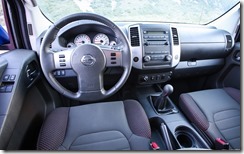
2012-Nissan-Frontier-4X4-PRO4X-dash-viewNow, I take more than a little crap from the fact that I own a manual transmission pickup, one of the last made and sold in the US: a Nissan Frontier. “Nobody” drives a manual anymore.” It’s almost true. Fewer than 3% of cars and trucks sold in the US have manual transmissions. Ten years ago, half of the vehicles sold had manual transmissions, especially trucks. It won’t be long before the only people who know anything about shifting gears will be motorcyclists and even that could change quickly. Scooters have always been “automatic” shifters and some motorcycles are going that way, too. My wife tolerates our pickup, but she has decided she wants a mini-van with an automatic transmission and all of the extras. My driving days are numbered and I’m not complaining. Part of the deal we made with the pickup was that I’d keep driving as long as we had it. When we go back to an automatic transmission vehicle, I’m moving to passenger-only status. It’s not a punishment for her, but a reward for me after driving more than a million miles in my lifetime, I’m opting out.

Some people believe that possessing a driver’s license is an important thing. A rapidly increasing number of Americans disagree. “Among young adults, the declines are smaller but still significant—16.4 percent fewer 20-to-24-year-olds had licenses in 2014 than in 1983, 11 percent fewer 25-to-29-year-olds, 10.3 percent fewer 30-to-34-year-olds, and 7.4 percent fewer 35-to-39-year-olds. For people between 40 and 54, the declines were small, less than 5 percent.” Owning a car and driving are less important in urban areas and are becoming less important in small-to-mid-sized cities. Red Wing, for example, has a terrific bus service that will pick me up at my driveway. It’s only 3 miles to downtown from my near-edge-of-the-city home, so walking or bicycling makes a lot more sense than driving about 90% of the time to go downtown. Getting to the Cities is more complicated, but not impossible. Amtrak has a daily “shuttle run” to the Cities, even though the times are weirdly inconvenient. There is talk of a “Red Rock Corridor” rail that would connect Red Wing and other Mississippi Valley cities to the Twin Cities. If that happens, even these rural areas1 could see a drop in car ownership.

automated_carsIn 2017, it might seem impossible to imagine a future where most people don’t drive their own cars. In 1900 it was pretty impractical to imagine a future where most people didn’t own a horse. In 1960, it was difficult to imagine a future where most Americans didn’t own an American-made car. In 2030, it could be hard to believe that people once drove cars, rather than simply instructed their autonomous vehicle to take them to a destination while they relaxed, read, did homework or work-work, or yakked on the phone. By 2050, it is entirely possible that the only people who will “drive” their own vehicle will be the ultra-rich, since they will be the only people who can afford the liability insurance. Imagine that.


1 An unanticipated effect of this shift would likely be even more abandonment of the rural areas, fewer resources for small towns and disconnected areas of even high population states like California, and more electoral catestrophes like the 2016 election unless the Electoral College idiocy is addressed. Not all Future Shock stresses are desireable or healthy. They just happen and we react as if “nobody knew it would be this complicated.”

Jul 11, 2017

Social Engineering & Motorcycling

One of my favorite things about Mount Rushmore is the statements the Park Service selected from each of those Presidents. George Washington’s words are, probably, my favorite, “The preservation of the sacred fire of liberty, and the destiny of the republican model of government, are justly considered as deeply, perhaps as finally staked, on the experiment entrusted to the hands of the American people.” Life and democracy are just a series of experiments, some successful and some not so much. Anyone who has ever worked in a lab of any sort knows that you just move on when an experiment fails.

So, with that background in mind, I think the MIC has been clueless in its sudden approach to find new customers. I’ve been saying, for almost 20 years, that new riders will not be the same people as the old riders. The Hardly/biker/gangbanger crowd are old, clip_image002white, poor, and stupid. They are, literally, on the way out; and good riddance. Their redneck replacements will be even more poor, dumber, and will satisfy themselves with the old stock easily found on practically every block in the country. Harley stock-piled bikes in warehouses, dealers’ lots, and in the garages of wanna-be yuppies who are so underwater on their chrome toys that they’ll never see dry land again. In the meantime, those “nicest people” Honda once convinced to buy motorcycles have moved on to other things. In Sound Familiar?, my last post, I ridiculed the traditional approach the MIC is taking to try to cling to the biker business in spite of the fact that bikers are about as trendy and hip as Disco Dan. A local Red Wing motorcyclists’ Google group I sometimes follow was on a similar subject, based on that Bloomberg article and the fact that internal combustion powered vehicles are losing ground faster than expected.

One member seemed to think electric motorcycles are a joke and that my suggestion that motorcycling advocates try to seperate motorcycle licensing from cage licenses was ridiculous. “I'm envisioning an electric moped running the ironbutt rally. Pulling a trailer full of batteries. Picking up fresh batteries every 100 miles.

“Not to mention that a driver's license is much more than a license to drive, but also establishes residency, personal identification and even implied nationality. 

“In my opinion, it makes sense to learn to drive in a car. Protected by a cage, one can learn traffic patterns etc without the undue risk associated with a bad/inexperienced decision on an MC.”

Since the Iron Butt is probably the ultimate motorcycling conspicuous consumption event, 1000 miles a day for no reason other than to burn fuel and attempt suicide-by-deer, I don't think many motorcyclists or motorcycle manufacturers take it into account in their product planning. I suspect there are more motorcyclists who don't know about the IBR than who do. I'd never heard of it until I moved to MN in 1996 and I'd been on two wheels for 40 years at that point. People who might commute by motorcycle are, or should be, a far bigger concern of the industry than the 12 guys who spend as small fortune on their once-a-year IBR extravaganza and the rest of the year recovering from that crippling event.

However, you might envision the ass-kicking suck-pow-blow bikes are getting at Pike’s Peak. Like horse-and-buggy owners at the turn of the last century, electric vehicles are coming on a lot faster than the old guard thinks and the speed of that change is only going to get quicker.

clip_image004In fact, a drivers’ licenses is exactly nothing “more than a license to drive.” There are identification cards that serve the identity purpose of a drivers' license and you get them at the same DMV office or, in civilized states, at the post office or your local library. Red state voter suppression politicos try to make ID cards as difficult and expensive to obtain as cage licenses, but those folks are fighting a losing battle. Demographics and economics are going to be driving this bus and no matter how much voter repression goes on in the red states, those two things will be driven by forces outside of political control.

That last argument is what I think of as the ultimate helicopter parent whine, “I’m gonna put my half-witted offspring in the largest SUV possible, in case little Douchebag gets distracted by his cell phone, video game, and in-dash movies and loses control of his vehicle and kills your kid; who was responsibly walking, bicycling, or motorcycling.” If you think young drivers are learning traffic patterns, you haven’t been on the road in any sort of state of consciousness. You don’t learn patterns or good habits from being inside a well-protected, smarter-than-you vehicle. You learn by immersing yourself in the environment where you will sink or swim. That’s why walking, bicycling, and motorcycling are better educators than cages, but it’s also why we’ve become a nation of pampered, lazy, uneducated spoiled brats who are non-competitive, trailing-edge, and have traded democracy for idiocracy.

hondaad2I’m not convinced motorcycles have a future in the industrialized world. When the only people who can afford the average motorcycle are the 1%, the market has shrivelled to unsustainable. There was a reason Henry Ford paid his workers enough that they could buy the products they built. There was an even better reason Honda tried to market their 1960’s motorcycles to “the nicest people.” Today, a reasonably practical new motorcycle costs at least $5,000 and that same money will buy a decent used car that will get the same or better fuel mileage, last longer with less maintenance, and be useable year-around.

I really believe it’s time to experiment with the whole motorcycle paradigm. I know of more than a few young people who could be tempted to obtain a motorcycle license before they mess with a car license. They might not ever bother with the car license, given mass transportation access and automous cars. While some people imagine that “drivers’ education courses” in high school or privately provides some level of competence, that would just be more of that silly idealizing-high-school crap. Drivers’ Ed courses are notoriously taught by the guy who couldn’t clear the lowest bar in teachers’ education, worse than phys-ed, and the classes are barely a joke, academically or practically. Currently, all licensing testing is designed to put butts in seats as efficiently as possible. Safety and competence isn’t any significant part of either drivers or motorcyclists training. That could and should be changed. Completely decoupling the cage license from motorcycle licensing could provide an opportunity to enhance all aspects of motorcycle training, which would make both motorcycle and car licensing more productive. Obviously, tiered licensing only makes sense. I can’t think of a single good reason to put a new motorcyclist on a liter bike; or a new driver in a 2,400 kilo SUV.

Electric motorcycles might make even more sense than electric cars, given the fact that most motorcycles don’t travel more than 1,500 miles a year and the advantage motorcycles could have in parking, lane-sharing, and storage. An electric motorcycle with a 150 mile range would more than do the transportation job for most people and a $0.06 fillup would just be icing on the cake.

Oct 7, 2015

My Motorcycles: Pure Polaris Electric Scooter

And Now for Something Really Different


All Rights Reserved © 2001 Thomas W. Day

An absolutely valid rap "against" the bikes I usually ride is that nobody ever looks at my ride and I rarely hear "wow! what a cool looking bike."  If that bothered me, the Pure Polaris Electric Scooter would be the cure.  Polaris claims that this snazzy little unit will do up to 12 miles at speeds of 16-18mph.  I'll test that claim, later, by making the poor little Scooter lug my 200+ pound butt around town and country.

Early on, I thought I'd never find out what the average speed is over any distance beyond a couple hundred yards.  Take my first morning out, for example.  I made it two blocks when a semi driver passed me and stopped in the middle of the road so he could ask me how the Polaris was powered (electric motor) and what it's range was (how the hell would I know?) and what it weighed (59 pounds, without me).  Two blocks later, I almost passed two power-walking women before getting stopped to answer the same questions plus "where can we buy one? (see your nearest Polaris dealer or call the company in Medina).  Three blocks later, a guy in a Buick stopped me to ask about the range, the manufacturer, the cost, and to tell me he thought it would be a great vehicle to ride to his deer stand.  At the coffee shop, three blocks later, in a half hour I got to read two pages of my book while answering questions about the scooter from half of the people in the store.  The ride home was just as talkative.  A little more than six blocks, four stops, four conversations, and I should be getting a free Electric Scooter t-shirt from Polaris so that I can complete my rolling advertising campaign for the Electric Scooter.

Since you mostly know me as the Geezer and you know how naturally crotchety I am, here's where you should be expecting my long list of gripes on the Scooter.  I'd like to accommodate you, but so far I'm having too much fun with the damn thing.  So is my wife, and I guess I could complain about that.  When she's riding it, I'm not.  She's already imagining a business where she rents these things to companies for parades, as sort of a rolling signboard.  I suppose she'll expect me to wear a Shriner outfit and ride the Scooter to get the company . . . rolling.  I may not care about looking cool, but I'm definitely opposed to looking dorky.  Believe it or not, I have standards, they're just lower than average.

I first saw the Electric Scooter at a MN-Sportbike pre-event.  One of the sportbikers brought his Scooter along to get from one end of the track to the other without having to mess up his Nike's.  He offered a ride to anyone who wanted to play with it, but I was the only taker.  Now I know why.  Ride it and you gotta have one. 

He had pulled the seat off of his Scooter and was riding it skateboard style.  I, mostly, ride mine the same way.  My wife likes the seat.  I just feel slightly less like I'm posing as an invalid on a powered shopping cart when I'm standing.  (See what I mean about having standards?)  The seat is way too comfortable and it doesn't allow for drastic weight-shifting which makes getting over curb entrances, at top speed, a lot more interesting. 

The Polaris Scooter is suspended.  The suspension is slightly more elaborate than the typical kick scooter, but it's good enough to suck up sidewalk irregularities and sloped curb entrances.  I've been told that the Scooter works fairly well on dirt roads, too.  I haven't tried mine because I'm nearly over the weight limit just by wearing shoes.  Adding the resistance of dirt roads would probably trip the circuit breaker in a few minutes. 

The Scooter's brakes are more than adequate, a mountain bike V-brake on the front and a drum brake on the rear.  The rear brake is also connected to the engine cutoff, so you can't brake and throttle at the same time.  Sort of an idiot switch, I guess.  The controls are in a motorcycle layout, right side = front brake and left side = rear brake, so you won't have to waste time re-routing cables like you did with your mountain bike. 

Most of the Scooter's weight must be in the tires, batteries (and their bash-rail-protected steel case), and motor, since the frame is aluminum as are most of the other metal bits.  The unit folds into something that could be carried on to a bus or packed in the trunk of a Geo.  The seat and handlebar height are fully adjustable and the hardware is all high quality bicycle bits.  The throttle/battery capacity indicator is a thumb control dead-man switch control by the right-side grip. 

The battery easily charges overnight from near-dead and the manual claims that the battery will charge from 70% depleted to full in 6 hours.  The charger is a high-tech, light-weight unit that fits in a hiker's tailbag so you can carry it with you on longer trips (using your employer's AC to provide energy for the return trip, for example).  The connector is an XLR (standard audio connector) which is unusually durable and reliable for this purpose.  The connector on the battery-end of the charging connection has a cover which will provide a little protection from dirt but it's far from water-tight.

The owner's manual contains a bit of age discrimination, since Polaris states the bike is for "age 12 to 45" riders.  If I weren't old I wouldn't be the Geezer and I resent being told that I'm too ancient to play with a toy that is this much fun.  Repeal that limitation, Polaris Marketing/Legal department.  I'd sue, but I'll probably fall down and bust my hip between now and when I'd get to court and Polaris would get to use me for evidence that the manual's precautions are justified.

The other precaution that seems a little paranoid is their warning against riding the Scooter downhill.  Unless you are a Flat Earth'er, it's hard to imagine a place you can ride where you're not either going uphill or downhill.  I see two possibilities regarding this contraindication: 1) it's a legal butt-covering tactic, 2) downhill operation could over-charge the battery.  In Amerika it's always reasonable to assume that any idiot who finds a way to go over the bars and bust his empty skull will immediately locate a lawyer and claim "manufacturer negligence."  However, I'd appreciate knowing if this warning is legal gibberish or some sort of limit on the Scooter's capability.  I've noticed that even when the battery is off and the handlebar kill switch is off, the charge-condition LEDs light up when the bike is pushed.  If the battery is getting a recharge from the motor during downhill operation, that recharge might be unregulated and could damage the battery or other circuitry.  I'll wait by the phone for a response to this question.  I'm reasonably patient about these things.  Ten minutes and no one has called, I give up.  I'll keep riding it up and down hills and I'll let you know how that works out for me.

Polaris is, apparently, a little confused about how they want to support the Electric Scooter.  Their marketing handout and the Pure Polaris website (http://www.purepolaris.com/) states that the unit comes with "a year limited warranty."  The owner's manual revises this number to 90 days.  I'm guessing the warranty is somewhere between 90 and 365 days (note: Polaris confirmed the one year limited warranty). In the end, the company simply pretended the scooter never existed and, to this day, their misnamed "Customer Service" department pantomimes shuffling through pages of manuals and computer screens before saying "We never sold an electric scooter."

Riding the Scooter is about as simple as two-wheeled riding gets.  The electric motor provides bags of torque.  When the battery is freshly charged it's not that difficult to life the front wheel on full power takeoffs.  You simply press the thumb control and go.  The Scooter is up to max speed about the time your foot hits the floorboard.  The belt-driven, 350W rare-earth magnet motor is quiet and amazingly powerful for its size. 

The 12" wheels roll over minor road irregularities and the suspension sucks up the rest.  The bike moves fast enough that you'll need to use countersteering techniques to turn quickly.  Standing or seated, the Scooter is agile and responsive, although you do have to get used to applying power a few seconds before you want it, because of the time-delay between the thumb control and a reaction from the motor. 

So far, I've learned these simple rules for my Scooter: 1) turn the freakin' battery switch off if you want the charger to do its job, 2) watch the weather, unless you want to walk home in the rain (electric motors and rain don't mix), 3) try to avoid police attention because nobody is sure how the law applies to this sort of vehicle, 4) use lots of body english to take advantage of the limited-travel suspension.  I've made three 10 mile, round-trip excursions on my Scooter and have returned with power to spare.  I'm about to test the unit on a home-to-work commute, but I'm building up to it since I haven't found an efficient, limited-traffic route as yet.  My bicycle has wasted away (while my belly is doing quite well, thanks for asking) because the Scooter is a lot more fun than the bike.  Any trip from home, shorter than ten miles, gets made on the Scooter.  It's more fun than the bike, more efficient than either the car or the motorcycle, and I'm starting to enjoy the attention.

I always assumed I'd give this to my grandson when he turned 13 and was old enough to ride it on the street legally. However, he snapped off the throttle lever practicing wheelies and snuck the scooter back into the garage without telling me about the damage or saving the broken part. Now, Polaris is doing a wonderful Sergeant Schultz imitation ("I know nothing.") and Wolfegang's window of opportunity and interest has past. Most parts that matter, like battery replacements are easily available on Amazon and through other on-line vendors.
 
2010 Postscript: Polaris has continued to disavow any knowledge of this vehicle since around 2004. Because of this review, I get emails from all of the company's victims/customers wanting to know where to buy parts for this little scooter. Through direct conversation with the company, I have been told "we never made/sold anything like that." They are, obviously, either liars or fools. This was a high-end attempt to get into the electric runabout business (at $1,000 MSRP) and Polaris isn't fooling anyone by pretending to be ignorant. They were probably too late to the market with too little support and their usual marketing stupidity and decided to cut and run from the model without a thought in their tiny little marketing/sales heads about the customers they were abandoning. Sorry, guys. I can't help you fix your electric scooter and I can't find parts for my own. I desperately need a new throttle mechanism, but I'm out of luck and the scooter is stuck in my shop until I find a substitute or give up and toss it in the dumpster.

2014 Postscript: Holy crap! I found a live person in Polaris' customer service and received this response:

Thank you for contacting Polaris. I apologize that you have had a poor experience with service parts for your electric scooter. Your model is called the EV Rider Xport SLX 707. This is a scooter with front and rear suspension and has the narrow tires. These scooters were made in the mid 2000’s and Polaris does not support these vehicles internally; however, service parts are available for the Polaris Electric Scooter directly from “Light Electric Vehicle Technologies.” They can be contacted at 1-888-743-3738 or levtservice@aol.com. [Talk to Shelly.]

Thank you for your inquiry,
Kyle
Parts Resolution Specialist
Polaris Industries
1-800-POLARIS


I don't know about the rest of Polaris Industries "Parts Resolution Specialists," but Kyle kicks ass. It took about a week and $24 (including shipping) for the throttle lever to arrive, a minute to install it, and our Polaris Electric Scooter/EV Rider Xport SLX 707 is back on the road. Many of the other parts for this scooter are common, like the batteries and drive belt, and the less common stuff may be in stock with Light Electric Vehicle Technologies (602 S 1st Ave, Pocatello, ID 83201 208-232-5515).

2020 Postscript: This August, I decided I had too many electric bikes (and one scooter) in my garage. I put the Polaris scooter up on Craig's List and was swamped with emails and calls. A local guy bought it as a reward for his daughter's excellent academic performance and, last I heard, she was lovin' it. I hadn't fired it up for a couple of years when I made the decision to clean out the garage. It needed one new battery, some connector cleaning, a little cosmetic work, air in the tires, and it was good to go. I even took it for a ride with my GPS in hand to verify the scooter's top speed (14mph) for the Craig's List ad. I have some really good memories of this scooter, but I have moved on to eBikes.

Aug 20, 2013

The sad fact is, I despise conservative anything. The kind of mental midgetry that bans a motorcycle from a race because it is too good just makes me want to ignore everything racing organizations sponsor. One of my childhood heroes, Parnelli Jones, experienced this bullshit at the Indianapolis 500 with his STP-Paxton Turbocar. I haven't watched an Indi 500 since. There was a back-story about Honda's EXP-2 that I can not find a link to, but as I remember it the bike was banned from the Paris to Dakar series because no one else could replicate the technology without breaking Honda's patents. Bore me to death with your old technology and timid bullshit and I take my money and time somewhere else. It is despicable that electric motorcycle racing is already turning into a bunch of little old ladies worried that someone might knit something interesting.

Jun 7, 2013

Going Downhill

When I was a 19-year-old kid and was barely into ownership of my first car, I didn't know an open end wrench from a socket from an Allen wrench. Right after getting married, I bought an early-60's Opel station wagon (that probably looks a lot like the one at right, if it hasn't been crushed into a little rusty square). It was a great car that served us well and didn't cause any irritating problems, but it was destroyed by a lady who ran a light crushed my little station wagon with her damn Cadillac. She claimed I'd run the light and the cop decided to believe the well-dressed bitch rather than the long-haired hippy kid and I walked home $500 poorer and without a vehicle.

I went from good to bad. My next vehicle was a barely-used 1959 MGA convertible. It had been left in storage by a guy who went overseas for several years. My independent euro-trash mechanic/friend thought he was doing me a great favor in scoring this car for $500. In Dallas, an MGA is pretty much a 100-miles-between-major-repairs vehicle. The MGA's postage stamp radiator didn't even get close to dealing with Dallas' 100+ days and the car blew a head gasket about every other day. I sold it a year later and several thousand dollars poorer for $300 and it rolled away smoking like a "clean coal" power plant. I have had nothing by sympathy for sports car owners ever since.

A couple of unreliable but cheap vehicles came next, but the first one that mattered was my 1967 VW convertible. I loved that car, but less than 10,000 miles after I bought it (for $1600 with 15,000 miles on the odometer) the engine tossed a rod. I took it back to the dealership where I'd bought it and the in-house, real German mechanic rebuilt it for $500 (that number just kept coming up). I learned a few things from watching him work on the motor. I learned a lot more from John Muir's handy book, How to Keep Your Volkswagen Alive.

When I decided my growing family needed more room, I traded my beautiful convertible for a 1971 Westfalia Vanagon. That was my next-to-the-last experience with a car dealer. The VW dealer had spun the mileage back about 60,000 miles and the motor and transmission were held together with banana peels and bailing wire. After a brief moment in court, I walked away with some cash and a bad taste in my mouth regarding VW dealers. The company didn't do much for me, either, and I have never forgotten that. Over the years, I've learned to be wary of dealers. I hear pretty much nothing but horror stories from bikers who trust their rides to the place where the bike came from. Hardly anyone has anything good to say about the people hired to work on vehicles in dealerships.

But I don't usually think about that stuff much. I mostly do my own work and muddle through slowly but eventually. In looking at a how-to PDF on installing a transmission modification to my "new" motorhome, I ran across this statement, "Most VW dealerships have no idea that the ATF needs to be changed every 40,000 miles minimum (as per the shop manual fine print). Most dealerships have never done this job and have no idea how to do it properly. Additionally, most will tell you that the automatic transmission is a "sealed unit" and is never to be opened or changed. This is utter nonsense. Do not listen to them! In fact, my blanket advice is to never go to a VW dealership for any reason, if you can help it!"

Some things are, apparently, universal.

I was sort of thinking that when my two-wheel days are done, I'd graduate to a new front wheel drive Beetle convertible. Maybe not.

Jan 23, 2013

A Technological Dead End?

All Rights Reserved © 2008 (revised 2012) Thomas W. Day
I have a theory, born from personal experience and lightweight observation of history.  My theory is that as a technology approaches terminal, it gets really good.  Then it dies.  When a new technology is just finding its legs, the technology being replaced makes a wonderful collection of giant leaps; which will fail to stave off obsolescence, even for a moment.  But examining those last moments of declining technological health can be really enlightening.  

I'm not saying this as someone who has been on the leading edge of a technology shift.  In fact, as a mid-tech transient I've been trailing edge for most of my life.  In the mid-1980's, professional analog audio recording gear began to be displaced by digital recording systems.  The last generation of analog recorders were a huge improvement over anything previous technology.  But it was too late: the convenience, cost advantage, signal-to-noise improvement, and trendy-ness of digital wiped out those last moments of glory and hardly anyone even noticed that most of the problems usually associated with recording on analog tape had been minimized.  Today, professional analog recording systems are practically relics and even the simplest personal computer has more editing and playback horsepower than a multi-million-dollar studio from twenty years ago. In my lifetime, I've seen (or am seeing) electronic tubes, analog computers, magnetic data storage, photographic film, visual artist's tools, payphones, cathode ray tubes, analog television, vinyl records and turntables, carburetors, and dual-shock motorcycle suspensions quickly peak and begin the rapid transition from regular use to museums' shelves [2]

I was first turned on to this realization when I was a very young man.  When my kids were toddlers, one of our favorite weekend trips was to Minden, Nebraska to visit the Harold Warp Pioneer Village Museum.  The place is stuffed with all kinds of historic tools and toys, from Pony Express relics to railroad history to farm equipment to early internal combustion vehicles. The thing that tripped my trigger was getting a close look at horse-drawn carriages, especially the high-end, luxury models from the turn of the last century.  Just as the first internal combustion vehicles were making horse-drawn transportation obsolete, the last carriages were becoming efficient, comfortable, and sophisticated.  I studied suspension systems that we wouldn't see on cars until fifty years later.  Some of these vehicles had heating systems, evaporation interior cooling, clever convertible tops, interior and exterior lighting, safety equipment, and finish work that made the next half-century of car design look primitive.  Unfortunately, they also had horses providing the horsepower. 

The other sign of impending obsolescence is nostalgia.  This country is currently being decorated with monuments to the Golden Days of Oil.  To anyone with a sense of history, that ought to be a big, red, flashing sign that something is on the downhill slide.  Folks are paying idiotic prices for Gulf, Esso, Kerr-McGee, and Standard Oil memorabilia.  Oil Century Museums are popping up everywhere from California to Tex-ahoma to Florida to New Jersey.  Ohio is home to the "Society for Commercial Archaeology."  And, of course, we have wads of motorcycle museums littering the country side.  On my last long Midwestern bike trip, I counted ads for half-dozen Harley/Indian museums before they began to fade into the fast food, antique store, and hotel signs. The last couple of decades witnessed a giant blast of the past as Boomers tried to revive their youth with muscle cars and 1950s-styled big twins.  That fad won't last much longer, because Boomers are soon going to be looking for their next hipster thing in prosthetic hips (like mine) and electric wheelchairs. 

Watching what's going on in our culture makes me suspect that we're about to see our beloved internal combustion engine technology vanish.  I don't know if you've noticed, but internal combustion engines have become trailing-edge technology, almost overnight.  There are alternative transportation systems on our highways and all over the rest of the world.  At the same time the technology designed into internal combustion-powered cars and, especially, motorcycles has become absolutely incredible.  The performance, reliability, and even the sound of modern motorcycles has been tweaked to the nth degree.  The only thing that's been stubbornly ignored is energy efficiency and that's probably the only characteristic that really matters in the twenty-first century.

In end-or-year issue, the relatively conservative Motorcycle Consumer News published their "Performance Index" for the current generation of motorcycles. In a summary, they listed the following most important performance categories: ten best 1/4 mile times, ten best rear-wheel HP, ten best power-to-weight rations, ten best top speeds, ten best rear-wheel torque, and ten best 60-0 stops. All but one of those measurements are, essentially, the same sort of 1950's information; power.

Most likely, the only modern statistic included in the data provided would be "average fuel mileage." By this standard, the 2006 Kawasaki Ninja 650R was the winner at 65.3mpg (the 2007 version was 10mpg less fuel efficient), followed by the Ninja 500 (64mpg), and Honda's Rebel 250 (62.6mpg). The Victory 8-Ball at 29.8mpg was the fuel guzzling loser. My daughter's 1991 Geo got better mileage than more than half of the motorcycles MCN rated. From occasional long ride experiences with folks on liter sportbikes, my own calculations estimate that MCN was optimistic about the efficiency of most of the bikes they rated. I wouldn't be surprised at less than 20mpg performance from many of those street legal race bikes. (The new Honda NC700X has upped the game a bit, but I think it's too little, too late.)

While those performance-based qualities are being fine-tuned, the world's oil consumption has rapidly passed world oil production.  Sometime in the last five years, oil demand whipped around oil production capacity and the world's economies will either shift away from burning petroleum or suffer the consequences.  Some experts claim that 2005 was the whipping point; the last year of "cheap oil" and that we're on the downhill slide where production will get further from meeting demand every year.[1]  In 1999, the uber-conservative, alternative-technology-spurning oilman Dick Cheney was one of those "experts" warning that the age of oil is about done.  Cheney told other oil execs, back then, that the reason oil companies weren't building new refining plants was that investment would be putting good money after bad.  We have more than enough oil processing equipment, we don't have much oil left to process.  Some folks estimate that in as little as two or three years, it may cost $100 to fill a compact car's tank.  Filling a bike's tank will be pretty close to half that and it's going to be more expensive every year afterwards.

Let's get real.  A 250hp, liter bike that burns 15-20 mpg is going to be a pretty worthless piece of history when gas costs four to ten times what it costs today.  Everything we use, do, and consume, will be incredibly more expensive when oil bumps against the predicted 2025 $400 per barrel.  If we humans are lucky and put some planning and a lot of resources into the next few years, we might be converting to hydrogen cell vehicles or some other petroleum-less fuel about the time the old technology becomes impractical.  I like to imagine that motorcycles, with their inherent energy efficiency and other advantages will be part of that change.  I'm sure horse lovers hoped horses would find a place in the modern transportation scheme, back in 1906.  Who knows, maybe horses will make a comeback?

Personally, I'm feeling a little nostalgic today, while the majority of Americans appear to be clueless about the future of our energy-dependent systems.  As an example, the dim-bulbs in St. Paul are widening freeways, planning communities that are further than ever from necessary services and employment, and designing government buildings that depend on energy systems that will be disappearing about the time those facilities are put into service.  My sentiments, inspired by that irresponsible bureaucratic inattention to reality, is considerably less upbeat.  Their behavior is more evidence that we always get the government we deserve, just like every other country in the world. 

While there appears to be a fair amount of thought going into replacing the power plant under the hoods of our cars, for a while it looked like that wouldn't be happening for two-wheeled vehicles.  Zero Motorcycles and Brammo have changed all that.  Zero Motorcycle's new Z-Forcetm power pack is pushing electric motorcycle technology fast into the new Green Age. With a 100 mile range, an 88mph top speed, and 3,000 charge cycles (a 300,000 mile battery life), Zero's bikes are beginning to warrant their price premium. Hayes' diesel-powered bike is another cool thing.  A hydrogen-powered turbo sportbike would be beyond hip.

Knowing that this oil barrel is more than half-empty with a rust hole in the bottom has forced me to suspect that the world I lived in is vanishing.  I'm trying not to sound like a reformed whore, but it's hard for me to pretend to any other pose.  I am from a generation that burned gas for almost nothing but recreational uses.  I can "brag" that I sometimes rode my Kawasaki Bighorn, Rickman 125 ISDT, or even the Harley Sprint to the racetrack, took off the street hardware, raced the bike, and, after reinstalling lights and crap, rode back home.  I guess that's something.  But I also trailered, trucked, and station-wagoned bikes to races, took long mind-altering rides in the country, and practiced racing on all sorts of surfaces.  Today, those leisurely rides through the country side feel a bit like immature, excessive exercises in selfishness; and I'm missing them before I've given up doing them.  I know that every drop of oil that I waste is coming out of my children and grandchildren's heritage and I'm becoming more than a little ashamed of the oil I wasted before I knew better.  The days of getting together with a few dozen friends to explore backroads and hang out in the twisties are fading.  I think sports like motocross, road racing, and all of the fun we have had aimlessly and recreationally burning fuel are also coming to a sooner-than-you-think end.  Between declining resources and world-wide pollution and global heating catastrophes, it appears that we have hung on to these carbon-burning handlebars a little too long.

I'm not celebrating this.  I'm not gloating or saying "I told you so" while I write this.  I lived in a gloriously ignorant, greedy, selfish time and it was an incredibly fun period in human history.  I wish I could pass it on to my children and, especially, my grandson.  If we're truly a civilization worth saving, we'll find a way to make a world our kids can enjoy.  If we don't, we deserve any misery we receive. 


[1] A depressing, but complete site for all sorts of links to information about the coming energy crisis is http://www.lifeaftertheoilcrash.net/.
[2] Paul Young added this note to my list of vanishing technologies from my own lifetime: "One of the guys I work with had his 11 year old son come up to him and ask 'Have you ever heard of something called a landline?' Something else to add to your list of disappearing technology. "