Showing posts with label motorcycle safety training. Show all posts

Jan 28, 2024

Getting A License in 1992

After I left California in late 1991, I spent exactly one month in Indiana working for the dumbest company I’ve experienced in my long life. After I’d given up that experiment as a loss-leader, I flew a bunch of resumes in westwardly directions and landed my first medical devices job in Colorado. The company moved me and all I had to do was get my lazy unemployed ass from Elkhart, IN to Denver in 60 days, when I’d start my new job. I’d shipped my two motorcycles ahead with the moving van, outfitted my 1984 Toyota Van as a marginal camper, and I was starting my westward meander with a dinner in Chicago with an old friend. He and another of his friends spent a good bit of energy arguing out a safe place for two black guys and a goober from Kansas for a late night dinner. We settled on a pizza place in western Chicago and, mostly, that worked out well. I didn’t have to pay for anything and didn’t realize until I stopped in Springfield, MO and realized that someone had lifted my billfold in the restaurant’s hatcheck back in Chicago.

My step-brother lived in Springfield, which is why I’d taken that route, and I stayed with his family for a couple of days while I chased down credit card replacements and did the usual 1990’s routine for a stolen identity. The state of California and my insurance company were gracious enough to send me evidence that I was licensed and insured, but I did drive the rest of the way to Colorado without an actual driver’s license. Since I had no reason to be in a hurry, it took me almost a month to make it the 1,000 miles from Chicago to Denver. A few weeks after I arrived, I was living in a friend’s basement waiting for my new job to start. Not having an official license to drive meant that I had to take the whole Colorado driving test, including the driving part. After I had that, I had to take the motorcycle endorsement written and driving test at the DMV.

I had a 1983 Yamaha 550 Vision and a 1986 Yamaha XT350 to choose from for the test and I’d been spending most of my previous 5 years on the XT350 commuting in L.A. and riding offroad in the southern California and Baja deserts. I was as comfortable on my XT as any motorcycle I’ve ever owned and loved. So, it was a no-brainer; the XT350 it would be.

It was January 1992, but the weather was practically Californian and I wanted to be legal as soon as possible. The written test was easy and I’d lucked into being able to go immediately from paper to the DMV alley where the examiner gave the test. The rest range was pretty weird. Since there wasn’t much room to work with, parts of the “course” was overlaid on other parts; like the cone weave, the swerve, and the quick stop tests. The cop administering the test had to reset the course for each section of the test, moving cones as required. All of the exam was incredibly easy (as all US motorcycle endorsements tests have always been) on the XT and the last test was the quick stop. I’d never had to take any sort of test for my motorcycle endorsement, because when I got my first license in 1964 you didn’t have to do anything but ask for an “M” stamp on your cage license. I was feeling pretty cocky and sure of myself by that last portion of the test.

As I remember, the runup to the quick stop was about 50’; according to the examiner that was barely enough space for a lot of motorcyclists to get up to the required 15mph. He was a little irritated that day because he’d just flunked a couple of cruiser riders and a Denver cop for failing this part of the exam. I was having fun and didn’t take note of his mood (I’m notorious for that kind of obliviousness.) and I was absolutely convinced that getting my endorsement was a given. I squared up at the start line, gave the bike a little more gas than necessary and took off aggressively toward the stop-box. The examiner was obviously startled and as I went past him he seemed excited. A smarter guy might have played it safe, but at that moment in my life I felt more free to express myself and be me than ever before (or since). Worst case, I fail and have to come back in two weeks and do it again on the same test fee. The moment my front tire hit the stop-box line, I nailed the front and rear brakes, lifting the back tire about 2’ in a spiffy stoppie. The examiner had warned me about wheelies, but he did not mention stoppies.

Turned out, he’d never seen a stoppie that resulted in a stop that didn’t also include a crash. Earlier that week, a couple of arrogant Denver cops (not motorcycle cops) had brought their Harleys in for the exam and both had not only sailed past the stop-box but had panicked so completely that they’d put themselves in the dumpster at the end of the alley. That was my examiner’s most recent experience with dumbasses overdoing the quick stop test. Turned out that I just made him laugh. I was so pumped up that I offered to do it again for both of our entertainment, but he’d had all the laughs he wanted for the day and I left with a Colorado motorcycle endorsement.

Since then, I’ve been renewing and transferring that same endorsement from Colorado to Minnesota for the past 30 years. In late 2000, I started on the path to becoming a Minnesota Motorcycle Safety Instructor and I’ve given something resembling that same test to several hundred wannabe motorcyclists. I’ve seen a couple of stoppies, usually accidental, during the course and the endorsement test. I might shake my finger at the student and offer a bullshit warning, but who am I to flunk someone for showing a little style?

Sep 6, 2023

Why I Think They Are Wrong

The constant reminder that the “Normalcy Bias” plagues motorcyclists into making fatal and foolish decisions is one of many reasons I decided my Motorcycle Safety Foundation (MSF)/Minnesota Motorcycle Safety Center(MMSC) instructor career was not worth continuing. Years ago (2006), I wrote one of my all-time favorite essays, “Panic Reactions,” where I described a phrase I came to use almost as often as “good job” in my motorcycle safety classes, "Every panic reaction you have on a motorcycle will be wrong." As part of my answer to every question a student might have had would be my constant hunt for “escape routes.” The latest version of the MSF’s Basic Rider Course (BRC) de-emphasizes risk to the point that instructors were reprimanded for talking about things like escape routes. There, of course, is a reason for that: 1) The MSF is owned by the Motorcycle Industry Council (MIC) and their overwhelming incentive is to put butts on seats; 2) The MMSC is funded by motorcycle license endorsements and their overwhelming incentive is to make it easy for anyone in the state to obtain and retain an endorsement. Years ago, I was asked to present a “This I Believe” talk to the Unitarian Universalist society to which my wife and I belonged and what I believe in is that “Incentives Are Everything.” Sadly, I find absolutely no evidence that humans are anything more than a slightly evolved animal and that 99.99…% of human activity can be explained by self-interest and incentives.

I get why the MIC is uninterested in actual motorcycle safety. Like every corporation on the planet today, today’s profits over-ride any future self-interest; you gotta satisfy those “equity investors” first and everything else be damned. The MSF’s mission statement is pretty clear, “MSF is the country's leading safety resource and advocate for motorcyclists. We create world-class education and training systems for riders of every experience level. We raise public awareness of motorcycling to promote a safe riding environment.” “Public awareness” is not motorcycling’s main problem: incompetent motorcyclists is overwhelmingly the biggest problem, illegal noise is second, and a close third is the outright hostility toward the motorcycle gangs that largely represents motorcycling in the public eye. Neither of the two groups I was once associated with have a reason to care about those problems. The state’s civil servants are all old enough that they’ll be long retired before any change happens and the MIC’s executives will be long golden parachuted out when the economics behind US motorcycling finally drops the coffin lid on motorcycles and public roads.

In the past couple of months, I’ve had to listen to at least a dozen motorcyclists and ex-motorcyclists describe their “had to lay ‘er down” stories. Not a one of those fairy tales was even slightly believable. If you can’t competently use your brakes, you sure as hell can’t pull of that stuntman bit, but what you can do is panic, scream, and fall over and, then, make up some bullshit story about how you planned it all and it either worked out or didn’t. At least three of the goobers telling me their sob story were hobbled for life from their motorcycle episode. Even they imagined doing something other than simply and stupidly fucking up and falling down when they crashed and disabled themselves.

Back to the “normalcy bias,” one of my favorite books (and podcasts) is You Are Not So Smart and the chapter on normalcy bias describes people frozen in their seats as a crashed airliner catches fire and burns down around them, while their brains chant “this can’t be happening, everything is normal” until the air is sucked from their lungs and they are fried or blown to pieces. The only way to avoid being trapped by your disbelief is to prepare in advance, to consider the options in a disaster, to look for escape routes, and to think about the steps necessary if escape becomes necessary. Every place you go and everything you do should be accompanied by this process, especially in Crazyville, USA where the NRA has armed every nitwit, fanatic, and pissed-off momma’s-boy incel with enough weapons to empty an auditorium. On the highway, an intelligent motorcyclist knows that bicyclists and pedestrians are the only road users who present a lower threat than a motorcycle and, as such, we’re invisible. The only protection we have are escape routes and a vehicle capable of using them [sorry cruiser and trike guys, you’re likely dead since your invalid bike can barely manage asphalt].

You could argue that riding while constantly worrying about being run over by a distracted, incompetent, and/or angry cager takes all the “fun” out of riding a motorcycle. You could delude yourself into imagining that riding rural highways minimizes those risks. The only real protections you have are your skills, your preparation, and luck. [Never discount luck.] An insurmountable obstacle for me to consider continuing my “safety instructor” career was the organizations’ discounting risk in favor of “more butts on seats.” I love motorcycling and motorcyclists (not bikers, they aren’t the same people) and my life was greatly enhanced by 60 years on a motorcycle, but filling the roster with untrained, unprepared, and unskilled riders is going to kill this form of transportation and I don’t want to be part of that.

The best guess is that motorcycle crashes cost the US economy $16B and the entire US motorcycle industry produces a gross income of about $5.6B in 2022. The damned industry and our idiot licensing systems and godawful training approach produces an income that is not-quite 1/3 of the cost of motorcycling to the nation. In comparison, the automotive industry produces $1.53T in gross income and the cost of automotive/truck crashes is about $340B, or one-fourth the national revenue from cars and trucks. Any half-rational nation would start purging motorcycles from public roads a few minutes after absorbing those numbers. We are closer to half-witted than half-rational, but that just means it will take longer to happen. But it will happen.

Sep 26, 2021

eBikes, Mopeds, and Motorcycles: Is There A Difference?

eBikes (“e-bikes”?) are becoming the most dangerous vehicle on the road, despite eBikers claim that bicycles and eBikes are not “vehicles.” Hint: if you are not walking and you are moving you are in or on a “vehicle.” "noun: vehicle; plural noun: vehicles 1. a thing used for transporting people or goods, especially on land, such as a car, truck, or cart." A bicycle/eBike is definitely “a thing” and even if you are just moving about recreationally you are being transported. This is, perhaps, the dumbest aspect of eBike promoters argument against regulating and licensing eBikes. If you like dumb arguments, you’ll love this doofus: Bolton Bikes.

If you’ve stuck with me for a while, you’ll know I think motorcycle licensing in the US is idiotic. And by that I mean any idiot with $13 and bare-minimal skills can get a motorcycle endorsement and, based on local traffic, I’d say every idiot in Minnesota has a motorcycle endorsement.

eBikes: Federal law in HB 727, a 2002 law enacted by Congress, defines an electric bicycle as “A two- or three-wheeled vehicle with fully operable pedals and an electric motor of less than 750 watts (1 h.p.), whose maximum speed on a paved level surface, when powered solely by such a motor while ridden by an operator who weighs 170 pounds, is less than 20 mph.” Most states adopted that definition of eBikes and most also adopted the federal park regulation that allowed eBikes fitting that description access to bicycle trails and bike lanes. In some states, eBikes are excluded from the legal definition of “motor vehicles.” That, mostly, is for the purpose of minimizing licensing requirements.

State bicycle/eBike helmet laws are inconsistent, irrational, and unequally enforced. If there are bike helmet requirements, most likely they will only be applied to whatever the state decides are “children.”

Mopeds: Mopeds are probably the most misleading named vehicle on the planet today. A moped is legally defined as "[a] vehicle that has two or three wheels, no external shifting device, and a motor that does not exceed 50 cubic centimeters piston displacement and cannot propel the vehicle at a speed greater than 30 miles per hour on a level surface." You’ll notice, I hope, that nothing is mentioned about pedals in the moped description. A zillion years ago, mopeds were mostly bicycles people had stuck un-muffled 2-stroke motors to, leaving the pedals to fool lazy cops (as if there is another kind?) and piss off as many pedestrians, neighbors, and property owners as possible. State laws about mopeds are all over the place. Some states require a license plate and motorcycle endorsement for any vehicle that meets the definition of moped and above (anything not legally a bicycle or eBike) and some states only require a license for under-16 or under-18-year-old riders. Most “mopeds” are just small (50cc/under-30mph) scooters. Moped horsepower definitions vary by state from anything over 1 h.p. to 5 h.p. Some states (Colorado, for example) have a weird undefined area between 750W and “4,476 watts for electric motors” (6 h.p.) where the vehicle is neither an eBike or a moped. I can’t imagine what kind of nutjobs wrote those laws, but I’ve pretty much given up on at least half of the fools in this country so I’m not inconvenienced.

Likewise, helmet requirements are all over the place for mopeds. Like motorcycles, there is no rationale behind moped helmet laws. Most states require helmets for 18-and-under, but states like Minnesota rarely bother to enforce those laws (or any other laws that don’t get cops into non-white people business).

Motorcycles: Motorcycles are pretty much everything else, including some 3-wheeled vehicles, like the Polaris Slingshot and Can-Am Spyder, that are “motorcycles” because that is how the manufacturers slithered past car safety regulations. The lesson there is “If you don’t care how many of your customers you kill, call your vehicle a 'motorcycle.’” The Bolton goober claims there “are no horsepower limits on motorcycles.” Of course, he’s about as useful a source as I am on particle physics. In 2010, the EU limited production motorcycles to 100 h.p. for a while, then changed its little mind in 2015 and reversed that ruling. France didn’t follow the EU in going back to unlimited horsepower and maximum road hazard until late 2016. US DOT restrictions indirectly limit production bike horsepower with emissions, noise, and safety restrictions. Of course our lazy local policing allows bikers to circumvent federal and state regulations because so many of the so-called “law enforcement” gangsters are also biker gangbangers. The one thing cops really hate are laws that apply to themselves.

It is fair to say that anything that isn’t either a bicycle (or legal eBike) or a moped is a motorcycle; regardless of if it is a scooter, an electric two-or-three-wheel vehicle, has or doesn’t have pedals, or is a custom one-off or production vehicle. The definitions of these three vehicles are solely determined by powered speed limits and horsepower/watts. Any attempt to cloud those definitions are nothing more that blown smoke and any policing fooled by that smoke isn’t worth the price of a badge or public support.

Motorcycle helmet laws have been under siege by the very people they are designed to protect, in practically every country. As I speculated a while back, the only real argument for not wearing a helmet is a childish desire to be recognized as a biker. In 1966, the federal government offered highway funding incentives for states to enact helmet laws. (Eeek! Social engineering!) Regardless of the look-at-me! crowd delusions, the evidence for reduced serious motorcycle injury and death with helmet use is overwhelming. However, helmet laws have been under attack by the AMA and ABATE and other biker disorganizations from the start and, somehow, the AMA convinced our congresscritters to repeal the federal incentives in 1975. At that time, California (believe it or not) was the only state not to have a mandatory helmet law. Today, only 19 states have mandatory universal helmet laws. Oddly, California is one of ‘em.

Some stats about motorcycle riders, helmet use, and motorcycle crash data are . . . interesting. The average age of motorcyclists is somewhere between 51 and 56, depending on who’s data you’re believing this week. In 1980, the average age was 27. 19% of riders are women, compared to 6% in 1980. 3% of motorcycle deaths “are attributed to women” and 93% of motorcycle passenger deaths are women. (No surprises there.) “Mothers don’t let your baby girls grow up to be biker chicks?”

The point of this essay was to try and clarify the very clear lines between eBikes and the rest of motorized two-wheeled transportation. A surprise, to me, was that the line between mopeds and motorcycles is so sloppy.

Nov 2, 2020

How Do You Know I “Can’t Ride?”

One of the local gangbangers was justifying his noise maker on the grounds of “safety,” and I recommended, as always, that he invest some time in learning how to ride competently. His response was, “How do you know I can’t ride?” A quick look at his social media page had turned up a picture of him on his goober-mobile and it was pretty much what you see in the drawing to the right. So, how do I know he can’t ride?

  1. In this drawing, the “rider”1 is wearing a jacket, boots, and jeans. No helmet, of course. While that isn’t even close to decent protective gear, the real gooberboy’s picture showed him in a wifebeater, lowtop tennis shoes, and a scraggly pony tail. I know he can’t ride because if he could he’d know how fast shit can go bad and how much blood, skin, and mobility he is going to lose when he hits the asphalt.
  2. The bike the dude in the conversation rides is just as disabled as the mechanical junk depicted in this picture. Everything from the feet-forward rolling-gynecologists'-chair riding position to the extended forks to the low ground clearance screams “this is a crash waiting to happen.” Obviously, the rider and the bike are overweight and under-equipped to cope with any emergency. Actions like stopping quickly, swerving to avoid an obstacle, getting up on the pegs to add stability and reduce suspension-load (as if this thing has a suspension), or even turning sharply without running out of ground clearance because of the exhaust parts or hard-mounted foot pegs are all out of this “rider’s” reach because the “design” of the motorcycle is non-functional. I’m not an emergency nurse, but I’d join them in calling this a “murdercycle.” It’s a stage prop, at best, but a completely disabled and incompetent vehicle to the point that it might as well be a trike. You know that “closed course use only” stamp that’s on your illegal exhaust pipe? This vehicle should have “for garage candy use only” written on the tank.
  3. What other clues did I have that led me to assume the character in this story can’t ride? My favorite reason of all, we got into this conversation from one of those “I had to lay’er down” stories. If you know much about me, you know I have no respect for that claim. I don’t care if it is made by some newbie or a motorcycle cop, if you fall down in your attempt to stop, you screwed up. You panicked, screamed, and fell over and tried to sell that as an intentional evasion tactic. Likewise, this goober couldn’t intentionally lay down a motorcycle with help in his garage. Just like the fruitcake in the drawing, he never uses his front brake for ordinary stops, but rides with a finger or three resting on the brake lever and when an emergency happened, he grabbed it and discovered that he had no idea how that brake works. In my character’s situation, that extended fork collapsed with the stress (Surprise!) and his already limited ground clearance vanished and he was instantly metal-on-metal. Then he “laid ‘er down.” Right.
  4. Finally, this ain’t my first rodeo. In my 18 years of teaching MSF courses for the state of Minnesota I taught about 40 of the old ERC (Experienced Rider Course) and a dozen of the renamed version of the same course, the IRC (Intermediate Rider Course). I have suffered the abuse of loud Harley exhausts and spectacular rider incompetence and seen these characters ride straight through obstacle ranges because “my bike can’t do stuff like that” or stop about 20’ beyond the minimum exercise distance because “I’m afraid of the front brake.” There are exceptions, for sure, and they are exceptional. One of the Minnesota Expert Rider instructors is a Minneapolis motorcycle cop and he does amazing things on his huge Harley. Of course, his bike is pretty much bone stock (which makes it the most unusual of all Harley’s on the road). It isn’t loud, it has a functional suspension, and he is a spectacular rider. Otherwise, 99.999% of the time, I can safely assume if you are on a Harley, especially a chopper, you are not a competent rider because you are not riding a competent motorcycle. You might think the stereotype is unfair, but so is life. I love it when someone proves me wrong, but you will be going against the grain when you try.

1 I keep putting “rider” in quotes because I don’t consider these characters in any way in charge of the direction of travel or speed their motorcycle takes. A more accurate description of these characters would be “handlebar streamers.” They are just dangling from the handlebars waiting for a crash to happen after which they’ll whine about how their “right of way” was violated or someone didn’t property sweep the street for debris or some other excuse that no actual motorcyclist would ever claim. When they crash, and they crash a lot, it’s never their fault and someone else is always supposed to get the blame and responsibility.


Dec 30, 2019

Book Review: The Art of Racing in the Rain

I am a habitual reader, a speed reader, and I make up my mind about books fairly quickly in the early pages. Sometimes, when a book appears to have some value but the scene and character-building activity bores me, I kick it into high gear and blow through 50-100 pages almost as fast as I can turn the pages. If I start a book, I almost always finish it, but often more as a physical exercise than from a love of or interest in the literature. Garth Stein’s The Art of Racing in the Rain started off with a bang, with a description of the main character’s canine limitations and impending death and the relationship between Enzo, the dog, and Denny, the dog’s partner in life and the human main character. By the third page you have the Big Picture of almost everything that is going to happen in the book, you just don’t have the details and everything is in the details.

Racing in the Rain is filled with reminders of my motorcycle safety training instructor career and some moments that made me recall my motocross days, too. Some of my favorite quotes follow:

  • “No race was ever won in the first corner but many have been lost there.” Denny Swift
  • “It’s not about a heavier foot. It’s about feel.” Denny
  • “In racing, your car goes where your eyes go.” Denny
  • “The great driver finds a way to keep racing.” Denny
  • “There’s no dishonor in losing a race. There is only dishonor when you don’t race because you’re afraid to lose.” Denny
  • 'The best drivers focus only on the present. Never dwelling on the past, never committing to the future. Reflection must come at a later time.' - Enzo (the dog)
  • 'When I'm in a race car, I'm the creator of my own destiny.” Denny

Eve: How come you go through the turns so much faster than the other cars?

Denny Swift: Well, most drivers are afraid of the rain, because it’s an unpredictable element. They’re forced to react to it. And if they’re reacting at speed, then they’re probably too late, so they should be afraid of it.

Eve: Well, I’m afraid just watching it.

Denny Swift: Yeah, but if you intentionally make the car do something, you don’t have to predict. You control the outcome.

Eve: So you skid the car before it skids itself?

Denny Swift: Yeah. Yeah. When I’m in a race car, I’m the creator of my own destiny. “That which you manifest is before you.” Create your own conditions, and rain is just rain.

  • Enzo: [voice over] In racing, your car goes where your eyes go. A driver who cannot tear his gaze from the wall will inevitably meet that wall. But the driver who looks down the track as he feels his tires break free, that driver will maintain control of his car and his destiny. I realized this was what Denny had done. He had manifested a win because he knew we needed one. Enzo: [voice over] It turned out to be the 1989 Luxembourg Grand Prix in which the Irish driver, Kevin Finnerty York, finished victorious while driving the final twenty laps with only two gears. A true champion can accomplish things a normal person would consider impossible. Denny just needed to remember that. Know who you are on the track with”.

Nov 16, 2019

Hardly Riders and Laugh In

More Hardly riders doing the Laugh In tricycle bit. “I hit that [invisible] hole in the road,” sort of like “I had to put ‘er down.” It always means, “I screwed up and fell over totally out of incompetence.” These guys always remind me of the Laugh-In tricycle gag. How can you ride this badly and still take your badass biker posing seriously?

Nov 6, 2019

Are You Invisible?

This is sort of like that Dancing Bear video, with a lot more science. Unfortunately, I think too much of the "message" is a deluded hope that car drivers will compensate for motorcyclists' fundamental problems.


Sep 2, 2019

It’s Not What You Don’t Know

All Rights Reserved © 2019 Thomas W. Day1

Thanks to old age and bad genetics, I’m stuck on a bicycle so far this summer. Double-vision and myasthenia gravis have pretty much taken me off of the motorcycle for an undetermined period; maybe for the rest of my life. Luckily, my generous and adventurous grandson donated his beat up electric bicycle to my cause this winter and, after repairing all of the damage done to that vehicle that he and city salt in 1 1/2 winters of Minneapolis commuting, I started riding it around my current hometown in January and have put about 750 miles on it, as of July. My wife became interested when she saw how much fun I was having on the eBike and I bought her one for Mother’s Day. She’s almost put 250 miles on the eBike since then. Riding with her today was an experience that made me think of something that might fit the August issue’s editor request for “a women-related article that would fit in with our August women rider issue.”

It’s never fair or realistic to stereotype people for sex, race, formal education, or any other major category we humans use to jump to easy conclusions. However, in my experience there are often some significant differences in men and women, outside of biology, and my experience is all I have to go on.

For example, my wife, like every other woman I know seems to be completely uninterested in how things work. I know a few guys like that, but not many. I realize that my acquaintances and friends are self-selected and I don’t have much in common with men who are disinterested in how things work, but I also don’t run into a lot of men like that. Every woman in my life is exactly like that; “Don’t bother me with how it works, just show me how to use it.” Even something as simple as an electric bicycle, my wife is disinterested in how the Pedal Assist System (PAS), derailleur shifter, battery status, brakes, or even the basic handling characteristics of a bicycle that will easily go 20mph; more than fast enough to create some major road rash. She just wants to know the minimum to get the bike in motion and get on with it. No chance she will ever read the 20-page manual, regardless of what might go wrong or what she might learn about her eBike that would enhance her enjoyment and confidence in riding the thing. I have known exactly two women in my life and career who were significantly different from my wife and her and our women friends.

Not knowing how a motorcycle works is a really limiting deficiency. For one, you’re pretty much stuck going any decent distance with other people; probably men who can fix stuff for you. Motorcycles are solo vehicles, by design, regardless of what the pirate parade nitwits may tell you, and clinging to those rolling bowling pin processions is a formula for ending up dead or wounded. Dead is no big deal, but seriously wounded is freakin’ awful. Another flaw in having to rely on someone else to be your technical resource is that the odds on finding a competent person who will take that job are slim-to-none. For the last 40 years, I have always said that if I ever won the lottery, the first thing I would do would be to hire an IT person for my wife. Likewise, I have found a mechanic to mess with her cars, so I don’t have to look at the neglect and abuse those pitiful vehicles suffer.

When it comes to riding skills, tactics, and techniques, motorcycle brand and model choices, and especially the clothes you wear on a motorcycle, if you are not actively making those choices on your own or, worse, basing those decisions on peer pressure, you are not really a motorcyclist (However, you might be a “biker.”). Peer pressure is for high school kids or worse. Style-over-function in a transportation or life-support equipment decision is just dumb. In my years teaching the MSF Basic and Experienced Rider Courses, I was too often asked questions about these things by people who had already made up their minds from poor advice and ignorant observation. In my touristy hometown, for example, about one-out-of-every-two-dozen bikers are wearing helmets and way fewer are wearing decent protective gear or even boots and gloves. I can tell by their posing that they imagine themselves to be such great riders that crashing is just not going to happen. Having been stuck trying to teach a lot of those exact characters how to make evasive maneuvers, use both brakes, keep their eyes ahead looking for hazards and escape routes, safe distances, and arguing with them about “dangerous helmets” and loud pipes saving lives, I’m here to tell you that those folks suck as motorcyclists. (They are state-of-the-art “bikers,” though.)

So, my suggestion for women who want to become motorcyclists is learn how to ride, learn how to maintain your motorcycle (busted fingernails and all), wear motorcycle gear (not Village People costumes), and remember “It ain’t what you don’t know that hurts you. It’s what you do know that ain’t right.” (Will Rogers) The problem with most of the people who want to give biker-advice is that almost everything they know is wrong.

1This was the first essay I have written for (of all places, Fast Lane Biker Magazine.Check it out. I am, currently, a contributor.

Jul 22, 2019

Running from the Noise Makers

There are tourist towns and there are tourist towns. Red Wing, MN, (my hometown) seems to really want to spend a lot of taxpayer cash attracting out-of-town money, but only a particular type of money. Like Lost Wages in the 90's, Red Wing is pretty much a town full of geezers (mostly retired) who are terrified of change, young people, and bikers. Our cops, especially, follow the national mode of knowing these assholes are gangbangers and domestic terrorists and they keep a long distance. If there is such a thing as a biker who could pass a DWI test on a typical summer weekend, our cops have no idea what that would look like.

We had some friends visit for a weekend recently and when we went looking for an restaurant on one evening we ratcheted from Smokin’ Oak to Kelly’s to Bayside to downtown, finally settling on one of the downtown restaurants that wasn’t surrounded by bikers and loud drunks (not that the two are a different crowd) and their poorly maintained and highly-illegal cruisers. The fact is, you can’t have it both ways; you are either a family-friendly tourist town or a biker-friendly bar stop. The difference between most cruiser exhaust noise and year-round fireworks is usually that the fireworks are quieter and more entertaining. Concentrating on the biker money means that family entertainment money will go elsewhere.

Back in 2007 and, again, in 2013, Stillwater, MN made some political noise about cracking down on illegal motorcycle and 4-wheel exhaust noise and the biker gangbangers made some seriously threatening noise back. About the same time, Hudson, WI’s City Council, reacting to residents’ complaints, had a similar discussion, attracting a collection of Outlaw bikers to a city council meeting, which scared the local cops into hiding for the evening. That effectively caused Hudson to back down from their resident-friendly position. There is a group, Citizens for a Quieter Stillwater, that has tried to keep this issue upfront in Stillwater, but Stillwater police seem to have been terrorized into pretending this isn’t a policing problem. I get that, biker gangs are high on the FBI’s list of domestic terror groups. There are many good reasons to be afraid of them, but that is supposed to be why police get to carry guns and can (and should) arrest dangerous law-breaking people. (I know, if I am dumb enough believe that the characters who mostly want to wear badges and carry guns are willing to risk their 20-years-and-out retirement plan putting themselves at risk to protect and serve the public, you have a bridge and Thomas Jefferson's airplane you want to sell me.)

A few months back, in answering a question about vehicle noise and disturbing the peace, Red Wing’s Chief of Police made it clear that he is familiar with the state noise laws (https://www.pca.state.mn.us/sites/default/files/p-gen6-01.pdf) and how they should be enforced. The reasons those laws are not enforced are both economic and pragmatic. Local bars catering to bikers carry a disproportionate amount of political weight and they don’t care much who brings in money as long as there is lots of it. In Minnesota, motorcycle advocacy groups like ABATE (Always Beer at the Event) advocate against helmet laws, motorcycle safety and pollution inspections, mandatory rider training and licensing, and to whine about increasing penalties for right-of-way violators (unless they are bikers). The state legislator was coerced (or terrified) into passing the “Motorcycle Road Guard” law where a mildly-"trained" doofus is allowed to “stop and control traffic for motorcycle group riders”: one of the dumber ideas from our not-too-bright state legislature. Obviously, a smarter approach would have been to enforce rational pirate parades with police examining all of the vehicles in the parade for legal exhausts and fuel systems and breaking up the parade into normaler, traffic-manageable groups. ABATE does an “Annual Bikerday at the Capitol,” where all the group’s pirates dress up in gangsta outfits intended to scare the crap out of the pseudo-conservative lightweights in the capitol and to keep motorcycle legislation off-discussion. It, so far, has worked. 

The average age of US motorcyclists has been going up 2-3 years every year (>50 as of 2018) and the median income is considerably above the US average: $62,500 in 2018. Safety training programs across the country are reducing the number of classes they offer, for example by more than half in Minnesota from the peak 2003-07 period. Motorcycle dealerships are closing or diversifying into ATVs and boats. The number of licensed motorcyclists drastically exceeds the number of motorcycles with valid license tags, indicating that actual ridership is down substantially (and that a regular demonstration of competence should be part of motorcycle license renewal). That last fact is even more dramatic than it seems when you take into account the fact that many/most active motorcyclists own and ride more than one motorcycle. So, this noise and safety issue could be self-solving as bikers age out of the country’s demographic and motorcycle manufacturers price themselves out of existence.

https://www.ironhorsehelmets.com/if-loud-pipes-save-lives-imagine-what-learning-to-ride-that-thing-could-do-biker-t-shirt/
As for the “loud pipes save lives” hype, as a life-long motorcyclist who taught Minnesota motorcycle safety classes for 17 years, I recommend learning how to ride your motorcycle over passive noise makers. 30-to-40-something-percent of Minnesota fatal motorcycle crashes are single-vehicle incidents and common sense would indicate that at least that number of motorcycle crashes are at least in large part the fault of the motorcyclists. The state doesn’t keep any sort of statistics on loud pipes involved in crashes, but there are a LOT of Harley’s and other cruiser models involved in fatal crashes and the most “custom” Harley is one with no pointless modifications done to the exhaust system. So, the evidence appears to be pretty conclusive that the only reason for loud exhaust systems to flaunt disrespect for laws and authority and common decency and peace and quiet.

Jul 8, 2019

Visible When It Counts

A "feature" of teaching is regular, frustrating failure: failure to communicate, failure to connect, failure to even be able to verify your own existence when you see the "results" of your students' test answers. If you are one of the many Americans who believe that teaching is a lucrative, rewarding, interesting job, I recommend you try it. Too often, it is just frustrating and doesn't even come close to compensating enough for the hassle. Many people who are teachers have the credentials to do something more financially and psychically rewarding and many do so after a very short stint in education. Teaching, as a calling, requires something that is rare to non-existent in modern life, "A good teacher is like a candle. It consumes itself to light the way for others."  You can only do that or so long. If you are smart, not very long at all.

When I hear the usual whining bleat of people working menial jobs who don't think their tips are big enough, I think of all the jobs that don't get tipped at all that don't pay anywhere near enough to compensate for the crap they take from an ungrateful public. In fact, most jobs don't get tips, a decent or livable income, or respect or gratitude. Teachers are high on the list of people in that category. In fact, the well-educated and trained teacher this article featured, "Why a South Carolina teacher quit at 28 — and shared her resignation letter with the world," left teaching for a waiting job which pays better, requires fewer hours, and is way less unreasonably demanding. I'm not complaining about my stint, either as a college instructor or a motorcycle safety instructor. I was in pretty good financial shape when I started those jobs and, mostly, I did them to keep from dipping into my retirement savings before I actually retired and, for a long while, because they were fun jobs. Not having to take the administration of either of those establishments particularly seriously was a giant insulator between my sanity and their general purpose weirdness. If I had been a recently graduated instructor with no financial resources and the typical blob of college debt, my situation would have been drastically different.

The only "tips" I have received from my students have been calls and emails and the occasionally note thanking me for helping them find a career or ride a motorcycle safely. Those come few and far between, not much more than a dozen times in 20 years and thousands of students. Most people think they have paid for a teacher's time and they deserve whatever comes from that. The rare student knows that is not true.

So, with that whining background behind us, a few days ago my grandson, Wolf, called to thank me for all of my years of riding tips, safety harping, and encouragement after he had a near-miss traffic incident when a cager ran a stoplight and nearly clipped him from his eBike.  Of course, the driver was fumbling with a cell phone and "didn't see" either the light or the bicyclist. She also didn't slow down after mouthing "I'm sorry" and drove off without even checking to see if he or his bicycle were damaged. What else is new, right?

Wolf, has been commuting year-round in Minneapolis by eBike for two years, going on three, and we've had lots of conversations about counter-steering, swerving, braking, and relentless paranoia with the understanding that anyone needing 4-wheels to balance a vehicle is, by default, a moron. Unlike so many of the people who filtered through the so-called "motorcycle safety program," Wolf learned a lot of hard lessons on his bicycle on empty streets in the early-morning hours (he worked night shift for a year) where errors like braking in the corners, applying brakes suddenly, riding with fingers resting on the brakes, and slight lose of attention put him on the ground in the ice instantly, but without a lot of morbidity/mortality risk because he is an AGAT guy. (See the picture at right for a bit of his winter riding gear.) After two years of well-developed braking habits, that event we all hope will never happen did and his smooth, strong application of both brakes brought the bike to a complete stop just before hitting the cager-nitwit. She brushed against his front wheel with her back bumper and almost pulled the bars out of his hands, but the contact was so slight that he didn't go down.

I'm going to guess that I have made at least 750 people miserable in my MSF Basic Rider Courses (BRC) over the last 18 years. In all that time, I have probably had no more than a half-dozen people thank me for anything other than passing them at the end of the course. Many of the people who did pass shouldn't have because they didn't have the skills, attitude, or awareness to be safe on motorcycles in real traffic. The old BRC wasn't even close to a serious safety and skills program and the new one is simply a joke intended to put as many butts on seats as possible. My grandson suffered mightily under my nagging from when he first started to ride a 16" wheel bike almost 17 years ago until this past winter. In many ways, all of the good things I have learned about riding and teaching over the last 50 years all ended up in his lap. When he was 15, we took a Rocky Mountain tour and many bikers were convinced that he was being abused in having to wear full gear, all the time, regardless of the heat. We had a lot of conversations about motorcycle operation, maintenance (his job was the check the tires and do a visual examination at every fuel stop). He did a great job, including noticing a fork seal leak that became a serious problem a few miles outside of Laramie, WY. We lucked into a great Suzuki shop there with a mechanic who knew that there were a LOT of Suzuki seals that would fit in my V-Strom.

If there were anyone on the planet who I would like to have influenced, it would be Wolf. Getting that call was the best tip I could have ever hoped for.

Oct 15, 2018

What's Wrong with Motorcycle Safety Training

All Rights Reserved © 2013 Thomas W. Day

I had a rare opportunity to talk with one of the big thinkers in national motorcycle training over the 2013 VBR3 weekend; David Hough. David has written about safe motorcycle riding tactics and skills for almost 25 years, both through his book collection (Proficient Motorcycling: The Ultimate Guide to Riding Well, Street Strategies: A Survival Guide for Motorcyclists, More Proficient Motorcycling: Mastering the Ride, and The Good Rider) and his many magazine articles with the AMA's American Motorcyclist, Cycle World, Sound Rider, and Motorcycle Consumer News. He has also stepped out as a vocal critic of US motorcycle safety training in a series of articles almost a decade ago in Motorcycle Consumer News aggressively titled "The Fuss About Rider Training" and "Trouble in Rider Training." Oddly, he and I have been concerned about many of the same things: motorcycling's out-of-control fatality and injury rate, the lack of practical application for motorcycles, and the state of motorcycle safety training and licensing that contributes to our mortality and morbidity statistics. 
 
I've harped on the counter productivity of the AMA more than a few times, but David has an insider's view of that disorganization that is even more gloomy. Unlike me, David has a profound respect for Rod Dingman, the AMA chairman, and repeatedly called him "a brilliant man." From my distant outsider's view, I would have never guessed other than during that brief instance when Mr. Dingman was asked what issues most threaten motorcycling and he replied, "Noise, noise, and noise." Typically, the AMA promptly backed off of that moment of sanity and returned to the safer territory of representing the interests of motorcycle aftermarket vendors rather than motorcycle riders. Before that quick retreat, I almost joined the AMA for the first time since my racing years (30 years ago) when membership was required to be on the track. The Motorcycle Safety Foundation has a similar problem because the heart of the organization is barely more than a lobbying tool of the motorcycle manufacturers disguised as a motorcycle training business. With that as a core purpose, motorcycle safety takes a back seat in the long, long bus full of constituents that both organizations try to serve. 
 
One of the places Mr. Hough and I totally agree is that motorcycling is dangerous business. So dangerous that in the late 1970's, Honda, Yamaha, Suzuki, and Kawasaki began to diversify their business models so that, when liability problems from motorcycling's terrible mortality records overran the profits derived, they could simply quit the business and go elsewhere. Honda and Suzuki build cars. Kawasaki and Yamaha build everything else. Motorcycles are just one division of a huge manufacturing business that will not be allowed to drag down the whole. Only the lame (economically and flexibility-wise) but politically-connected Harley-Davidson constituency has protected the rest of the industry from obsolescence . . .  for a while. Our time appears to be coming, though.

David's perspective on our share of highway mortality is considerably different than the already-awful numbers with which we're familiar. His take comes from the independent Motorcycle Safety Training Institute where the data is more directly related to what we care about; driver mortality, since motorcycles are primarily a single-passenger vehicle. That data says we are 20% of the driver vehicle deaths, nation-wide. The other place David and I agreed was that "registered vehicles" is useless information. While it may be a source of pride to industry promoters that motorcycles are 3% of registered vehicles, anyone who sets up a video camera on most any freeway, highway, or residential street will discover we are rarely 0.01% of total traffic. (Optimistic motorcycle promoters might claim we're as much as 1% of total traffic, but no reasonable observation over time would substantiate that.) With those numbers in mind, it becomes obvious that motorcycles are substantially more dangerous than any other vehicle on the road; several hundred, or thousand, times more dangerous. 
 
That last bit is at the core of what's wrong with motorcycle safety training. The first thing that needs to be admitted and recognized is that your mother was right, motorcycles can kill you. That old motorcyclist saying that "there are motorcyclists who have crashed and those who haven't crashed yet" is absolutely true and if you aren't bright enough to recognize that, you aren't aware enough to ride a motorcycle. This should be the thing we talk about most in the early stages of motorcycle training classes. The 1960's "Mechanized Death" videos ought to be revived and revitalized with even gorier crash pictures and up-to-date statistics. Students should be forced to look at the carnage and mayhem from motorcycle crashes and be made well aware that they are entering into an activity that can be lethal, crippling, or mindlessly saddening when we are responsible for the injury or death of a loved one who trusted us with their life on a motorcycle.

Contrary to the industry's advertisements, riding a motorcycle is not a gleefully liberating activity: motorcycling is a life-threatening, dangerous, high-risk activity that requires all of our concentration, ability, and constant practice just to minimize the risk to "really, really dangerous." Beyond  and because of all that, the casual motorcycle "bike-curious" should be discouraged. Anyone not actively and irreconcilably drawn to motorcycling because of the many great things about taking your life in your own hands and tempting fate on a balanced pair of wheels is pretending that motorcycles are a "lifestyle" and has no business on a bike of any sort; powered or otherwise.

In fact, anyone who hasn't already put a few thousand miles on a bicycle isn't interested enough in this kind of machinery to be a motorcyclist. If you are going to take your life in your own hands, you ought to at least care a little bit about staying alive. If you don't, buy a gun and take yourself out in America's Favorite Method. Don't make our dismal statistics even worse because your daddy didn't appreciate you or your mother liked your sister better. I am dead serious about this. Riding a motorcycle is a commitment in time and money that requires concentration, study, practice, and the kind of attitude you might expect from skydivers or rock climbers. We can lightly remind beginning riders that motorcycling is a "skill of your mind and eyes," but that's just a fraction of the reality.

It is also a physical skill of the sort that you need to practice until muscle memory overcomes natural reactions. You won't get that kind of result from an occasional weekend ride. Muscle memory requires practice. Martial arts experts say it requires 3,000-5,000 repetitions to ingrain a exercise.1 For example, just practicing the single skill of emergency stopping could take you twenty or thirty hours of continuous practice. If you want to get to 25-30mph for your practice run, you'll need at least a 100 foot range for that attempt. Add 50 feet for the return loop and you have a 250 foot total practice loop. Five-thousand attempts later and you have traveled about 240 miles. If we assume you are stopping and returning to your start point quickly, you're still going to have a hard time managing a 10mph average. That would be 24 hours of continuous practice for a single skill.  Do you have that kind of dedication to becoming a good rider? If not, you are probably the wrong person to take on motorcycling.

1 Motor Learning and Performance,  by Dr. Richard Schmidt and Dr. Craig A. Wrisberg and Performance and Motor Control And Learning by Dr. Richard Schmidt and Dr. Timothy D. Lee

Oct 8, 2018

Can You Hear Me Out There?

When I taught the MSF program for MMSC, I’d get several questions per class along the lines of “what kind of first bike should I buy?” As you might know from following this blog, I have some strong opinions about that. (“No, you’re kidding?”) Most of the time when I’m giving this sort of advice, I feel like the deaf bluegrass banjo player whacking on a microphone saying, “Can anyone out there hear this thing?” (All bluegrass banjo players are deaf, I know.) It’s almost like teaching when the midterm or final exams get graded and you wonder if you were even in the room when those nitwits came to class. 

Mostly, I’d recommend something small, lightweight, that handles well and my ”students” would act like I’d insulted their intelligence, skill, or something and move on to the other instructor for more “manly advice.” As a habit, I recommend a bike around 250cc and one that weighs close to 300 pounds for daily riding. I’ve said this before in “A Good Beginner’s Bike” and I’ll say it again. And again.

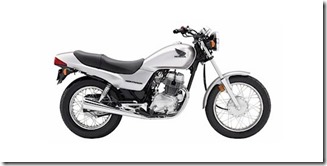
2006_Honda_Nighthawk_250There have been a couple of times, though, when I almost felt like I existed. The first time was in the first couple of years I taught the BRC. Two near-retirement-age physicians took the class, asked the question, and when I suggested they consider the Honda Nighthawk 250’s they were riding in the class. The Honda air-cooled twin is a tough, reliable, lightweight motorcycle that can more than do the job for the kind of around town riding they expected to be doing. A few years later, I was having lunch with a friend in Stillwater when the two doctors came over to our table, reintroduced themselves, and thanked me for the advice. Then, they told me about the trip they’d just returned from to Alaska and British Columbia on their 250s. It was a great story and I wish I remembed it well enough to accurately repeat it here, but I don’t.

Larry's BikeThe second time my advice didn’t die in a vacuum was when my brother asked for the same advice. I had been training on the Suzuki TU250X for a few years at the time and had the opportunity to “test” it on the police driving course at Dakota Technical College earlier that summer. The bike did everything a motorcycle needs to do, plus was fun to ride, gets great fuel economy, has a low seat height, and looks like a 1950’s British bike. Larry bought one and is driving it into the ground in Arizona as I write this. His one complaint was that it didn’t do all that well off-pavement, so I suggested a change in tires. As you can see in the picture above, he took that advice, too. He’s had it for a couple of years and 20,000 miles or so and will probably keep it until he rides it to death.

Likewise, I’m down to one motorcycle and taking my own advice it’s my Yamaha WR250X. Since I sold my V-Strom, I haven’t been riding much but I wasn’t riding much before I sold it. This fall or winter, I plan to rig up a relay so that I can run some electrical crap off of the WR’s battery without draining it when I forget to turn things off. I admit it, I’m addicted to my GPS, heated vest, heated gloves, and charging my computer while I ride on long trips. We’ll see if taking my own advice puts me back on the road and trail.

Sep 10, 2018

Merge It or Park It

All Rights Reserved © 2017 Thomas W. Day

MotorcycleMergeA big cruiser (a full bagger with a reasonably geared-up rider) and a semi loaded with turf approach a T-intersection from opposite directions. The cruiser is making an easy right into the T while the semi has a turn lane and will be crossing lanes after coming to a near stop. The cruiser should reach the turn at least one-hundred feet before the semi begins to make his turn. How do you think this plays out?

Other than me following the semi through the intersection, there is no other traffic in sight. The semi approaches the turn and comes to a complete stop. The cruiser slows to a walking pace before entering the exit lane and, eying the semi, comes to a complete stop at the end of his merge lane. If he got off his hippobike and walked into the road he'd have beaten the semi through the intersection. He waits for the semi driver to signal that it's safe for him to leave the merge lane. This, of course, forced the semi to come to a complete, totally unnecessary, stop partially sticking into the incoming lane while the cruiser doofus waddles away. What should have been a mindlessly simple traffic situation turned into something not only ridiculously complicated but was one more demonstration why Minnesota (and the rest of the country) needs tiered licensing and a dramatically more difficult motorcycle license test for any two-wheel vehicle over 50cc. The motorcyclist in this situation was obviously incapable of handling his oversized toy and should have been ticketed for blocking traffic. If there had been actual traffic in the scenario he would have constituted a road hazard.

From my backseat perspective, the whole incident reminded me of a constant irritant that I do not miss from years of commuting in the Cities. Minnesotans do not know how to merge. Personally, I think stopping in an intersection or, worse, on a freeway entrance/exit ramp should be grounds for loss of license. I wouldn't even object to the police firing a couple of rounds into the driver/rider's head to get their attention. As my father used to say, "There is obviously no vital organ located in that skull." The idea that drivers need to have the "zipper merge" explained to them in remedial terms amazes and depresses me. How is that not obvious?

It clearly isn't, though. There are a couple of exercises in the old, 2007 MSF program that require simple merging skills and about one out of one-hundred classes actually manage to get through these exercises without one or seven or eleven backed-up traffic jams caused by merge-inability. The so-called "seasoned rider" courses are no exception to that statistic. People who have called themselves "riders" for decades simply come to a dead stop when faced with 5mph oncoming traffic (even when that traffic is another motorcycle in a parking lot exercise) and the resulting confusion is comical in a parking lot and suicidal on public roads. As I have asked thousands of times, if you can't merge competently what makes you think you are capable of safely drafting/tailgating?

A few years ago, a rider and fellow MMSC/MSF coach remarked that he'd seen me "aggressively" getting into northbound downtown I35E traffic, as if merging at the end of the entrance lane at traffic speed was impolite. The implication was that I had somehow committed a faux pas in "jumping the line" of traffic some distance above his stuck-in-traffic position. Talk about Minnesota passive-aggressive. Guilty as charged. When I merge, I want to be moving at the prevailing speed and as near to the end of the merge lane as I can get. Commuting is not about standing in line politely waiting for some moron to hang up his damn cell phone. It's about getting to work or home as quickly as possible. If you can't figure that out, you have no hope of comprehending filtering and lane sharing. The day a semi beats me into a T-intersection from the cross-traffic side, even on my 250 dual purpose bike, will be the day I hang up my helmet and buy a convertible. If you are not going to use your motorcycle's superior acceleration, braking, and maneuverability in a simple merge, what would make you think you can use those qualities in an actual emergency? Trust me, you can't and you won't. I've seen that kind of incompetence demonstrated on a regular basis and it amazes me that anyone that impaired would want to risk their life and limbs on a motorcycle.

Back in the 1970's, I visited Chicago from my home in Omaha, for a trade show. My business partner and I were driving a rented panel van, loaded with audio equipment, and we were both small town guys blown away with the Big City. At the first stop light we encountered in the city, when the light changed I was pleasantly surprised to see all of the vehicles started moving together. A couple of lights later, a distracted driver didn't hit the gas when the light changed and the vehicle behind him simply pushed the semi-conscious vehicle into the intersection until the driver assumed marginal control and caught up with traffic. Like most of the US, Chicago is dumbed-down and distracted, today. Vehicles leave intersections connected by invisible 100' ropes, as one of my readers described driver awareness, in every city I've visited. Autonomous vehicles are going to solve this problem for cagers, but motorcyclists are forever going to be on their own. It is hard to imagine how this is going to play out in some way that provides public road access for motorcycles. At least until we are forced into recreational vehicle status, we ought to be merging competently. If nothing else, out of wanting to exit the scene gracefully.

Jul 1, 2018

I Ride Too Good

All Rights Reserved © 2017 Thomas W. Day
On the way back home through South Dakota on a smoking July afternoon a few years ago, I decided to count the number of times someone said, "It's awful hot to be wearing all that gear" or something equally clever and observant. By the time I made it home, it happened seven times.
My favorite incident was in Platte, South Dakota at a bar where I ate my last meal of the day, after finding a motel and shedding my bike luggage. As I'd come into town, I spotted a huge (tall and wide) woman on a big cruiser wobbling away from the curb into traffic, looking as uncomfortable and incompetent as anyone I've ever seen on a motorcycle. She had both feet on the ground, paddling along into moving traffic, hoping the universe was looking out for her. She was barely able to turn her head far enough to see her own hands on her ape-hangers, let alone the on-coming traffic. That same woman was sitting at one of the outside tables with six other women as I left the bar after dinner.
One of her friends remarked, "That's a lot of gear to be wearing on a hot day."
I repeated the response I have memorized for this silly statement, "It's not nearly enough when you're sliding down the road on your ass."
Another woman said, "He got you there."
The big cruiser rider said, "I ride too good for that to happen to me."
The Dunning-Kruger Effect explains how "persons of low ability suffer from illusory superiority when they mistakenly assess their cognitive ability as greater than it is." This lady was a classic example of that human delusion and she had no idea how ridiculous her statement would sound to anyone who had seen her ride. I have to feel a little sorry for her, though. The motorcycle she rode was way more machine than she could ever handle. She was so overweight that any sane society would classify her as "handicapped" and so unskilled that same culture would refuse to issue her a license for anything more powerful than a 25cc moped. The Harley marketing machine had convinced her that she was a badass biker, but bad was all she could manage. If all she does with her motorcycle is wobble from her house to the bar in that tiny village, she might survive to tell stories about her "biker phase" when she's in the old folks home. If she ever puts that thing on an open road, the chances are good that she'll make a contribution to the single-vehicle crash and fatality statistics.
In my last basic motorcycle course of the 2017 season, we had one exceptionally marginal student, who was taking the class for the second time in a last gasp attempt at a license. As usual, that student was the most confident of the group. In a discussion about evaluating traffic hazards and escape routes, I described how easy it is to overestimate your skills and capabilities and how quickly a traffic situation can catastrophically point out your errors and limitations.
Our marginal student said, "That will never be me. I know what I'm doing."
I replied, "In my experience, all of the really good riders I've ever known are more aware of their shortcomings than confident in their skills."
She said, "Now you're just making things up."
"The best lack all conviction, while the worst are full of passionate intensity." Yep, I made that up, too. 

The real benefit to taking additional and regular training is discovering how much distance there is between what you think you know and what you actually know. That goes for anything, not just motorcycle training. Humans are notoriously lousy self-evaluators, as individuals and as groups. One of the most hilarious anti-government delusions is the fantasy of "self-regulation." Literally, I can't think of a single area of human activity where any industry, organization, or community has done a decent job of self-regulation. Anytime humans are left to their own isolated devices they inbreed and become stupid and corrupt. It doesn't even take expert outside observers to provide useful advice; people mangle their intended purpose so completely and destructively that almost anyone with eyesight can provide useful corrective feedback. The South Dakota cruiser rider was a terrific example of that.
One of the things I will miss when I retire from teaching the state's motorcycle safety classes is the corrective feedback from the students and the coaches I worked with. In particular, the classes that used to be called "Experienced Rider" often exposed me to motorcyclists with far different experiences from my own. During the discussions I picked up all sorts of ideas about how other riders manage traffic, maintain their motorcycles, and plan cross country trips. Having to demonstrate the exercises for competent riders always added a little pressure to the otherwise simple activities and gave me a solid benchmark for knowing when it would be time for me to hang up my Aerostich for good.
At the other end of that spectrum, beginning and so-called "experienced" riders often discovered that their motorcycle talents were dramatically less impressive than they'd convinced themselves. Sadly, not everyone who miserably fails to cope with the course exercises is honest enough to realize how low a bar they failed to step over. Riders who drive straight through the offset weave exercises tell themselves their bike is the problem, ignoring the fact that other riders on similar or less maneuverable motorcycles are handling the course without difficulty. Riders who never learn to use and trust their front brake pretend that they'll avoid having to make an emergency stop by sticking to country roads and riding in a pack. One of the huge shortcomings of not having a tiered license system is that completely incompetent riders can end up on equally hard-to-ride motorcycles and won't discover why that is a problem until seconds before becoming a statistic.
One fairly reliable indicator of riding competence is the amount of gear a rider decides is enough. AGAT riders are consistently more competent than the shorts and flipflops or bandanna and pirate outfit crowd. It appears that the more you know about riding a motorcycle, the more aware you are of the risk. The opposite of the Dunning-Kruger Effect is something every good scientist, engineer, and technician knows, "The more you know, the more you know you don't know." So, if you are confident that your skills are good enough to allow you to ride helmetless and without decent gear, the odds are good that you are likely to be fatally wrong. 


May 23, 2018

How They Do It

Great Britan has a different take on motorcycle licensing. Until one of our friends, Paul Compton, sent me a link on the British motorcycle license history, I had no idea how different it is: http://www.motuk.com/Motorbike-MOT-history.asp. In comparision, I’m not sure what we have passes for the basic requirement of “a system.”

May 12, 2018

Last One of the Year? Or Ever?

October 7 & 8, 2017, I taught my last MSF Basic Rider Course (I) of the year. This year, in July, I will be "officially 70" (officially, because I’ve called myself “70 years old” since I passed 68 1/2). I’m having a hard time imagining myself teaching kids and middle-aged students motorcycling at that age. 70 is REALLY OLD and I’m feelin’ it. After one of those half-day classes, I can barely move. Six years ago, I was regularly doing doubles but today I wouldn't touch a double with your legs. Guys a lot younger than me say that their day is finished after a morning or afternoon hiking around the BRC range. I’d still be up for the old 2PM to 7PM classes, but we don’t run those anymore: not enough students. Getting up at 5AM to get to a Cities’ range at 7AM isn’t my idea of a fun way to spend a weekend. Early in the season, driving or riding 50 miles in the dark when I'm exhausted and sore is far from my comfort zone.

Teaching motorcycle classes was a terrific income gap-filler when I first left the medical device industry in 2001; before my consulting and repair businesses took off and the college teaching gig became full-time. Yeah, I enjoyed teaching people about motorcycling and getting to ride the state’s motorcycles for money, but it was always close enough to “work” that I wouldn’t have done it without the money. It’s actually a lot of work. In the early years, 2002-2010 or so, I did 20-something courses a summer; pretty much every weekend of my whole summer for a lot of years.

From 2007 to 2011 I made space for at least one several week long trip every season: Alaska in 2007, Nova Scotia in 2008, the Rockies with my grandson in 2009,. North Dakota ghost towns in 2010, the Lake Superior loop with my brother in 2011. I decided on different excitement at the end of 2011: a hip replacement. I made another loop around Superior late that summer, but I put on a lot fewer miles than I usually rack up on that route. I followed that up with a heart attack and a surgery in late 2012. I retired my businesses and from my college instructor gig after the next spring school semester in 2013 and turned a simple RV retirement trip into an extended and miserable VW repair extravaganza. We moved to Red Wing later that year, sold our house in the Cities in early 2014, and . . . that’s about it. The only trip left on my bucket list would be a run down South America’s Pacific Coast Highway. That’s probably not gonna happen.

Since 2014, more than half of my classes scheduled at Red Wing’s site, Southeast Technical College, have cancelled. For the last decade, most of the classes I taught have been at Century College in White Bear, about 50 minutes from our home in Little Canada; but an hour from Red Wing. I have spent a lot of my life arranging my work and home to minimize commuting time and distance (in that order). I’m not going to stop now. I compulsively calculate my actual hourly rate, after 50 years of billing customers for work, and I’m making about $18/hour in real dollars, pre-tax, with the motorcycle classes. Not awful, but certainly not great.

That last 2017 October weekend, I worked with one of my favorite co-instructors: John Wright. If anything could convince me to put in another year or two at this gig, working with John would do it. As always, working with John was in no way like working. I went home sore, a little frustrated with the process and the fact that at least three of the students who "passed" had no business being on a motorcycle, and feeling like I have probably over-extended my use-by-date as an instructor. In early April this year, just like in my first experience with Pat Hahn and the old MSF program, I gave John a volunteer hand with a one-instructor class in Red Wing. After that part-time afternoon on the range, I was almost crippled for a day or so. One of the unexpected benefits of the motorcycle teaching gig has been the people I’ve taught with over the years. The list is long and memorable: motorcyclists and instructors who have not just taught me about motorcycling and teaching, but a whole list of subjects have been explored and appreciated. I feel incredibly lucky that the MMSC opportunity came along when it did; thanks to Pat Hahn and Bill Shaffer for encouraging me to battle through that first mostly-miserable year and the training program. I believe those two friends where hugely responsible for most of the good times that resulted from walking away from my lucrative but miserable medical devices career. If I tried to list all of the instructors I've enjoyed working with, this paragraph would be ridiculous. However, if I didn't mention Greg Pierce and Duane Delperdang, the two program managers who have run the best MNSCU/MMSC program in the state (Century College), I would be sorry for a long while. Not only is the Century program the poster child for a well-run training facility, but those two guys are also a pair of my favorite coaches to work with. Ben Goebel, Mike Jagielski, Jed Duncan, Sev Pearman, and Ken Pierce all make my list of favorite people with whom to spend a weekend standing on hot asphalt for a couple of ten hour day and in the 250+ courses I taught over the years, most of those days were spent with the guys listed in this paragraph.

My first year teaching the MSF program was not that much fun. For a while, that first year, I wouldn’t have bet much on my lasting another season. Since that first year, I’ve worked with several experienced coaches who are not only a lot of fun, but educational, interesting, skilled, and good people. Partially due to location convenience, I ended up teaching mostly at Century College where the program directors have also been coaches.  Working for someone who knows the job, the customers, and the challenges, makes the job a lot more predictable. Oddly, a guy who is no longer with the MMSC program as of a few years ago was the first decent, experienced instructor I worked with: Steve Lane. Steve taught, mostly, at Dakota County Technical College which is often referred to as “the Wild West” by instructors from other locations. Over the years, DCTC became the place for instructors who wanted to make up their own wacky rules and course "design." I quit teaching there more than a decade ago, with once-every-three-or-four-years experimental toe-dip just to see if anything had changed. It’s a little more controlled now, but not consistent enough for my personal liability comfort-levels.

Now, after 16 years, I’m in a similar place as that first year; except I don’t need the money. I don’t like the early morning travel; especially riding or driving in the dark. The work is physically hard on me and has been harder every summer for the last couple of years. I don’t like scheduling my spring and summer weekends seven to eight months in advance; instructor course sign-up occurs in November and December depending on the school where you work. I was in no hurry to make a decision about retiring, but I wanted to as fair as possible to the MMSC program and people who are counting on me. At least until the course sign-up meetings began last winter, I could put the decision off for a while. For that matter, I could just do fill-in work in 2018 and put off the decision until the new BRC 2 kicks in in late 2018. I could have done that, but after evaluating my lack of motorcycling, physical conditioning (especially eyesight), and lack of enthusiasm this spring, I decided to officially retire this month.

Throughout the 2018 season, instructors will be training for that "new" MSF program, the BRC 2, this spring and summer (2018). That is a long two-weekend commitment and I suspect it would be a make-or-break event for me; and lots of other trainers. The rumor was that about half of Wisconsin’s trainers quit during and after their 2015 BRC 2 training (Transitional RiderCoach Prep or TRCP). If history repeats itself, it could be hard to find a Minnesota motorcycle course next year. Finding new coaches is getting tougher because there aren't many younger skilled and experienced motorcyclists and even fewer of those riders are willing to donate the time to become a trainer and put in the work to become a decent coach. It takes a few years to become much of a teacher, if it is ever going to happen for you. Like most professions and human activities, "90% of everything is crap." Once you are a MMSC/MNSCU motorcycle trainer, the state pays something for the semi-annual training requirements, but you have to get past that first long and intense training hurdle on your dime.

Quitting was a tough decision, even with all of the reasons I've listed above. I retired from my college instructor gig 5 years ago and almost all of the friendships I made there have become distant memories. Even though I've continued to teach at Century during the last 4 years, most of my friends there are now only seen in passing and rarely even then. Absence does not "make the heart grow fonder," the more accurate saying is "out of sight, out of mind." But everything changes and so have I and so have you.


Stay safe everyone and thanks for all the fish.