Showing posts sorted by relevance for query autonomous. Sort by date Show all posts

May 22, 2017

#143 Outta My Cold, Dead Hands


cavemanThe Geezer with a Grudge Columns
(Originally published in Minnesota Motorcycling Monthly Magazine.) 

All Rights Reserved © 2015 Thomas W. Day

There is a punk gangbanger group on Facebook called the Yamaha WR250X and WR250R Public Group. I joined this group about two years ago, because their intro FAQ is all about the useful (and not so useful) things that can be done to make the WR250X/R more fun and practical to ride. I left the group this week because the most outspoken members are consistently spoiled brats. Like a lot of bikers/gun nuts/spoiled children and the rest of the crowd who think their “right” to do any damn thing they please overrides public safety, an undisturbed peace, and their neighbor’s property rights, many of these kids consider themselves above the law and beyond reproach. They are classic examples of why motorcycles and motorcyclists are about as popular as used car salesmen in plaid suits or politicians from another state. Between the “I don’t need no stinkin’ endorsement” and the “why would I carry insurance, I’m just a motorcycle” and “why should I care if wheeling out of control freaks out cagers” attitudes, the group is a sad cartoon of why motorcycles are likely to be historical relics in a decade or less. There are some decent folks in the group, but their voices (like the voice of reasonable motorcyclists everywhere) are drowned out by the goons, brats, and gangbangers.

The last “conversation” I had on the group was about how gangbanging is going to be tough in an autonomous vehicle world. One of the kids claimed “they’ll have to pry my steering wheel away from my cold, dead hands” and a half-dozen or more chimed in accordingly. I asked what they were driving now and got a list of fairly new, mostly-Japanese sedans and mid-sized pickups. I suggested that since all of these vehicles had automatic transmissions and were controlled by transmission and engine computers they weren’t really driving now. Add power steering, backup cameras, parking sensors, ABS brakes, adaptive cruise control and proximity warning systems and you are about 1/2 way to the fully autonomous vehicle. The difference between being a total passenger and a terrible driver in a smarter-than-humans car is immeasurably small. I think it is safe to assume that, based on their motorcycling attitudes, that these kids are awful cagers too.

As macho as the American driver pretends to be, it ain’t gonna take much to remove most of us from the steering wheel. The first and logical step is to crank the shit out of the price of car insurance for those who insist on driving themselves. That will pretty much do the job alone. Cops will be watching the self-piloted vehicles closely, since their business will pretty much dry up on the autonomous side of transportation. They are absolutely not going to be issuing tickets to the corporations that provide the multi-user leases to autonomous vehicle passengers. Not only are corporations “people” but they are people with super-special privileges not to be fucked with. I can’t remember the last time I heard of a cop going after any sort of big business, regardless of how vicious the corporation’s crimes may have been. So, the only ticketing game in town will be the “cold, dead hands” crowd and they will be feeling pretty picked on by the time they hand over the reins to their own autonomous car. I know, you’re thinking “The Geezer is still just pissed off about his damn Volkswagen automatic transmission experience.” True, I’m pissed off at Volkswagen over that nightmare, but I have always disliked automatic transmission cars. They feel patronizing, sort of like having someone pat me on the head, when they put me in an electric wheel chair and say, “Now you’re in charge old dude. The hallway is all yours.”

I think the most insulting vehicle I’ve ever driven was a Toyota rental car with “Sport Shift Mode” thumb shifters.  I guess some kid who grew up playing video games might be able to fool himself into believing that he’s “really driving a car” when he can select the gear with a flick of the thumb, but I don’t play video games. The little Corolla had more than enough power to get out of its own way, but the Sport Shift Mode was clunky, intolerant of any high RPM operation, and it felt like an attempt by Toyota’s engineers to convince me to go back to letting the car do the driving. Which I did after a couple of unsatisfactory experiments with the thumb shifters.

Unlike the obtuse kids, I don’t care about driving and I’d just as soon lease a portion of an autonomous car as own a whole car that I have to finance, insure, and drive myself. Cars are boring and I’m a lot happier as a distracted passenger than driving. I can read, sleep, watch the scenery, or write as a passenger. As a driver, I spend most of my energy trying to stay awake. Unlike these kids, if I’m going be stuck behind the wheel I want as much control as I can have, including getting to decide my vehicle’s gear, engine RPM, and the point in the powerband for the situation at hand. I’ve yet to see an automatic transmission or all-wheel drive vehicle do a half decent job on ice or in deep sand and I’ve sure as hell seen those vehicles do a pitiful job in those conditions. So, until I can get at least 95% of an autonomous car, I’m hanging on to my 4WD, manual transmission pickup.

There is nothing cold-dead-handish about this, though. I just don't like doing things half-assed. If I can get a computer to drive for me, I'm in. If the computer is just there to make me a more distracted, less competent driver, I don't need that kind of help. But back to the original point of this rant, in an autonomous car world (Coming soon to your town!) motorcycles morbidity/mortality statistics will become unjustifiably over-represented majority in traffic crashes and the ugly face motorcycling has proudly presented to the public will be something we're going to wish we'd have done something about when it would have helped.

MMM April 2016 (and, oddly, again in the March 2017 issue, #154)

Feb 16, 2013

More of the Same

A short burst of comments on one of the off-road groups I belong to fired up the geezerly aspect (90% or greater) of my personality. One of the guys cited ex-Minnesotan Pat Hahn as a source for why Minnesotans wouldn't take to lane-splitting well.

Pat is a good guy, a friend, a serious motorcyclist, and a published motorcycle author. However, his opinion on lane-splitting is mostly inexperienced and anecdotal. Now that he's a west coast guy (Oregon), his opinion has shifted a bit from when he was a Midwesterner and had only experienced lane-splitting from the perspective of the young hooligan who did it, illegally, when he was pissed off or in a hurry. One of the cool things about writing is that you can become an official "expert" purely by research. You don't have to actually know anything. Even cooler, once you write about something and get it published the lazy assholes in the Mainstream Media will repeatedly ask your uninformed opinion about this subject that you know so little about. As long as the rest of us know that media "experts" are nothing more than people in a bar with barely-informed opinions (like the rest of us), their opinions can't do much harm. When we imagine that the lazy assholes who print and broadcast the crap that passes for information in our braindead society are actually bothering to identify and interview real "experts," we're all doomed.

So, when one of the guys cited Pat as a source and justification for his fear of lane-splitting, I posted a pissed-off response. The more I think about it, the more pissed off I am.

I think Pat's attitude has changed now that he's actually had an opportunity to use lane-splitting in northern California. I did more than 100k miles, lane-splitting constantly, in my decade in southern California. I totally disagree that it is a "dangerous" practice, unless we're just applying "dangerous" to any aspect of being a motorcyclist on-road. You can do anything stupidly and many motorcyclists belong in public buses because they don't have the skills or brainpower to safely transport themselves across a padded room.

California has done motorcycles a serious disservice by eliminating/minimizing
exhaust noise regulation. Loud pipes and lane splitting do not coexist peacefully. Pick one, act like a hooligan or become part of the transportation system.

Midwesterners are specially poor and aggressive drivers, something I realized
  when my wife and I spent the beginning of January in Oregon and northern California. I had almost given up on American drivers knowing how to merge in traffic, manage reasonable spacing, or cope with moving vehicles. As congested and overcrowded as the San Francisco area is, traffic moves fast there. Incapable idiots are not tolerated and will be pulled over and ticketed by the CHP for trying to merge at something under the prevailing speed.

If we tossed out the useless and irritating "Start Seeing Motorcycles" campaign
and put the same energy into informing drivers that lane-sharing is legal, Minnesotans would figure it out as fast as anyone. A motorcycling campaign to wise up drivers to motorcycle advantages and one that also attempted to civilize motorcyclists might save motorcycles from obsolescence: helmet requirements,
massively tougher training and licensing requirements, relentless exhaust noise and emissions enforcement (for all vehicles), legalized lane splitting and filtering, and state-legislated motorcycle/scooter parking advantages.


Otherwise, autonomous vehicles and computerized traffic will make motorcycles as obsolete as buggy whips. And those things are coming a lot faster than you think.


--- In TC_Dualsport@yahoogroups.com, Needs Information wrote:
>

> I drive the metro area as much as 750 miles per week, from 5AM to 6PM mostly. Commuters can be a very nasty bunch. Some are sneaks that use the shoulders to gain advantage and some are self proclaimed traffic moderators that will block others from not doing as they do. MnDOT has a campaign, not so well promoted, to do the Zipper Merge. The 'moderators' get very very aggressive against this policy despite its official promotion by MnDOT and state law enforcement. It may take a generation to get the moderators off the road, if ever. Their bad attitudes get passed on to their children pretty much.
>
> What has this to do with lane sharing? These same moderators would rather see you crash than be gotten ahead of, and many will do whatever they can to prevent your passing illegally (or even legally if you could ever get the legislators to change the laws) . . .

One reply (abbreviated) noted:

> We're a pretty conservative bunch here, lower case C,
. . . "Minnesotans would figure it out as fast as anyone. " I have grave doubts about that my friend, emphasis on the grave. Just too much anger on the roads. "Midwesterners are specially poor and aggressive drivers" No legislation will change this I'm afraid.
. . .
> Not to throw water on your fire, but I don't expect to see much change going on with lane usage legislation, or cage driver attitudes.
My response is:

No fire to dowse, there. I have no doubt that the whole of the US is too lower-case-conservative (as in timid-to-downright-cowardly) to make any useful changes in any activity. We are a decaying empire that hasn't yet smelled the rot. Thomas Jefferson was the first president to suggest the metric system and we still can't manage that obvious change. National lane-sharing is not likely, but a national ban on motorcycles on public roads is almost a certainty as autonomous cages take over the major roadways (on its way to your town soon). Change or die is the rule of nature and we've probably picked "die."

I think you overrate the "genius" of California drivers, they have girlyman moderator/regulators there, too. I put solid steel wraparound bumpers on my old Toyota pickup to move them out of my merge lane when I lived in CA in the 80's. The 1% are particularly arrogant about holding their space on California roads; Mercedes, Volvos, Suburbans, and the $100k sports car crowd. Those people never go away, but you can make their lives and position precarious enough that they begin to suck it up and keep their stupid ideas to themselves.

Still, most people are reasonable and allow space and even make space for sharing and filtering. You can't eliminate an activity because someone will object to it. Ok, you can, but that's a conservative way to design and maintain a system and it will fail from an inability to evolve.

The cool thing about splitting is it is voluntary. You can wait in traffic if you don't have the skill for it it, think it is dangerous, or don't have an appropriate vehicle. There were times when I thought splitting wasn't the best choice and I stayed where I was. Mostly, I split anytime traffic was moving under the speed limit. Seriously, I suspect I split for at least 100k miles of my 300k motorcycle miles in CA, though. I rarely ever stayed in my lane on PCH between Huntington Beach and Long Beach.


AMA Press Release: "Washington, D.C.: Self-driving cars would be allowed to operate on Washington, D.C., roads under the Autonomous Vehicle Act of 2012 (B-931), introduced by Councilwoman Mary M. Cheh (D-Ward 3). The bill would authorize autonomous vehicles, which are self-driving cars, to operate on the roads in the district, establish a system for taxing users of autonomous vehicles based on vehicle miles traveled -- 1.875 cents per mile -- require the district Department of Motor Vehicles to create an autonomous vehicle designation for registration, titling and operation permit purposes, and establish safe operating protocols for such vehicles"

Oct 30, 2018

More Autonomous Problems to Solve

m.i.tsmartcarchoicescolo01"Should a self-driving car kill the baby or the grandma? Depends on where you’re from" poses a pretty funny question for the ethics department of autonomous car companies in this Technology Review article. Of course, if you are a half-decent motorcyclist there is at least one more option in their example picture; go off road and avoid them both. And what the hell is a baby doing crawling across a road in the first place. Maybe the best solution is to target that kid’s parents. They clearly should not be reproducing.

scenario1_0Another scenario from the article has the driver deciding whether to kill five jaywalkers or one. I say use the logic Fat Freddy’s cat’s cockroach general adversary used: “We got millions more where they came from.” It’s not like the world has a shortage of people or jaywalkers. If you want to march across the street against the light,e44e6fab0ed86e1eebe59fbb55e672e1 into traffic with a quartet of nitwits, I think you should enjoy the consequences.

Sarcasim, cynicism, and grumpy old man-ism aside, the above scenario is going to become far more common. We’re already living in a time when large numbers of nitwits walk into traffic concentrating on their cell phones, assuming the world is going to look out for them. Autonomous cars are going to bring a level of false security and confidence to that breed of non-sustainable human that will make the above scenario seem ordinary.

Likewise, when that ethics-challenged autonomous vehicle comes upon a parade of pirates or bicyclists(https://www.youtube.com/watch?v=rmTHk3sxSUA), go for the middle. nitwit paradeTake on the bigger issue—too many stupid people in the gene pool—and do the world a favor. Yeah, I know. It has been a long frustrating day and I need a whiskey to top it off and mellow me out.

Sep 3, 2016

Big Leaps vs. the Status Quo

For about 40 years, I had at least some of my fingers into some area of mid-to-high-tech every day. When I moved from engineering into academia, I was pretty much down to one finger on the edge of what was going on in technology. Retirement put an end to that connection in any practical sense. One of the few ways I have left to stay in touch with what is going on in the tech world is my subscription to “Design News.” This month, Design News had a few articles that should be interesting to a motorcyclist.

In this month’s review of the magazine’s past home gadget builder projects, “Gadget Freak Case #235: Ignition Control Unit for Harley Davidson Panhead Engine” described how one gearhead tried to resolve the problem of getting an old Harley to start reliably. There isn’t much follow-up in the article, so I don’t know (or care) how it all worked out. Reading the story of his analysis and design solution was interesting, though.

In case you are still suffering the delusion that autonomous cars are in the distant future, "Hope or Hype? Big Automakers Look to Autonomous Vehicles" should relieve you of that false hope. You might know how I think autonomous vehicles are going to affect street legal motorcycling, so read it and weep. "Ford president and CEO Mark Fields made it clear that the giant automaker is not settling for half-measures in its effort and is going straight to self-driving cars by 2021. ‘That means there’s going to be no steering wheel. There’s not going to be a gas pedal. There’s not going to be a brake pedal and, of course, a driver is not going to be required,’ he said."

As for the noise, pollution, energy inefficiency of internal combustion engines, "6 Automakers Will Lead the Way to EV Battery Growth" describes how “Six big automakers will carry the electric vehicle (EV) battery market to a five-fold sales increase by 2020, a new study says . . .Tesla, General Motors (GM), Renault-Nissan, Volkswagen, BMW, and BYD will account for 90% of the electric car battery sales during those five years, mostly on the strength of bigger battery packs.” By “bigger” the article is not talking about physicial size, later this year Chevy will be hyping a “60-kWh battery in the all-electric Chevy Bolt.” The number of electric cars on the road is going to change, too. Tesla is planning for “annual sales of 500,000 of the affordable Model 3 vehicles by 2018.” There is some debate over how much of the cage market electric vehicles will be in the next few years, but I think the end of the Age of Oil is in sight and if I were a younger motorcyclist I’d be really interested in how that will play out on two wheels.

Jun 3, 2015

Clogging Up the Damn

From about every engineering and societal viewpoint, autonomous cars are the obvious future. That is, in fact, a fact. But it is possible that the US might be completely out of the progressive loop when this giant sociological change takes place. We’ve done it before. Often.

The US has a long history of being terrified by intelligence. We elect congress-critters, governors, and presidents whose sole credential is being (or appearing to be) a whole lot dumber than the average guy. Apparently, we mostly like ‘em stupid. Smart cars, then, have to scare the shit out of the ordinary mouth-breathing, NASCAR whooping, goofball. The scary news, if they were capable of reading it, is that computers are capable of out-smarting about 50% of us and have been since the Z80 days. In more recent times, computers are getting smarter every day while Americans are . . . downbreeding into puddles of terrified, conservative backsliders.

We did the coward/conservative thing in 1980 with Reagan’s promise to save us from having to “learn stuff.” When Reagan canned the United States Metric Board and ridiculed and ignored the requirements of the Metric Conversion Act, 15 U.S.C. 205d, most 'mericans cheered not having to adapt to the international measurement standard. Today, we’re the only industrialized nation in the world still concerned with the length of the King’s foot, the width of a man’s thumb (inch), or the rest of our disorderly, overly complicated SAE system. That bit of backwards thinking has been as expensive, on an annual basis, as our last two recreational wars. “Jos. V. Collins did some work on this question in 1915. He concluded in an article called, 'A metrical tragedy', that a 'Total annual loss of $315 000 000' could be attributed per year to non-metrication in the USA at that time.” In today’s money, that would amount to about $6.5B/year. We could pay for all sorts of idiot wars and invasions with that kind of money or we could make stuff we and the rest of the world want to buy. Currently we don’t make much that anyone else wants and what we do make is being replaced by foreign (non-USA) sources.

With that history in mind, it is totally possible to imagine ‘mericans stubbornly screeching “You’ll have to take the steering wheel from my cold, dead hands” while the rest of the world efficiently converts personal vehicles to a municipally-owned autonomous transportation system. Because we’ll be a backwards market, our auto manufacturers will stick with old-world transportation and manufacturing models and products and they will slowly become as obsolete as their products; dying off one-by-one like their US competition did in the 1950’s. Eventually, only 3rd world manufacturers will service the US market’s demand for 20th Century transportation technology and we’ll join them in their misery. Most of our 1% will move to where the lifestyles are more comfortable (and modern), since none of those folks have any more loyalty to the United States than do our corporations.

I suppose some people will look forward to an America that resembles the Mad Max vision of cobbled-together junk-mobiles. Most of the Southeast and the Rust Belt won’t notice a change at all.

Sep 17, 2016

How Historic will this Make Motorcycles?

outbackranch2_(5)__hd“Navigant now believes that by 2050, self-driving cars will be the norm in civilized societies. “The idea of getting behind the wheel (in 2050) and actually driving a car is likely to be more a curiosity, akin to going to a stable to climb on the back of a horse.” In this month’s Design News blog entry, “Which Will Capture the Market First -- Autonomous Cars or Electrics?” Charles Murray describes the parallel race between electrics and autonomous vehicles. While EV’s are still just 1% of world automotive production, that number is expected to move up quickly. By 2030, that number could be as high as 50%.

e793109d5c5907bc0adccbe3583ce8d1If people stop driving cages, how long will it be before they don’t pilot motorcycles? That “back of a horse” comment has been on my mind for about two decades.

Jun 23, 2015

Don’t Believe Me, Read This

[Thanks Paul]

Carmakers need to fear for their lives—and it’s not just about getting electric cars right

“When you put the two together, you get urban-dwellers tooling around in shared, autonomous vehicles, and—reckons Bill Ford, executive chairman of Ford Motor—buying far fewer cars. Ford has said the company is already having to adapt because of shared driving, and predicts that autonomous functions just short of self-driving will be installed in most vehicles within five years.”

Go for the comments, too. There is a chimp named “Topper Gunns” who appears to not only be illiterate but universally clueless. Comments sections are, apparently, where the mentally naked can go to expose themselves.

Feb 3, 2013

March: All the News that Didn't Fit

Last One
The winds of change have caught me, again. This time, they are blowing in the same direction I'm traveling. MMM has a new editor, is taking a new direction, and will look a lot different in the future. I discovered, a little late, that I'm not doing the All the News that Fits column, beginning the first issue of this year. I am not sad, upset, or sorry. It's a hard column to write and it might be obvious from the tone I take to the news that I'm tired of doing it. Most motorcycle "news" is pretty much corporate drivel and about as believable as White House press reports (no matter who is in the White House). So, when Harley, BMW, Ducati, Honda, or whoever dumps some of their gruel into the press hopper, I grind it up a little before redistributing it. What Americans appear to want is "happy talk" and I rarely believe happy talk coming from anyone. Especially me.

With the deadline pressure off, I might find that looking at the news and reporting it from my pissed off perspective is fun. We'll see. Whatever happens, it will be happening here from now on. Thanks for watching!
 

KTM Buys Husky
After a brief (6 years) and confusing off-road adventure, BMW decided to return to paved civilization and put Husqvarna Motorcycles S.R.L up for sale. The buyer is, semi-surprisingly, KTM CEO Stefan Pierer's investment company, Pierer Industrie AG. If you're old enough to remember the vintage-yearss enduro and motorcross battles between Penton (KTM's original US importer) and Husqvarna, this is a confusing turn of events for both brands. Relatively speaking, Husky had a pretty good year in 2012, producing 10,751 motorcycles, up 15.8%. Obviously, that wasn't good enough for the 100,000-unit-sales BMW mothership.
Presumably, the new conglomerate will be something like "KTM/Husaberg/Husqvarna." Pierer and his company successfully took KTM from bankruptcy court to the all-purpose off-road-to-roadracer juggernaut that it is today. Fans of the Swedish-turned-Italian brand (production moved to Varese, Italy during the period when Cagiva owned Husky), can only hope this is a good move for the historic off-road motorcycle company and not an opportunity for KTM to eliminate EU competition in that market.
Minnesota Motorcycle Road Guard Certificate
The state is in the final stages of officially recognizing one of the least-loved motorcycle behaviors; pirate parades. The newly semi-deputized Motorcycle Road Guards will have the authority to hold up productive traffic so that miles of slow moving parade participants can crawl through cities and towns emitting volumes of noise and air pollution and solidifying general public opinion into a unified "I hate motorcycles" atmosphere for every solitary motorcyclist who happens to follow the parade route for weeks afterwards. Way to go Minnesota legislature!
Commuting Wastes Time & Money, Who Knew?
In an amazing demonstration of how long it takes for a few dozen PhD's to screw in a light bulb, the Texas A&M Transportation Institute (TTI) published the results of their annual Urban Mobility Report (UMR) to the amazement of the barely-conscious major media. It turns out (wait for it) that Americans blew an average of $818 each sitting in traffic in 2011. And that was a "good year," due to the traffic reduction effects of the 2nd Great Depression. On average, Americans allow an hour for what ought to be a 20 minute commute for a grand total of $121B in wasted time and energy costs.
Bill Eisele, a TTI researcher and report co-author noted, “As bad as traffic jams are, it’s even more frustrating that you can’t depend on traffic jams being consistent from day-to-day. This unreliable travel is costly for commuters and truck drivers moving goods.” A secondary cost of slow-moving traffic is the estimated 380 pounds of carbon dioxide (CO2) per auto commuter contributed to the atmosphere (for a grand total of 56 billion pounds annually).
If US motorcyclists weren't wasting political energy and clout on divisive issues like opposing helmet laws and jacking-up right-of-way violation penalties, we could offer a solution to congestion in a substantial number of urban areas with lane-sharing and lane-splitting. A 2012 Belgian consultancy Transport & Mobility Leuven study found that 10% percent of cars were replaced by motorcycles commuting time for all vehicles decreased by 40% and total emissions were reduced by 6%. That study claimed that a 25% shift from cars to motorcycles would eliminate congestion. It has been estimated that with lane-sharing and filtering introduced into the formula, if only 1% of freeway traffic swapped their cages for motorcycles and scooters, traffic congestion would be significantly reduced.
CHP Defines and Recommends Lane Splitting
After years of rumor and inuendo, The California Highway Patrol has published a lane-splitting guide and initiated a public awareness campaign to educate riders and drivers about the long-accepted, commute-time-busting practice (http://www.chp.ca.gov/programs/lanesplitguide.html.). If nothing else positive comes from this information, the clinically and chronically uninformed will
Here They Come (and There We Go?)
The Autonomous Vehicle Act of 2012 (B-931), introduced by Councilwoman Mary M. Cheh, would allow self-driving cars to allowed to operate on Washington, D.C., roads The bill provides for vehicle designation for registration, titling and operation permit purposes, and establish safe operating protocols for such vehicles. Autonomous vehicles are the hot issue all over the EU and Japan and are expected to begin to displace piloted cars and trucks in the next decade or two. Obviously, motorcycles are incompatible with computer-controlled traffic systems.
Legislative Foolishness Around the Nation
Florida State Rep. Ritch Workman wants to eliminate the state's motorcycle handlebar height restriction ("no higher than the top of the shoulders of the person operating the motorcycle while properly seated upon the motorcycle"). Ohio's State Senator John Kasich sponsored a bill that changed the maximum height of motorcycle handlebars from 15 inches above the operator’s seat to no higher than the operator's shoulder height. Kasich's bill also created a “cab-enclosed motorcycle” classification for two- or three-wheeled vehicles having an occupant compartment top that is either permanent or removable.
Kentucky State Rep. Kelly Flood wants to label motorcyclists "vulnerable users of a public roadway" to add "enhanced penalties" for anyone convicted of, or pleading guilty to, a collision resulting in serious injury or death to a vulnerable roadway user. (I wonder if there will be a Special Olympics for "vulnerable roadway users?" Are old motorcyclists "venerable vulnerable roadway users?") Rhode Island, Missouri, and New York all have proposed legislation that would enhance penalties for motor vehicle violations at intersections and right-of-way violations that result in serious bodily injury or death.
Maine State Rep. Paulette Beaudoin is trying to require helmets for "all motorcycle operators and passengers" in that state. State senators in Nebraska (Dave Bloomfield) and New York (Michael Nozzolio) are trying to repeal those states' helmet laws. The Virginia legislature sidelined it's attempted repeal of the state's helmet law after opposition from the Virginia State Police, local chiefs of police, fire chiefs, volunteer rescue squads,
New York Senator William J. Larkin is attempting to outlaw wheelies, stoppies, and any airborne motorcycle activity.
New York Assembly Member Thomas J. Abinanti wants to prohibit any passenger vehicle (including motorcycles) from "idling its engine more than three consecutive minutes under certain conditions when the vehicle is stopped."
As always, MMM applauds these fine states and officials for having resolved all of their states' critical economic, environmental, and criminal problems, resulting in lots of spare time to spend on these inconsequential motorcycle transportation issues.
Crazy People Scoff at Common Sense
Refugees from MMM dominated the Watertown, SD, 2013 Groundhog Road Enduro in mid-January. Off-roading promoter and all-around-tough-guy Lee Bruns and the rest of the STFU M/C hosted this frosty inaugural event. Either the reputations of the Minnesota contingent frightened off the locals or common sense kept them near their fireplaces and far away from their motorcycles, because "no locals" turned out to suffer the event. Lee's description of the weather was "Ice, wind, snow. No fun. " Bruce Mike, MMM's editor won. Rick Ashton took second. Former Sev Pearman took third. Only 1-point separated 1st and 2nd! The riders were polled at halftime and they unanimously decided to call it a day.
Total miles driven to/from event: 425
Total motorcycle miles ridden: 27
Satisfaction derived from staying home and warm: Priceless
Be Like Steve
In case you're a slave to fashion, but adverse to actually getting dirty or riding a real motorcycle the folks at Barbour have produced exactly what you need: a MacGrain Waxed Jacket that is a replica of the 1964 ISDT team jacket Steve McQueen wore for that event. The key feature of this reissue is the "mud-splattered design made of rubber compounded mud, made to match the mud marks on Steve's original jacket." (Personally, I'd rather have a replica of the jacket Bruce Mike wore at the 2013 Groundhog Road Enduro, with an ice-coated design made to match the frozen slabs of ice on his event-winning gear.)
A 250CC Triumph?
Triumph is building a new manufacturing site in facility in Narasapur, India, near the city of Bangalore where the company expects to be producing 250,000 bikes per year by 2015 and double that number when production is fully operational and the company's Asian marketing and distribution are up to speed. The new facility's first products will be twin-cylinder 250cc motorcycles.
Making Enemies and Spreading the Love
Sportbike gangbangers, Hector Martinez and Paige Hernandez, and at least 100 of their biker buddies put on a demonstration of arrogance and vandalism in late January when the wild bunch shut down L.A.'s I10 freeway traffic for about ten minutes. As rush hour traffic backed up for miles, Martinez proposed to Hernandez and the the pair's punk friends stunted, smoked up the California air with colorful burnouts, and generally made nuisances of themselves. While some of us imagine the wonderful future for motorcycles as a practical vehicle, these zombies do their damnedest to make sure that 99.999% of the population hate motorcycles and motorcyclists. Good job, douchebags.
Sidesaddle That Bike
The Indonesian town of Lhokseumawe has banned female passengers from straddling motor bikes, as passengers or riders. “We want to save women from things that will cause them to violate Shariah law. We wish to honor women with this ban, because they are delicate creatures,” said Lhokseumawe mayor Suaidi Yahya.
The loony mayor said an aspect of the law is to discourage women from wearing pants. “It will be easier for women to avoid straddling motorcycles if all of them wear skirts.” Sounds like a plan to convince all of the smart people in Lhokseumawe to move somewhere else. A lot of the Midwest and most of the South tried that tactic and the braindrain those places suffered as a result created the Teatards.
Making Up for Lost Time by Losing Time
The "good years" of slightly lowered Minnesota motorcycle death rates are over, which might be a sign that we're experiencing some economic recovery or just a side-effect of last year's mild winter and early spring. Whatever the cause, in 2012 Minnesota cycle fatalities were up 26%, for a total of 53 motorcyclist deaths; compared to 2011'S 42 deaths. The state has a record-high 230,000 registered two-wheelers and approx. 400,000 licensed operators (7.5% of the population).
NTSA Motorcycle Recalls
Triumph 2011-2012 Daytona 675, Street Triple, and 2012 Thunderbird and Thunderbird Storm motorcycles : Wheel bearings of poor quality could fail unexpectedly, increasing the risk of a motorcycle crash. Triumph will notify owners, and dealers will replace the affected bearings free of charge.
Continental Tire ContiMotion motorcycle tires, size 180/60R16 M/C 74H: Sold as replacement equipment for Honda GoldWing 1800 motorcycles, some of these tires may experience uneven wear, groove cracking, and belt lift. This could result in a loss of inflation pressure. Continental Tire will notify owners and reimburse customers for the affected tires.
Triumph 2013 Trophy motorcycles: These motorcycles were produced with a label bearing incorrect tire data, which could cause users to install incorrect replacement tires, increasing the risk of personal injury. None of the affected motorcycles have been sold to consumers and they will be repaired prior to sale.

May 26, 2017

Losing Money on Every Unit?

osbornesplash2This story is awfully familiar: “The Electric Car’s Same Old Problem.” The quote that sums up the whole problem is from Fiat Chrysler’s Sergio Marchionne, “I hope you don’t buy it because every time I sell one it costs me $14,000.” I keep hearing through unconfirmable sources that Zero has yet to sell a motorcycle for a profit. I hope it isn’t true, but I suspect it is. Things change, but often pioneers take it in the shorts in the early stages. I remember Adam Osborne’s Trump-like claim for how his company was going to make money selling computers, “I lose money on every unit, but make up for it in quantity.”

After the shake-up this week at Ford, mostly over EVs and autonomous vehicle sales, it will be interesting to see if ANYONE makes it to the goal post with an electric car.

Jul 18, 2017

Grand Assumptions

too-many_minds 4When I was a kid, growing up in western Kansas, I assumed that everybody knew how to ride a horse. I did, after all, and I was a “city kid” and most of the people I knew were city kids and all of them rode a horse at some time or another, I assumed. I had an uncle who had a large eastern Kansas ranch and who kept horses, a lot of horses. I started riding horses when I was about five and kept at it until I was in my mid-twenties. When I moved to Dallas, Texas in the late-60’s, I discovered practically no one in that city had ever seen a horse outside of television. I was practically considered a “cowboy” because of my hometown and the fact that I knew how to saddle and ride a horse.

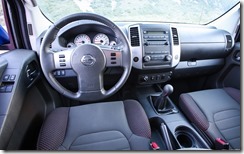
2012-Nissan-Frontier-4X4-PRO4X-dash-viewNow, I take more than a little crap from the fact that I own a manual transmission pickup, one of the last made and sold in the US: a Nissan Frontier. “Nobody” drives a manual anymore.” It’s almost true. Fewer than 3% of cars and trucks sold in the US have manual transmissions. Ten years ago, half of the vehicles sold had manual transmissions, especially trucks. It won’t be long before the only people who know anything about shifting gears will be motorcyclists and even that could change quickly. Scooters have always been “automatic” shifters and some motorcycles are going that way, too. My wife tolerates our pickup, but she has decided she wants a mini-van with an automatic transmission and all of the extras. My driving days are numbered and I’m not complaining. Part of the deal we made with the pickup was that I’d keep driving as long as we had it. When we go back to an automatic transmission vehicle, I’m moving to passenger-only status. It’s not a punishment for her, but a reward for me after driving more than a million miles in my lifetime, I’m opting out.

Some people believe that possessing a driver’s license is an important thing. A rapidly increasing number of Americans disagree. “Among young adults, the declines are smaller but still significant—16.4 percent fewer 20-to-24-year-olds had licenses in 2014 than in 1983, 11 percent fewer 25-to-29-year-olds, 10.3 percent fewer 30-to-34-year-olds, and 7.4 percent fewer 35-to-39-year-olds. For people between 40 and 54, the declines were small, less than 5 percent.” Owning a car and driving are less important in urban areas and are becoming less important in small-to-mid-sized cities. Red Wing, for example, has a terrific bus service that will pick me up at my driveway. It’s only 3 miles to downtown from my near-edge-of-the-city home, so walking or bicycling makes a lot more sense than driving about 90% of the time to go downtown. Getting to the Cities is more complicated, but not impossible. Amtrak has a daily “shuttle run” to the Cities, even though the times are weirdly inconvenient. There is talk of a “Red Rock Corridor” rail that would connect Red Wing and other Mississippi Valley cities to the Twin Cities. If that happens, even these rural areas1 could see a drop in car ownership.

automated_carsIn 2017, it might seem impossible to imagine a future where most people don’t drive their own cars. In 1900 it was pretty impractical to imagine a future where most people didn’t own a horse. In 1960, it was difficult to imagine a future where most Americans didn’t own an American-made car. In 2030, it could be hard to believe that people once drove cars, rather than simply instructed their autonomous vehicle to take them to a destination while they relaxed, read, did homework or work-work, or yakked on the phone. By 2050, it is entirely possible that the only people who will “drive” their own vehicle will be the ultra-rich, since they will be the only people who can afford the liability insurance. Imagine that.


1 An unanticipated effect of this shift would likely be even more abandonment of the rural areas, fewer resources for small towns and disconnected areas of even high population states like California, and more electoral catestrophes like the 2016 election unless the Electoral College idiocy is addressed. Not all Future Shock stresses are desireable or healthy. They just happen and we react as if “nobody knew it would be this complicated.”

Feb 20, 2013

The Crap Just Keeps Comin'

This damn argument just gets dumber. The only motorcycle magazine I read from cover-to-cover (sometimes) is Motorcycle Consumer News. The editor, Dave Searle, usually pisses me off and his pro-hooligan attitude is not much different than the rest of the motorcycle press, which defeats the best purposes of MCN. This month's issue started well and turned to crap by the letters to the editor. Bad timing on someone's part. My subscription is about to run out and I still have 2-3 back issues I haven't been able to stomach. Now, I might just read the damn thing at the library on the rare occasion I need to know what Mark Barnes or Ken Condon have to say. I was so pissed off, I sent this letter to MCN's editor:
_____________________________________________
From:     T.W. Day [mailto:twday60@comcast.net]
Sent:    Monday, February 18, 2013 9:32 PM
To:    'editor@mcnews.com'
Subject:    Misuse of Statistics

I was pleased to see Dave's "Open Road" this month. It's unusual for a motorcycle magazine to advocate any sort of safety gear and, when they do, it's usually as unscientific and "freedom" biased as crap from the NRA. It didn't take long for that pleasure to turn sour, though. In a grossly incompetent and statistically misleading response to a readers letter on the NTSB's universal helmet law recommendations, the editor wrote, "the number of motorcycle fatalities in the US has been on a sharp decline over the past few years despite the fact that the number of miles ridden has increased. The decline in fatalities is not because more states have instituted mandatory helmet laws--they haven't."

The argument that motorcycle miles ridden has increased in recent years is doubtful. Until recently, the garage candy crowd has been purged from the road as their rides were repossessed along with their eviction notices. From 2008 to 2011, the only good news about motorcycling has been that fewer of us are on the road and fewer of us are dying because of that. Last year, there was a slight upsurge in motorcycle sales and the early and mild spring put riders back on the road and deaths jumped accordingly. If you look at the states' statistics (http://www.ghsa.org/html/publications/pdf/spotlights/spotlight_motorcycles11.3.pdf
http://www.ghsa.org/html/publications/pdf/spotlights/spotlight_motorcycles11.3.pdf), you'll see a consistent rise in motorcycle deaths from 1997 to 2008 as states repealed helmet laws and riders took "advantage" of that and splattered themselves all over the nation's roadways.

The future of motorcycling is at risk due to autonomous vehicle development and our out-of-line mortality and morbidity contribution to highway safety and our barely-noticeable contribution to useful traffic. If we insist on pretending that we're getting safer and riding more when all evidence contradicts that, we're shooting ourselves in the foot and will deserve our place along with buggy whips, go carts, and horses in the history of discarded transportation options. The AMA and the motorcycle press are absolutely useless when it comes to promoting practical motorcycling. You should do better than that.

Thomas Day
Minnesota Motorcycle Monthly Magazine
http://http://mnmotorcycle.com/
http://geezerwithagrudge.blogspot.com/
thomas@motorbyte.com

Apr 7, 2018

The Last Whining, Blubbering Motorcyclist on Earth

An email asking for support for this ridiculous "cause" made the rounds yesterday. The first time this silly panhandling link hit my email, I replied, "Funny, pretty much the whole movie appears to be about old guys riding older motorcycles. This e-panhandle is making the rounds. "Nobody thought it would happen this quickly," (other than me, but I'm used to being nobody). I've been predicting the end of motorcycles on public roads for two decades. Autonomous cars will accelerate the trend, but motorcycling's general hooliganism and the non-stop lousy safety states are the cause. It doesn't make much of a point that the lead character's motorcycle is barely a noisemaker. Bikers really resist the idea that South Park's "F-Word" is the opinion of motorcyclists by a whole lot of the public, but they're usually wrong and they're wrong again. I'm pretty sure the Constitution doesn't protect anyone's freedom to be a noisy, polluting asshole. I don't know why these old farts are worried, they'll be dead or in wheelchairs before it happens. I wonder if the horse and buggy characters whined this much when their toys were muscled off of the public roads?

"One thing is true. The next couple of generations are not going to be hoarders/collectors of anything substantial. All of the hoards are losing value like crazy; from motorcycles to muscle cars to electric and vintage acoustic guitars to art."


The third, fourth, fifth, and so on times I just hit "delete."

The dystopic future "The Last Motorcycle on Earth" wants to fix is described as, "Gasoline is $20 per gallon. Self-driving cars are everywhere. And motorcycles are outlawed. 


"This is the plot of our new dramatic TV series now in production and fundraising on IndieGogo. Starring bike builder and vintage motorcycle collector, Neil 'Morto' Olson and directed by Eric W. Ristau (of The Best Bar in America and Sit Stay Ride) the series asks the questions: 'What happens to motorcycles and vintage automobiles in a world dominated by self-driving cars?' and 'What happens to our motorcycles when petroleum is outlawed, as planned in Britain, Norway, and others?' We're currently raising funds to finish the series through an IndieGogo campaign. Take a look at the trailer and let us know what you think. Thanks for supporting independent motorcycle films!"

Your mileage will probably vary, but I'd just as soon see this project get aborted ASAP.

Jun 27, 2013

Here It Comes, Smartass

Think auto-piloted vehicles are in the science fiction future? Think again bozo-boy. Your days of “being in control” are numbered.

Think motorcycles are going to be in the traffic mix when these vehicles are on the freeway?

The final statement in this article was, “And if it all goes wrong, Audi Pre Sense will step in to save your bacon. At the sign of potential hazards, you'll see a visual and audible warning. But responding to info from the ESP sensors, like hard braking or skidding, the windows and sun roof will close, while electric motors tighten your seatbelt ready for impact.

There's even a thermal imaging camera with a 24-degree scanning angle, giving your car night sight in the far infrared region (FIR). That's 300 meters in total darkness, and unlike our feeble eyes, it's not affected by the glare of oncoming headlights. In fact, sitting in this autonomous automobile we're beginning to feel like the weakest link.”

Humans have been the weak link in traffic since the freeway system was designed. If we’re not being fuckin’ morons, we’re just not trying.

Nov 5, 2018

What Will You Do Then?

All Rights Reserved © 2016 Thomas W. Day

The ultimate consumer electronics trade show, coincidentally called the Consumer Electronics Show, held early this past January is the place where all of the folks making cool toys show what they're up to with this year's products and products they hope to be bringing to market in the not-so-distant future. Ford, VW, GM, and Toyota all had a lot to talk about and what they talked about was how much smarter cars are going to be in coming years. Our favorite "unprecedented connectivity" will be coupled with driver-assist safety measures with an end goal of fully autonomous vehicles. They all talked about the "death of the internal combustion engine" with recent significant improvements in solar cells, fuel cells and electric vehicle charge loads, drive time, and improved charging cycles. Considering the fact that these speakers were corporate industry leaders, the number of times they used the words ""disruption" and "revolution" was a little unsettling. There is a lot of money available for investment in this technology, since 2015 was the most profitable year in American car manufacturing history. On top of that, new competitor brands in transportation like Tesla, Google, and Apple are driving changes outside of the usual culprits and their vested interests. Along with working towards the end of urban traffic problems, these new technologies could are expected to dramatically reduce private vehicle ownership. Motorcycle manufacturers have to be worried about one of the less marketed effects of smarter vehicles: an anticipated 90% reduction in automotive accidents and casualties.  
 
Let's face it, given motorcycling's conservative tendencies there isn't much chance that any of this good stuff will find its way into motorcycles. We can't even agree to wear minimal protective gear and fight every effort to improve motorcycling's dismal safety record as if we were a bunch of 2-year-olds being asked to drain a big spoonful of nasty tasting medicine. Simple mathematics should illustrate what's going to happen if the car guys pull off their revolution. Motorcyclists are around 15% of traffic fatalities in a typical year. About half of those deaths are the result of single-vehicle crashes. If that's true, it's pretty obvious that a significant number of the multiple vehicle crashes are the fault of motorcyclists to a large enough extent that nothing the car manufacturers can do will save us from ourselves. Let's say, for the sake of being hopeful, that really smart cars drops motorcycle deaths by 25% (Personally, I suspect this is ridiculously optimistic.). That means that the percentage of motorcycle contributions to traffic deaths will be more along the 50-60% territory. 
 
You would have to be seriously delusional to imagine that it is reasonable for a vehicle (and riders and passengers) that contributes less than 0.01% to the total miles travelled (and most of those miles are purely recreational and unnecessary) but causes 50% of total highway deaths. Somewhere between our currently insanely high injury and fatality rates and that future 50% mark, society is going to take a serious look at motorcycles. When that happens all of the big bad biker stares, gangbanger threats, and whimpering about "freedom" and "tradition" are going to have no effect whatsoever. Roads and doors are going to start closing on motorcycles and our favorite means of transportation will become just another not-legal-on-public-roads recreational vehicle.  
 
Humans, and Americans in particular, are not known for foresight or preventative action. We tend to react to events as they happen, even when they were predicted and could have been prevented with just a little work. In this case, there are actually some financially significant vested interests involved. Between Polaris and Harley Davidson and a few smaller manufacturers, there are a few billion dollars in revenue at stake. Add the Japanese Big Four and the rest of the importers and you'd think the Motorcycle Industry Council might have its let's-pretend-we're-safety-training organization, the Motorcycle Safety Foundation, and the industry's official mouthpiece, the AMA, begin to move motorcyclists toward anything that will reduce our crash contributions. Modern executives are so grossly overpaid that they have no real motivation to preserve the health of the company's they mismanage or the industries they "serve," but stockholders might be a little concerned. I, for example, wouldn't put a nickel of my investment portfolio into any aspect of the motorcycle industry. Since it's TARP-assisted post-Great Recession recovery, Harley Davidson's stock has taken a clobbering, as of this writing: from a $72.68 high in May of 2014 to today's (Feb 2016) $40 price. More than a few financial authors suspect that HD's future is shaky, at best. Polaris is in much better shape, but their bottom line isn't particularly dependent on motorcycle sales. The same goes for Honda, Yamaha, Kawasaki, and Suzuki. If motorcycles disappear from the industrialized world's highways, none of those companies will be seriously inconvenienced.  
 
Commuting by motorcycle, on the other hand, will be history. I think that's a bad thing, but if I'm the only one who thinks that, I suspect that means it doesn't matter. What do you think?


Jan 21, 2018

Another Tipping Point

“According to the Department of Energy, there are now over 500,000 EVs driven in the U.S.” Xcel Energy is even noticing the speed of EV adoption, “State of the Electric Vehicle 2017: Adoption keeps accelerating.” Used EV’s are littered all over Craig’s List, many for less than $6k with insanely low miles. If I didn’t have a small garage already double-parked with two motorcycles and a bunch of motorcycle equipment, I’d be seriously looking at a used Nissan Leaf. The new Leaf 2.0 has a 150 mile range, more than enough for any typical day trip I’m likely to take. The ads for most of the older EVs are more like 70-90 miles at highway speeds, which isn’t much of a problem as long as we still have the pickup for long hauls and pulling the camper.

electric-cars-ukI think we’ve hit the official deadend for suck-bang-blow. From here out, I expect to see EV’s capabilities increase exponentially and IC sales sag. Even dinky little Red Wing Minnesota has a downtown refueling station. EVs are particularly suited for autonomous operation, especially because it will be so easy to include electrical auto-fueling over the safety hazards of gas or diesel. The pressure is on for motorcycles to either get on the bus or get out of the way.

Aug 2, 2015

Put all the Idiots on Motorcycles

Against my better judgment, we spent a couple of days in the Cities this weekend. No place on earth, except possibly Seattle, is more in need of autonomous cars than Minnesota’s Twin Cities. The average driver IQ has to be well below 100 and the closer you get to the UofM, the dumber the drivers get. Watching the bumper car crowd tailgate each other like lemmings on the way to the cliff, my first thought was that there should be a special class of cage for idiots with minimal protection and harmless mass so that when these morons crash their survival rate and the damage they do to others on the road approaches zero. As soon as I said that out loud my wife replied, "There is, motorcycles. "

Almost immediately we were passed by some helmetless, bald fucktard on a sportbike in his shorts and wife beater and sandals. As he locked on to the bumper of the car in front of him, he took both hands off of the bars and gave the disinterested traffic behind him an “Awe-nold” muscle-head pose. Yep, we are, more often than not, prime Darwin Award winners deserving of absolutely no sympathy at all. To be honest, if the cage in front of this display of incompetence and cluelessness put on its brakes and tossed the biker into the air, I’m hard pressed to be able to say I would stop to render anything other than being a witness to the cager’s innocence. If the about-to-be-skinned-alive biker’s body bits flew into the path of my vehicle, I can tell you for certain that I would absolutely not put myself, my wife, or my vehicle in any jeopardy making evasive maneuvers in his behalf.

he_is_usFor the most part, I have to say driving east to west across the city on Saturday and in the reverse direction Sunday provided overwhelming evidence that the whole “Start Seeing Motorcycles” promotion is wrong-headed, statistically clueless, and probably creates more pissed off drivers than careful ones. This weekend, “We have met the enemy and he is us.”

May 27, 2020

Spam Magnet?

I admit, I don't know what the purpose of spam attached to blog comments could be. Call me "stupid," I'm used to it, but one rant I've written rises above all others as a spam magnet, "Start Seeing Corners and Road Signs." China, Russia, Hong Kong, and the Philippines spammers (in that order) are attracted to that one essay to the point that I once turned off "anonymous" comment access and, now, I automatically route anonymous comments to my spam holding pen. Typically, I will delete 50-75 anonymous comments due to their spammy nature every week. Often, every one of those comments will have been attached to that one rant. 

Maybe I should be flattered? I have a mirror, so that never works. I am entertained to the point that I have left a bunch of those comments in the blog as some sort of reminder that I'm shipping out my thoughts to a autonomous world of non-readers . . . or something. If I were more trusting (could I be less trusting?) I'd have let them all go and I could brag about having written something that received 1,000s of comments. I keep suspecting one of those "anonymous" comments will have an attachment that could do harm to actual readers, but most don't and I can't figure out what their purpose is. 

On another level, I am sort of proud of "Start Seeing Corners and Road Signs." It drew a little attention when it was published in Minnesota Motorcycle Monthly (even though the magazine didn't like it enough to post it on their website afterwards). "Attention," to my column always meant pissed off bikers posing as real motorcyclists. In that column, I wrote this, "A newbie rider, Harley-shopping guy, Roger Holmes, 59, said it all with his Trib article quote, 'It makes you feel good. It makes you feel younger.' Holy crap. One more sucker buying into the marketing bullshit. Dude, you need to have someone take a picture of you and your wife on your hippobike. Put it on your mirror and stare at it every day until you wise up and realize that you not only don't look younger, you look downright silly wallowing around the road on that porker. Exercise will make you feel younger. Eating smart, giving up smoking, drinking less (way less, for you cruiser characters), and reducing the stress in your lives by avoiding stupid impulse buying and idiotic debt will all make you feel younger (and look younger than your dumber Boomer friends)."It probably says a lot about me, but I am damn proud of that writing and I'll stick with the content until my bones are incinerated.

May 27, 2015

Un-Vesting Interests

WI is taking on the “updated” MSF while Minnesota is sticking with the old program for a while. There are nasty rumors coming out of WI about loads of instructors quitting or failing the new certification program. On top of that, many of the people who are still with the program hate the new course, both in the classroom and on the range. The MSF, of course, says things like “The new BRC skill test was also revised to better align with the licensing tests used by many states.” If you’ve ever seen the DMV’s motorcycle test, you know what they are saying. If you can’t pass the DMV’s test, you probably can’t walk and chew bubblegum at the same time. It is grossly, ineptly, irresponsibly, dangerously easy. Apparently, the MSF test has taken that same route even further. The idea that everyone belongs on a motorcycle is industry suicide, but maybe the industry doesn’t care? The real question is, do we? Do motorcycle riders actually care if motorcycles retain their rights and privileges to use the public roads?

If we do, California’s 2015 motorcycle training experiment is where we should all be looking. In most states, the wrong people are in charge of motorcycle safety training and the related income and expense. It’s not that I’m accusing the people who run state programs of being corrupt, but I am accusing them of being marginally interested in the effectiveness of their programs. California’s Motorcycle Safety Program makes the “California Highway Patrol (CHP) . . . statutorily responsible for California's official motorcycle safety training program.” I think this makes a crap-load of sense. The people who have to clean up the mess made by motorcycle crashes, sort out who was at fault in each incident, and those who have the political clout to make big decisions about who provides safety training without a lot of ass-kissing in the state capital to counteract the lobbying by a major manufacturing association (MIC, for example). Whenever possible, the people in charge of a budget should also be the people who are most effected by the effectiveness of the money spent. In most states, unvested bureaucrats of varying sorts hold the purse strings for motorcycle training. That’s almost as dumb as paying for a police department’s liability insurance from a municipal general fund. If the department resources are directly effected by how well they do their job, they do the job a lot better.

The California Highway Patrol changed the requirements for the training program they wanted and the MSF bet that no one would compete with their national franchise. They lost. This year, California replaced the MSF program with something designed to produce better motorcycle riders. The model CHP picked was based on the Idaho state program (derived from the Oregon state program), the Oregon state program, and Lee Park’s Total Control Advanced Riding clinics. Total Control is the core provider. As AsphaltandRubber.com put it, “The two programs differ in that while the MSF curriculum is based on the idea that anyone can be taught how to ride a motorcycle, Total Control Training’s sets higher failure rates for students, and weeds out new riders who would likely not excel at riding on two wheels.” In other words, the MIC/MSF is primarily interesting in putting as many butts on seats as possible. That seems like an obvious conflict of interest, but the MSF/MIC relationship has been largely unexamined for a couple of decades. Total Control’s program has no vested interest in motorcycle sales. The intent of that program is to reduce crashes and fatalities. You would think any state program seriously looking at spending taxpayer money effectively would take that conflict into account.

While Wisconsin’s program appears to be “weeding out” a lot of instructors, I know for a fact that a few of those weeds were good instructors and solid rider-coaches. In a reasonably intelligent world, every state would be reviewing their commitment to a program that repeatedly reminds us that there is no connection between MSF-style “training” and reduced crashes or fatalities. In my opinion, that is a damning statement. “Statewide Integrated Traffic Records System data indicates motorcycle fatalities in California increased 175% in ten years, from 204 in 1998 to 560 in 2008.  These increases in motorcyclist deaths occurred at a time when significant gains were achieved in other areas of traffic safety.  Although California did experience reductions in motorcycle fatalities in 2009 and 2010; the 2011 data shows an increase.  Motorcyclists are [grossly] over represented in overall numbers of traffic deaths.” A lot of eyes should be on California and Oregon, two states who have pulled away from the MSF machine. If they manage to produce something that effectively reduces motorcycle deaths and crashes, the rest of the country should be paying attention.

There is substantial evidence that the current current generation of autonomous cars is (dramatically) more competent than the average driver, which wasn’t a high bar to clear.

Sep 10, 2018

Merge It or Park It

All Rights Reserved © 2017 Thomas W. Day

MotorcycleMergeA big cruiser (a full bagger with a reasonably geared-up rider) and a semi loaded with turf approach a T-intersection from opposite directions. The cruiser is making an easy right into the T while the semi has a turn lane and will be crossing lanes after coming to a near stop. The cruiser should reach the turn at least one-hundred feet before the semi begins to make his turn. How do you think this plays out?

Other than me following the semi through the intersection, there is no other traffic in sight. The semi approaches the turn and comes to a complete stop. The cruiser slows to a walking pace before entering the exit lane and, eying the semi, comes to a complete stop at the end of his merge lane. If he got off his hippobike and walked into the road he'd have beaten the semi through the intersection. He waits for the semi driver to signal that it's safe for him to leave the merge lane. This, of course, forced the semi to come to a complete, totally unnecessary, stop partially sticking into the incoming lane while the cruiser doofus waddles away. What should have been a mindlessly simple traffic situation turned into something not only ridiculously complicated but was one more demonstration why Minnesota (and the rest of the country) needs tiered licensing and a dramatically more difficult motorcycle license test for any two-wheel vehicle over 50cc. The motorcyclist in this situation was obviously incapable of handling his oversized toy and should have been ticketed for blocking traffic. If there had been actual traffic in the scenario he would have constituted a road hazard.

From my backseat perspective, the whole incident reminded me of a constant irritant that I do not miss from years of commuting in the Cities. Minnesotans do not know how to merge. Personally, I think stopping in an intersection or, worse, on a freeway entrance/exit ramp should be grounds for loss of license. I wouldn't even object to the police firing a couple of rounds into the driver/rider's head to get their attention. As my father used to say, "There is obviously no vital organ located in that skull." The idea that drivers need to have the "zipper merge" explained to them in remedial terms amazes and depresses me. How is that not obvious?

It clearly isn't, though. There are a couple of exercises in the old, 2007 MSF program that require simple merging skills and about one out of one-hundred classes actually manage to get through these exercises without one or seven or eleven backed-up traffic jams caused by merge-inability. The so-called "seasoned rider" courses are no exception to that statistic. People who have called themselves "riders" for decades simply come to a dead stop when faced with 5mph oncoming traffic (even when that traffic is another motorcycle in a parking lot exercise) and the resulting confusion is comical in a parking lot and suicidal on public roads. As I have asked thousands of times, if you can't merge competently what makes you think you are capable of safely drafting/tailgating?

A few years ago, a rider and fellow MMSC/MSF coach remarked that he'd seen me "aggressively" getting into northbound downtown I35E traffic, as if merging at the end of the entrance lane at traffic speed was impolite. The implication was that I had somehow committed a faux pas in "jumping the line" of traffic some distance above his stuck-in-traffic position. Talk about Minnesota passive-aggressive. Guilty as charged. When I merge, I want to be moving at the prevailing speed and as near to the end of the merge lane as I can get. Commuting is not about standing in line politely waiting for some moron to hang up his damn cell phone. It's about getting to work or home as quickly as possible. If you can't figure that out, you have no hope of comprehending filtering and lane sharing. The day a semi beats me into a T-intersection from the cross-traffic side, even on my 250 dual purpose bike, will be the day I hang up my helmet and buy a convertible. If you are not going to use your motorcycle's superior acceleration, braking, and maneuverability in a simple merge, what would make you think you can use those qualities in an actual emergency? Trust me, you can't and you won't. I've seen that kind of incompetence demonstrated on a regular basis and it amazes me that anyone that impaired would want to risk their life and limbs on a motorcycle.

Back in the 1970's, I visited Chicago from my home in Omaha, for a trade show. My business partner and I were driving a rented panel van, loaded with audio equipment, and we were both small town guys blown away with the Big City. At the first stop light we encountered in the city, when the light changed I was pleasantly surprised to see all of the vehicles started moving together. A couple of lights later, a distracted driver didn't hit the gas when the light changed and the vehicle behind him simply pushed the semi-conscious vehicle into the intersection until the driver assumed marginal control and caught up with traffic. Like most of the US, Chicago is dumbed-down and distracted, today. Vehicles leave intersections connected by invisible 100' ropes, as one of my readers described driver awareness, in every city I've visited. Autonomous vehicles are going to solve this problem for cagers, but motorcyclists are forever going to be on their own. It is hard to imagine how this is going to play out in some way that provides public road access for motorcycles. At least until we are forced into recreational vehicle status, we ought to be merging competently. If nothing else, out of wanting to exit the scene gracefully.